Gods
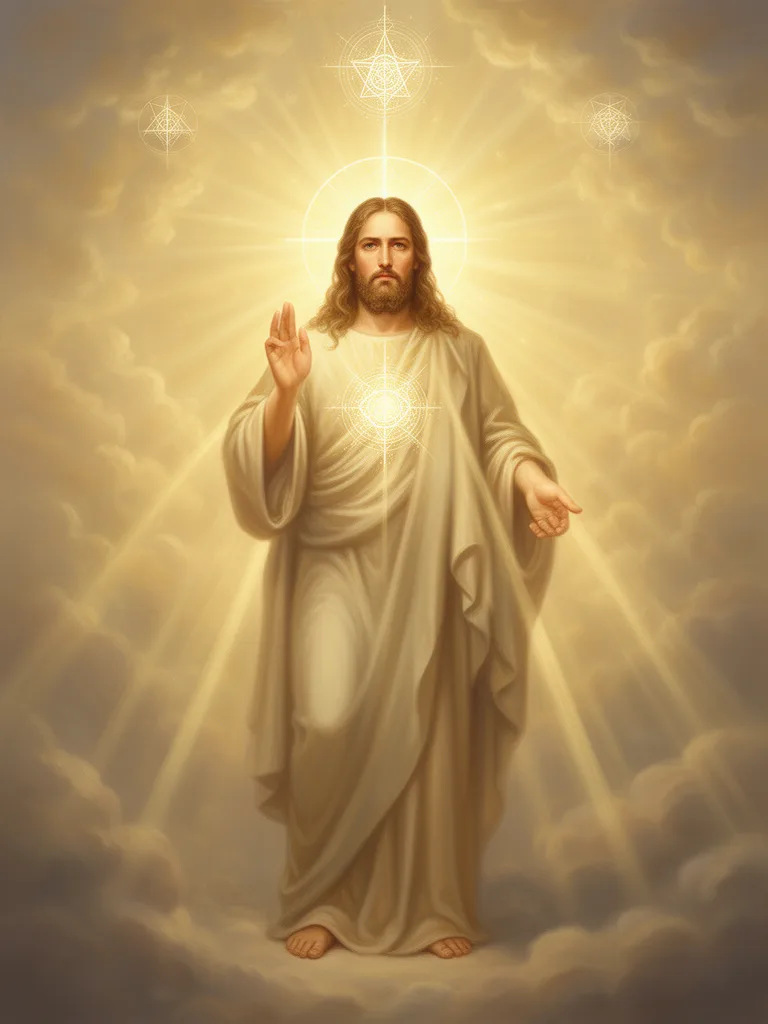
Deities or divine beings, often conceived as supernatural entities with power over natural phenomena or human destiny. They populate mythologies and religious cosmologies, acting as intermediaries between the human and the ultimate divine, or as manifestations of cosmic forces.
Where the word comes from
The English word "god" derives from the Proto-Germanic gudam, ultimately from Proto-Indo-European ghu-dʰ-o-m, meaning "invoked being." The concept of divine entities is ancient, appearing in the earliest recorded mythologies and religious texts across cultures, with diverse names and forms reflecting local cosmologies.
In depth
In Chaldea they reigned one hundred and twenty Sari, or in all 432,000 years; which amounts to the same figures as a Hindu Mabayuga 4,320,000 years. The chronology prefacing the Book of (h ncsvi (Engli.sh translation) is given "Before Christ. 4004"'. But the figures are a rendering by solar years. In the original Hebrew, which preserved a lunar caleidation. the figures are 4,320 years. This "coincidence" is well explained in Occultism. Dyookna (h'ab.). The shadow of eternal Light. The "Angels of the Presence" or archangels. The same as the Frromr in the Vrndidad and Zoroastrian works. Dzyn or Dzjian (Tib.). Written also Dzin. A corruption of the Sanskrit DJn/an and Jndna (or gnj/dna phonetically "i-^Visdom. divine knowledge. In Tibetan, learning is called dzin. E. LL.— The fifth letter of tlie English alphabet. The he (soft) of th.- Hebrew alphabet beeonies in tlie Ehevi system ot" i-eadinfr tliat laiigiiagf an E. Its numerical value is five, and its symbolism is a tvinduw; the womb, in the Kabbala. In the order of the divine names it stands for the fifth, which is Iladoor or the "majestic" and the "splendid." Ea idiuld.). also Hm. The second fiod of the orifjinal Babylonian trinity composed of Anu, Ilea and Bel. Ilea was the "Maker of Fate". "Lord of the Deep". "God of "Wisdom and Knowledrje". and "Lord of the City of Eridu".
How different paths see it
What it means today
The term "gods," as presented in Blavatsky's era, echoes a time when the pantheons of ancient civilizations were being re-examined through the lens of comparative mythology and esoteric philosophy. What strikes one is the inherent human drive to articulate the ineffable, to give form to the formless. The multitude of divine names and stories across cultures—the Mesopotamian Anunnaki, the Egyptian Ennead, the Greek Olympians, the Hindu Devas—are not merely a catalogue of primitive superstitions but rather a complex, often poetic, cartography of the human experience of the cosmos.
Mircea Eliade, in his seminal works on religion, highlighted how the sacred manifests through the numinous, often personified in divine figures that mediate between the mundane and the transcendent. These figures, whether benevolent or fearsome, represent primal forces: the generative power of nature, the destructive potential of chaos, the order of the heavens, the mysteries of the underworld. They are the dramatic actors in humanity's ongoing dialogue with the universe, providing narratives that imbue existence with meaning and purpose.
For the modern seeker, the concept of "gods" can be approached not as literal beings to be worshipped, but as archetypal symbols, as described by Carl Jung. These archetypes are psychic structures, universal patterns of experience and behavior that shape our understanding of the world and ourselves. The thunder god, for instance, might represent the raw power of the unconscious, while a goddess of wisdom could embody the intuitive faculty. Engaging with these figures, whether through mythology, art, or meditation, can offer profound insights into the deeper currents of the human psyche and its relationship to the larger cosmic order. The ancient practice of invoking these divine names or forms was, in essence, a sophisticated form of psychological and spiritual exploration, an attempt to harmonize the inner world with the outer, the human with the divine. The challenge for us today is to reclaim this symbolic language, to see in these ancient deities not relics of a bygone era, but living metaphors for the profound mysteries that continue to shape our existence.
Related esoteric terms
Books on this concept






No reflections yet. Be the first.
Share your interpretation, experience, or question.
