Ophis
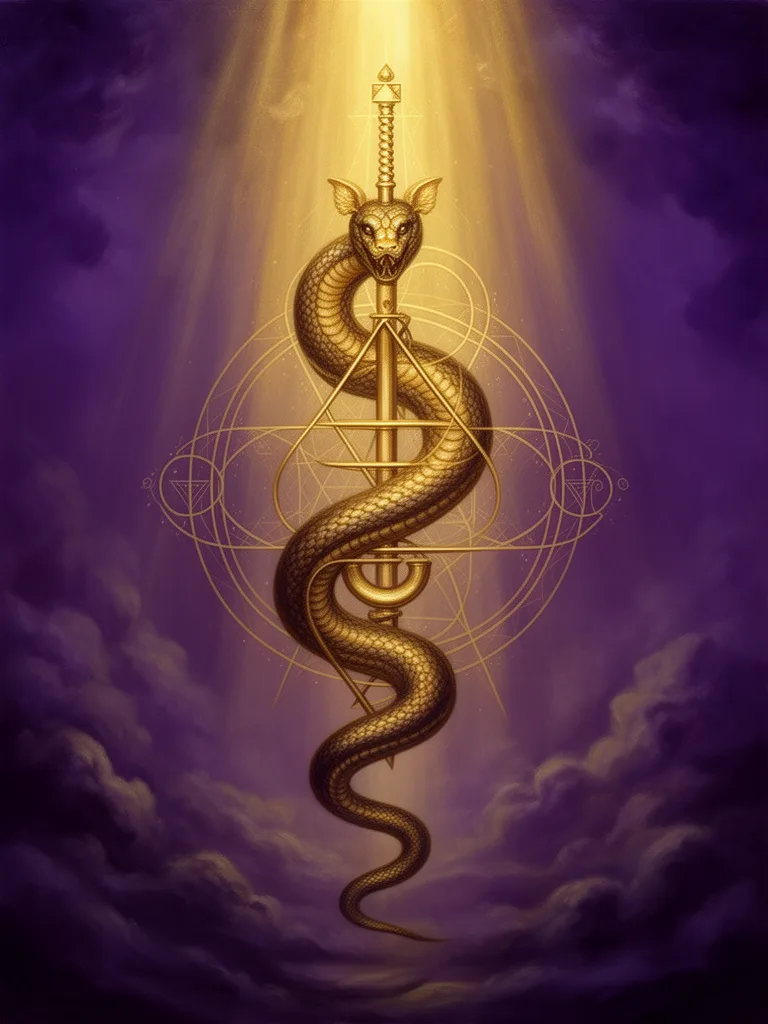
Ophis, in Hermetic philosophy, represents the serpent or dragon, often identified with Chnuphis or Khnum, symbolizing wisdom, cosmic energy, and divine intelligence. It embodies the cyclical nature of existence and the creative, regenerative power inherent in the universe.
Where the word comes from
The term "Ophis" derives from the ancient Greek word ὄφις (ophis), meaning "serpent" or "snake." This imagery was prevalent in Hellenistic Egypt, where it was associated with Egyptian deities and concepts of cosmic order and divine utterance, particularly in Gnostic and Hermetic traditions.
In depth
The same as Chnuphis or Knrph, the Logos; the good serpent or Agathodaemon.
How different paths see it
What it means today
The serpent, Ophis, coils through the ancient world not just as a creature of myth but as a potent philosophical and theological symbol. In the Hermetic tradition, particularly as seen in Blavatsky's interpretation, Ophis is elevated to the status of the Logos, the divine word or principle that orders the cosmos. This is a far cry from the simplistic portrayals of serpents as purely malevolent entities. Instead, Ophis embodies a profound duality, mirroring the regenerative power of nature – the shedding of skin, the cyclical renewal – with the inherent wisdom that arises from understanding these fundamental processes.
Mircea Eliade, in his extensive studies of myth and religion, recognized the serpent as a primeval symbol of fertility, rebirth, and the chthonic forces that underpin existence. Its terrestrial nature connects it to the earth, the source of life, while its sinuous movement can be seen as an analogy for the flow of time or the unfolding of cosmic processes. In the context of Hermeticism and Gnosticism, this earthly wisdom is transmuted into a spiritual insight, a gnosis that allows the initiate to perceive the divine architecture of reality. The serpent becomes a guide, a bearer of hidden knowledge, much like the mythical serpents of wisdom in various cultures.
The association with Chnuphis, or Khnum, the Egyptian creator god often depicted with a ram's head and sometimes associated with serpents, further solidifies Ophis's role as a primordial creative force. It speaks to a universe not born of a singular, static act, but of a continuous, dynamic unfolding, a process of becoming and unbecoming. For the modern seeker, contemplating Ophis offers an invitation to embrace the cyclical nature of life, to see wisdom not as a fixed destination but as a serpentine path of constant transformation and deeper understanding, recognizing the divine in the primal energies that shape our world.
RELATED_TERMS: Ouroboros, Agathodaemon, Logos, Chnuphis, Gnosis, Primordial Serpent, Kundalini ---
Related esoteric terms
Books on this concept







No reflections yet. Be the first.
Share your interpretation, experience, or question.
