Jiva
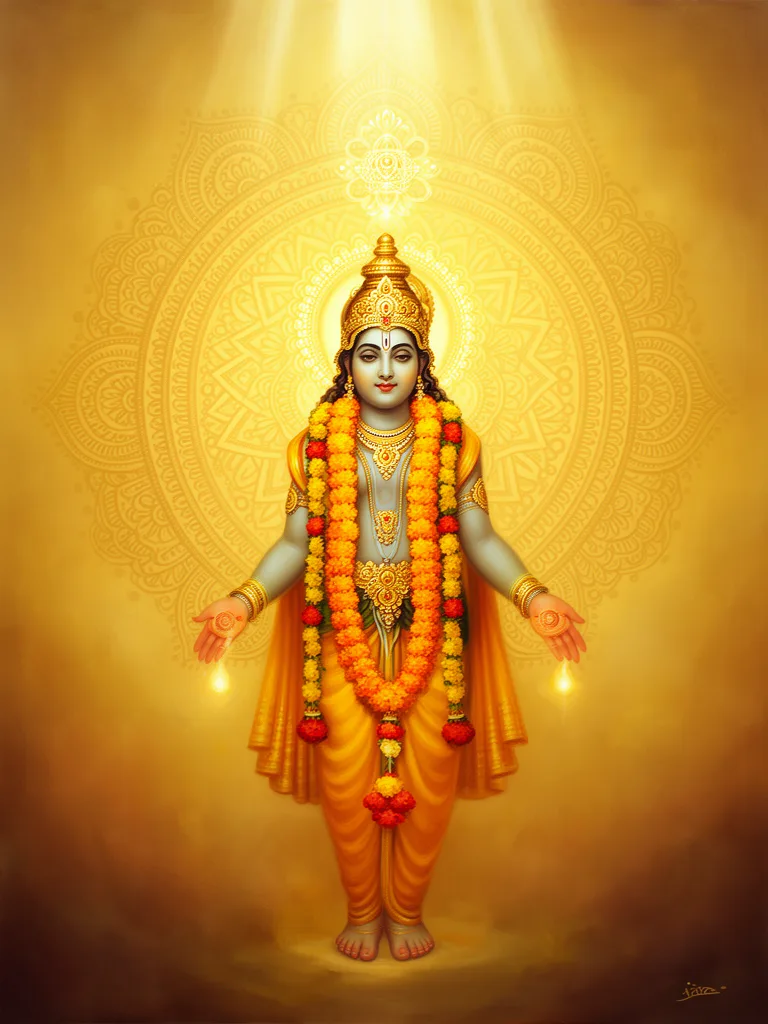
Jiva represents the individual soul or life-force in Hindu philosophy, often equated with the Monad or the principle of consciousness animating a being. It is the eternal spark of divinity within, distinct from the physical body yet bound to the cycle of birth and death until liberation.
Where the word comes from
Derived from the Sanskrit root jiv, meaning "to live" or "to breathe." Jiva signifies the vital principle, the animating spirit that distinguishes a living entity. It first appears in ancient Vedic literature, evolving in Upanishadic thought to denote the individual soul, the self.
In depth
Life, as the Absolute; the Monad also or "Atma-Buddhi".
How different paths see it
What it means today
Blavatsky's definition, though concise, gestures toward a profound concept. Jiva, in its Sanskrit root, speaks of the very act of being alive, the breath that animates the corporeal form. It is the individual spark, the microcosm reflecting the macrocosm, the unique melody arising from the universal symphony of existence. In Hindu thought, particularly within Vedanta, Jiva is often understood as the individual soul, the Atman, which is ultimately identical with Brahman, the Absolute. However, due to ignorance (avidya) and the accumulation of karma, the Jiva becomes entangled in the cycle of rebirth (samsara), experiencing the world through the lens of a separate self.
The spiritual path, therefore, becomes a journey of realizing the true nature of the Jiva, not as a distinct entity to be annihilated, but as a manifestation of the divine that has temporarily forgotten its origin. Practices like yoga, meditation, and devotional worship (bhakti) are designed to purify the Jiva, to loosen its grip on the illusion of separateness, and to facilitate the recognition of its inherent unity with the Absolute. Mircea Eliade, in his studies of shamanism and archaic religions, often points to the universal human impulse to connect with a vital, animating force, a concept that resonates deeply with the notion of Jiva. This force is not merely physical but spiritual, the very essence of consciousness that persists beyond the dissolution of the physical form.
The challenge for the modern seeker lies in reconciling the lived experience of individual consciousness, the "I" that perceives and acts, with the philosophical assertion of non-duality. Jiva invites us to examine the nature of our own subjective reality. Is the feeling of being a distinct, independent self an accurate reflection of ultimate truth, or is it a sophisticated construct, a necessary illusion for navigating the phenomenal world? The wisdom embedded in the concept of Jiva suggests that true liberation comes not from denying this individual experience, but from understanding its provisional nature and its ultimate grounding in a universal consciousness. The journey of the Jiva is the journey of the universe experiencing itself, a cosmic unfolding of awareness.
RELATED_TERMS: Atman, Brahman, Karma, Samsara, Moksha, Maya, Purusha, Prakriti
Related esoteric terms
Books on this concept







No reflections yet. Be the first.
Share your interpretation, experience, or question.
