Jayas
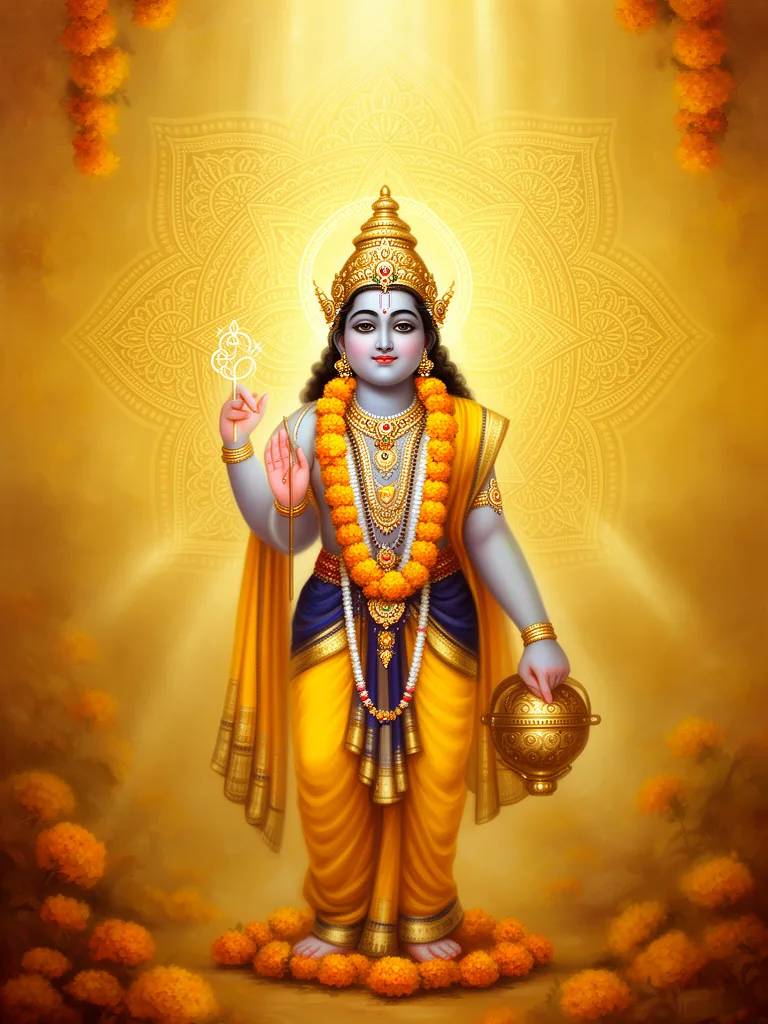
The "Victorious Ones," a class of celestial beings in Hindu cosmology, often depicted as twelve deities who, due to a past transgression, are destined for repeated rebirths within the cycles of creation until the seventh cosmic epoch. They represent a form of the ego or self-consciousness undergoing perpetual reincarnation.
Where the word comes from
From Sanskrit "jayas," meaning "victory" or "triumph." In this context, it refers to those who have achieved a form of spiritual victory, though paradoxically, their victory is incomplete, leading to continued cycles of rebirth. The term appears in ancient Vedic literature and Puranic texts.
In depth
The twelve great gods in the Puranas who neglect to create men, and are therefore, cursed by Brahma to be reborn "in every (racial) Manvantara till the seventh". Another form or aspect of the reincarnating Egofi.
How different paths see it
What it means today
Blavatsky's interpretation of the Jayas as a "reincarnating Ego" offers a potent lens through which to view these figures, transforming them from mere mythological characters into archetypes of the persistent, self-aware consciousness trapped in the wheel of becoming. The Puranic narrative, wherein these twelve "Victorious Ones" are cursed by Brahma to perpetual rebirth until the seventh Manvantara, speaks to a profound cosmic principle. It is not merely a divine punishment but a symbolic representation of the ego's inherent struggle against dissolution, its desperate clinging to existence across vast epochs. This echoes Mircea Eliade's observations on the cyclical nature of time in archaic societies, where repeated cosmogonic events offer a model for renewal, yet the Jayas embody a more complex, perhaps melancholic, aspect of this cycle—a victory that necessitates unending struggle. Their story, as recounted in texts like the Vishnu Purana, suggests that true victory lies not in the perpetuation of self, but in its transcendence. It is a cosmic drama that resonates with Carl Jung's exploration of the Self as a process of individuation, a journey through the shadow and the accumulated ego-consciousness towards a state of wholeness, a state the Jayas, in their unending cycle, have yet to fully attain. The image of these celestial beings, bound to repeated incarnation, serves as a stark reminder that the pursuit of spiritual liberation is a universal quest, not confined to human experience, and that the very notion of "victory" might require a redefinition beyond mere persistence. Their plight, a cosmic echo of the individual soul's journey, invites contemplation on the nature of selfhood and the ultimate aim of existence.
Related esoteric terms
Books on this concept






No reflections yet. Be the first.
Share your interpretation, experience, or question.
