Iamblichus
Iamblichus was a 3rd-4th century Syrian philosopher and mystic, a key figure in Neoplatonism. He synthesized Platonic thought with Pythagorean mysticism and Egyptian theology, developing a complex system of theurgy, or divine work, aimed at spiritual ascent and union with the divine.
Where the word comes from
The name Iamblichus is of Greek origin, Ἰάμβλιχος (Iámblichos). Its etymology is uncertain, with some scholars suggesting a possible Aramaic root, perhaps related to "king" or "divine ruler," though this is not definitively established. He lived circa 245–325 CE.
In depth
Iamblichus ( eye-AM-blik-əs; Ancient Greek: Ἰάμβλιχος, romanized: Iámblichos; Aramaic: 𐡉𐡌𐡋𐡊𐡅, romanized: Yamlīkū; c. 245 – c. 325) was a Syrian Arab Neoplatonist philosopher who determined a direction later taken by Neoplatonism. Iamblichus was also the biographer of the Greek mystic, philosopher, and mathematician Pythagoras. In addition to his philosophical contributions, his Protrepticus is important for the study of the sophists because it preserved about ten pages of an otherwise unknown sophist...
How different paths see it
What it means today
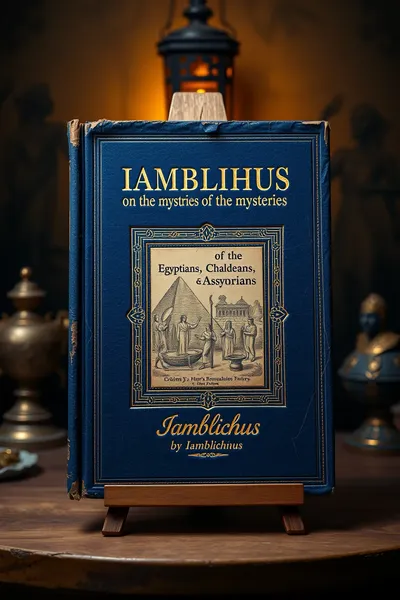
Iamblichus, a towering figure in late antique philosophy, offers a potent antidote to the disembodied intellectualism that can sometimes afflict spiritual pursuits. His work, particularly "On the Mysteries of the Egyptians," is a profound exploration of theurgy, the practice of "divine work," which he understood as a divinely instituted system of rituals, incantations, and symbolic actions designed to facilitate the soul's ascent and its union with the divine. This was not mere magic in the vulgar sense, but a sacred technology, a means by which the human, through participation in divine operations, could effect its own spiritual transformation.
Mircea Eliade, in his seminal works on shamanism and the history of religions, recognized the deep currents of ecstatic experience and spiritual transformation that Iamblichus tapped into. For Iamblichus, the cosmos was alive with divine presence, and the practitioner, through precise engagement with this presence, could align themselves with the cosmic order. This resonates with the hermetic maxim "As above, so below," but Iamblichus provided a detailed, practical framework for enacting this principle. His philosophy, a sophisticated synthesis of Plato, Pythagoras, and the religious traditions of the East, particularly Egypt, sought to bridge the chasm between the intelligible and sensible worlds.
Theurgy, as Iamblichus conceived it, was a path of purification and initiation, a meticulously ordered ascent through the hierarchies of being. It demanded not just intellectual assent but a total commitment of the self, a willingness to become a conduit for divine energies. This emphasis on embodied practice, on the potent efficacy of ritual and symbol, is something that modern seekers, often adrift in a sea of abstract concepts, might find particularly compelling. It suggests that the sacred is not merely to be contemplated, but to be enacted, to be brought into tangible existence through our own divinely inspired efforts. Iamblichus reminds us that the path to the divine is often paved with sacred actions, with a profound and active engagement with the mysteries that surround and permeate us.
Related esoteric terms
Books on this concept







No reflections yet. Be the first.
Share your interpretation, experience, or question.
