Humanum genus
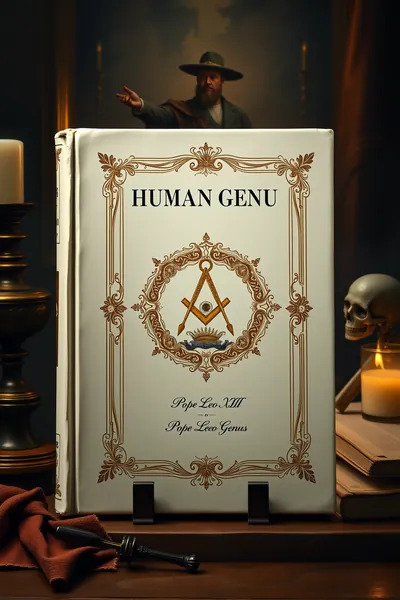
The term "Humanum genus" refers to a papal encyclical issued by Pope Leo XIII in 1884, primarily condemning Freemasonry and its perceived threat to the Roman Catholic Church. It critiques philosophical naturalism and secularism attributed to Masonic ideals, advocating for a return to traditional religious authority.
Where the word comes from
The phrase "Humanum genus" is Latin, translating directly to "the human race" or "mankind." It was chosen by Pope Leo XIII as the opening phrase of his 1884 encyclical, establishing the scope of his address as concerning the collective well-being and spiritual state of humanity as understood through the lens of Catholic doctrine.
In depth
Humanum genus is a papal encyclical promulgated on 20 April 1884 by Pope Leo XIII. Released in the ascent of the industrial age, Marxism, and the aftermath of the September 20, 1870, Capture of Rome by the Kingdom of Italy military forces from the Papal States, Humanum genus is principally a condemnation of Freemasonry. It states that the late 19th century was a dangerous era for the Roman Catholic Church, largely due to numerous concepts and practices it attributes to Freemasonry, namely naturalism...
How different paths see it
What it means today
The phrase "Humanum genus," meaning "the human race," anchors Pope Leo XIII's 1884 encyclical in a grand, almost cosmic, concern for mankind's spiritual trajectory. Yet, the document's actual focus is far more specific, a pointed denunciation of Freemasonry, which the Pope viewed as a dangerous force undermining the foundations of Catholic society. This encyclical stands as a stark example of how religious institutions, when confronted by the seismic shifts of modernity—the rise of secularism, industrialization, and new forms of social organization—can articulate their anxieties and reaffirm their doctrines by defining an "other," in this case, the perceived naturalism and anti-clericalism of Freemasonry.
The Pope's critique of naturalism, the idea that nature itself holds sufficient truth or moral guidance, resonates with a long history of theological debate. For many mystics and esoteric thinkers, including those within the Hermetic tradition, understanding the divine often involves an intricate interplay between the revealed word and the wisdom inherent in the cosmos. However, Leo XIII frames this naturalism not as a path to divine immanence but as a seductive error, a departure from divinely ordained truth. This perspective reflects a fundamental divergence in how humanity's relationship with the sacred is conceived: is it found through direct experience and interpretation of the world's inherent patterns, or is it mediated solely through established dogma and institutional authority? The encyclical, therefore, is less about the abstract concept of "mankind" and more about a fierce defense of a particular vision of human destiny, one that sees salvation and societal order inextricably linked to adherence to Catholic teachings. It’s a historical marker, a moment when the papacy sought to fortify its spiritual and temporal authority against the encroaching tide of secular thought, framing the very definition of humanity’s purpose within its own theological boundaries.
RELATED_TERMS: Naturalism, Secularism, Papal Authority, Freemasonry, Social Order, Religious Doctrine, Divine Revelation
Related esoteric terms
Books on this concept





No reflections yet. Be the first.
Share your interpretation, experience, or question.
