Athor
Athor represents the primordial darkness and the cosmic womb from which all existence emerges in ancient Egyptian cosmology. She embodies the boundless, unmanifest potential of the universe before creation, a divine abyss pregnant with possibility.
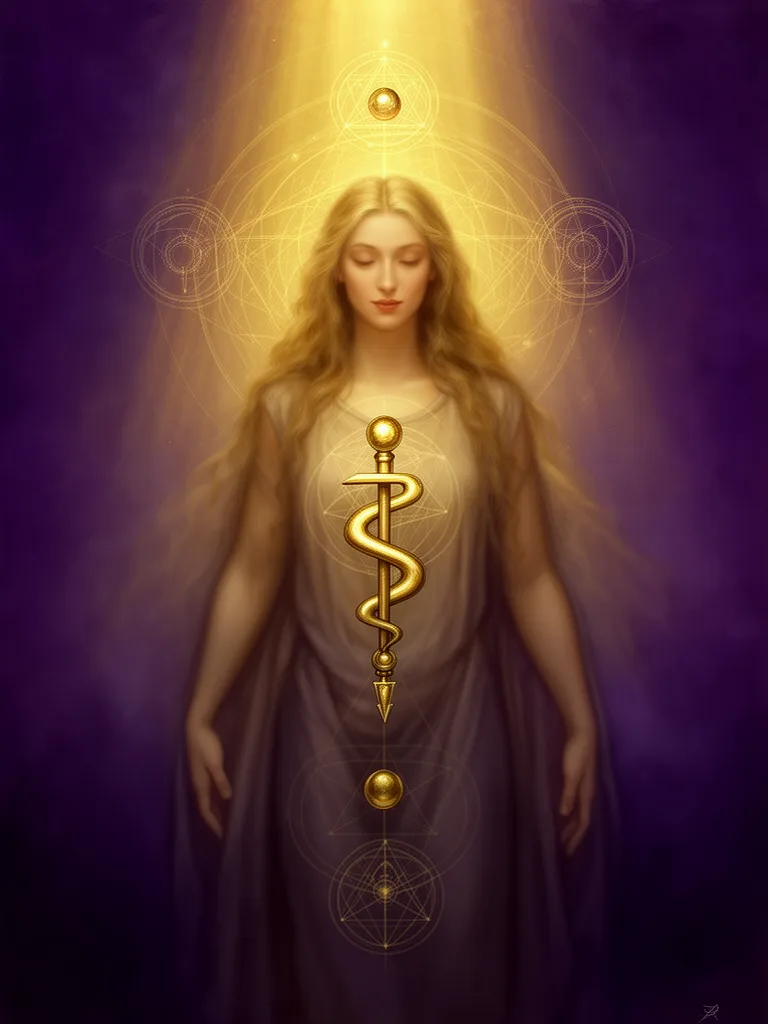
Where the word comes from
The name "Athor" derives from the ancient Egyptian "Ḥwt-Ḥr," meaning "Temple of Horus." While Blavatsky's definition emphasizes her role as "Mother Night," this etymological connection points to her multifaceted nature as both a primordial cosmic principle and a divine figure associated with celestial and earthly dominion.
In depth
"Mother Night"". Primeval Chaos, in the Egyptian cosmogony. The goddess of night.
How different paths see it
What it means today
The ancient Egyptians, in their profound contemplation of the cosmos, personified the unmanifest as Athor, a goddess of the night and the primeval chaos. This is not the void of nihilism, but rather a fertile, generative darkness, a cosmic womb from which all that is seen and unseen springs forth. Mircea Eliade, in his exploration of myth and reality, would recognize in Athor the archetypal "Great Mother," the source and end of all existence, a concept that permeates spiritual traditions across the globe.
Her designation as "Mother Night" invites us to consider darkness not as an enemy but as the essential precursor to light, the silent stage upon which the drama of creation unfolds. This resonates with the contemplative practices found in various mystical paths. The Hesychasts, for instance, sought a profound stillness that mirrored this primordial silence, a state of inner darkness conducive to divine encounter. Similarly, the Sufis speak of the "night of the soul," a period of spiritual desolation that paradoxically precedes illumination, a journey through the inner abyss toward union.
In the Hermetic tradition, Athor’s primordial chaos can be understood as the prima materia, the raw, undifferentiated substance that the alchemist seeks to refine and spiritualize. It is the latent potential within all things, waiting to be coaxed into its higher form through the alchemical marriage of opposites. This primal darkness is not a passive state but an active, potent force, a reservoir of divine energy that sustains the universe. Carl Jung, in his work on archetypes, would likely see Athor as embodying the shadow aspect of the feminine, not as something to be feared, but as a necessary component of wholeness, the dark, chthonic power that grounds and nourishes the manifest world.
To contemplate Athor is to confront the mystery of beginnings, to acknowledge that the most profound truths often lie not in the clamor of manifestation but in the silent, pregnant darkness from which all arises. It is an invitation to embrace the generative power of the unmanifest, to find wisdom in the stillness before the dawn.
Related esoteric terms
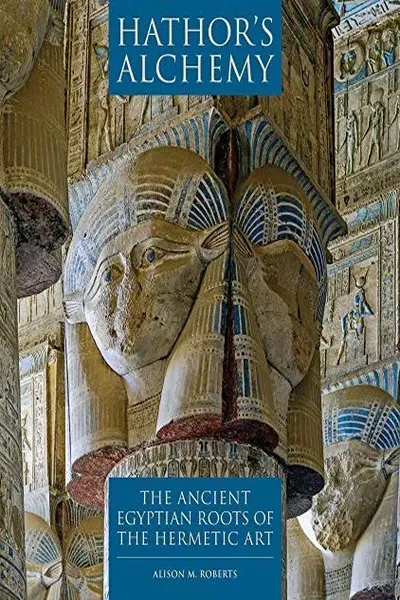
Books on this concept



No reflections yet. Be the first.
Share your interpretation, experience, or question.
