African divination
African divination encompasses a diverse array of practices across the continent used to interpret omens, understand the present, and foresee future events. These methods often involve intermediaries, symbolic objects, or altered states of consciousness to access spiritual knowledge and guide individual and communal decisions.
Where the word comes from
The term "divination" derives from Latin "divinatio," meaning "foresight" or "inspiration from a god." While specific African terms are numerous and culturally bound, the concept of seeking divine or hidden knowledge through interpretative acts is ancient and universal, predating written records across many indigenous cultures.
In depth
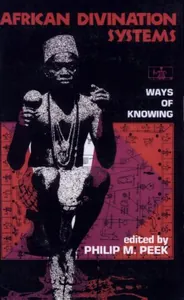
Divination is an attempt to form, and possess, an understanding of reality in the present and additionally, to predict events and reality of a future time. Divination has been practiced in African societies for millennia. Divination might be thought of as a social phenomenon, and is central to the lives of many in Africa.
How different paths see it
What it means today
Mircea Eliade, in his seminal work "The Myth of the Eternal Return," observed that for many traditional societies, time is not a linear progression but a cyclical unfolding, a cosmic drama in which the present is deeply interwoven with the past and future. African divination, in its myriad forms—from the casting of shells and bones in West African traditions to the intricate patterns of sand in North African practices—embodies this understanding. It is less about foretelling a fixed destiny and more about discerning the currents of spiritual forces that shape existence, offering a means to align oneself with the cosmic flow.
The diviner, often a figure of immense respect and spiritual authority, functions as a liminal being, existing at the threshold between the human and the divine, the known and the unknown. This role is akin to the shaman, as described by scholars like Ioan Lewis, who mediates between the earthly realm and the spirit world, bringing back knowledge that can heal, guide, and restore balance. The symbolic language of divination, whether through the arrangement of cowrie shells or the interpretation of animal entrails, is a profound semiotic system, a visual grammar of the cosmos. Each element carries layers of meaning, resonating with the individual's or community's present predicament and potential futures.
As Henry Corbin explored in his work on imagination and the spiritual senses, the act of divination engages a faculty that transcends ordinary rational perception. It is an intuitive apprehension, a form of knowing that arises from the "imaginal," a realm where symbols are not mere representations but potent forces in themselves. The effectiveness of divination, therefore, lies not in its empirical accuracy in a Western scientific sense, but in its capacity to evoke a response, to catalyze self-reflection, and to provide a framework for understanding life's complexities within a sacred cosmology. It is a practice that insists on the interconnectedness of all things, reminding us that the universe speaks, if only we learn to listen to its subtle, symbolic voice.
RELATED_TERMS: Oracle, Shamanism, Cosmology, Symbology, Ancestor Veneration, Auspicy, Augury, Scrying
Related esoteric terms
Books on this concept




No reflections yet. Be the first.
Share your interpretation, experience, or question.
