Hermetic Qabalah
Hermetic Qabalah is a Western esoteric tradition blending Jewish Kabbalistic mysticism with Hermetic philosophy and occult practices. It uses symbolic systems like the Tree of Life to explore divine emanations, spiritual ascent, and the interconnectedness of the cosmos.
Where the word comes from
The term "Qabalah" derives from the Hebrew word קַבָּלָה (qabalah), meaning "reception" or "tradition," signifying knowledge passed down orally. The "Hermetic" prefix denotes its integration with Hermeticism, the ancient tradition attributed to Hermes Trismegistus, thus creating a distinct Western esoteric synthesis.
In depth
Hermetic Qabalah (from Hebrew קַבָּלָה (qabalah) 'reception, accounting') is a Western esoteric tradition involving mysticism and the occult. It is the underlying philosophy and framework for magical societies such as the Hermetic Order of the Golden Dawn, has inspired esoteric Christian organizations such as the Societas Rosicruciana in Anglia, is a key element within the Thelemic orders, and is important to mystical-religious societies such as the Builders of the Adytum and the Fellowship of the...
How different paths see it
What it means today
The Hermetic Qabalah, a rich confluence of ancient Hebrew mysticism and Hellenistic magical philosophy, presents a profound system for understanding the architecture of reality and the pathways of the soul. It is not merely an academic curiosity but a living tradition, a symbolic language designed for spiritual ascent. Mircea Eliade, in his seminal work on shamanism and archaic religions, often highlighted the universal human drive to comprehend and interact with the unseen forces that shape existence. Hermetic Qabalah provides one such intricate framework.
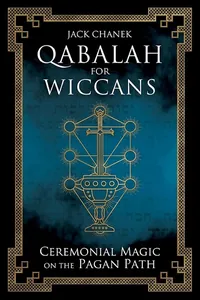
The central imagery of the Tree of Life, with its ten Sephirot and twenty-two paths, serves as a cosmic diagram, a map of divine emanation from the unknowable Ein Sof (the Infinite) down to the material world. Each Sephirah represents an attribute of the divine, a stage in the creative process, and a corresponding level of consciousness. The paths are the dynamic currents connecting these spheres, representing the processes of transformation and the journey of the soul. This resonates with Carl Jung's exploration of archetypes and the collective unconscious, suggesting that these symbolic structures tap into universal patterns of human experience and spiritual longing.
For the modern seeker, the Hermetic Qabalah offers a structured approach to introspection and spiritual development. It encourages the practice of visualization, meditation, and ritual, not as ends in themselves, but as means to cultivate inner harmony and align oneself with cosmic principles. The axiom "As Above, So Below," a cornerstone of Hermetic thought, implies that the macrocosm is reflected in the microcosm, and by understanding the divine order, one can effect change within oneself and, by extension, within the world. This echoes the insights of mystics across traditions who sought to find the divine within the ordinary.
The tradition's emphasis on correspondences—the intricate web of relationships between planets, elements, colors, sounds, and spiritual concepts—provides a powerful tool for seeing the interconnectedness of all things. This holistic perspective can be a balm in an age often characterized by fragmentation and specialization. It invites a deeper engagement with the world, seeing the divine immanent in every aspect of creation. As Seyyed Hossein Nasr has articulated, traditional cosmology offers a vision of an ordered universe imbued with meaning, a stark contrast to a purely materialistic worldview. The Hermetic Qabalah, in its meticulous construction and symbolic depth, offers a path to re-enchantment, a way to perceive the sacred pulse beating at the heart of existence. It is a disciplined practice of seeing the invisible in the visible, the eternal in the temporal.
Related esoteric terms
Books on this concept







No reflections yet. Be the first.
Share your interpretation, experience, or question.
