Guru Deva
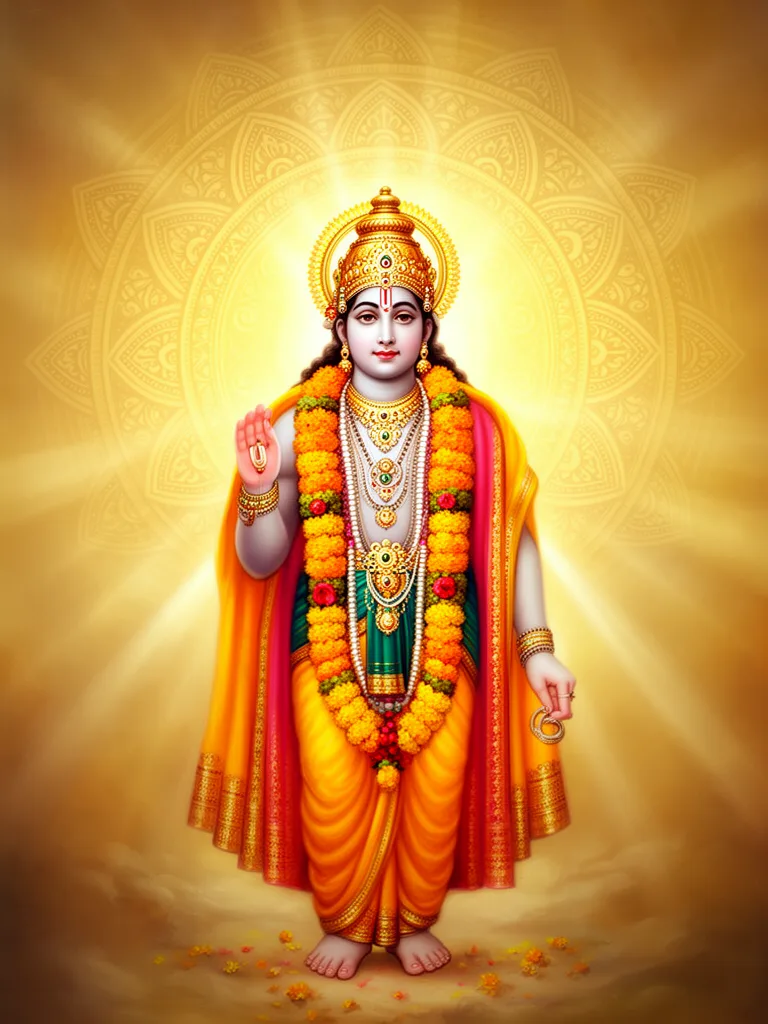
Guru Deva is a Sanskrit honorific combining "Guru," meaning spiritual teacher or master, with "Deva," meaning divine or god. It signifies a highly revered spiritual guide, often seen as embodying divine wisdom and authority, guiding disciples towards spiritual realization.
Where the word comes from
The term "Guru Deva" originates from Sanskrit. "Guru" derives from the root gur, meaning "to lift" or "to carry," implying one who dispels ignorance. "Deva" comes from the Proto-Indo-European root deiwos, meaning "god" or "divine being." The compound signifies a divine master.
In depth
Lit., ■■(livimMaster". Gyan-Ben-Gian il'<rs.}. Tli»K\\\\i of tluIN-ris. tli.Sylphs, in the old mytliolopy of Iran.
How different paths see it
What it means today
The designation "Guru Deva" speaks to a profound understanding of the teacher-disciple relationship within the Hindu tradition, an understanding that resonates across many spiritual paths seeking a living embodiment of wisdom. It is not simply a title of respect, but an acknowledgment of the teacher as a channel, a luminous point where the Absolute makes itself accessible. Mircea Eliade, in his seminal works on religion, often explored the archetype of the shaman or mystic as a mediator between the human and divine realms; the Guru Deva occupies a similar, albeit more formalized, position in the spiritual hierarchy. This figure is not merely a purveyor of doctrines but a living example, whose very presence and conduct are instructive. The disciple’s devotion, or bhakti, directed towards the Guru Deva is often seen as a potent form of spiritual practice in itself, a means of focusing the mind and dissolving the ego. As Carl Jung observed, the projection of the divine onto a human figure can be a crucial step in the individuation process, allowing the seeker to confront and integrate their own inner divinity. The Guru Deva, therefore, is not just a guide but a mirror reflecting the disciple's own potential for spiritual realization. The term suggests a profound trust placed in human capacity to embody the divine, a trust that, when honored, can indeed lead to transcendence. It reminds us that the path to wisdom is often illuminated by those who have walked it before, not as distant prophets, but as present, guiding lights.
RELATED_TERMS: Sadhu, Yogi, Avatar, Bodhisattva, Master, Sage, Ascetic, Enlightened Being ---
Related esoteric terms
No reflections yet. Be the first.
Share your interpretation, experience, or question.
