Gnostic Mass
The Gnostic Mass is a ritualistic service, often a variation of the Christian Mass, adapted by various Gnostic churches. It typically incorporates elements of ancient Gnosticism, such as the veneration of Sophia and the pursuit of gnosis (spiritual knowledge), and can be found in differing forms among distinct Gnostic denominations.
Where the word comes from
The term "Mass" derives from the Latin "missa," meaning "dismissal," referring to the concluding words of the Christian liturgy. "Gnostic" originates from the Greek "gnōstikós," meaning "knowing" or "skilled," referring to the central Gnostic emphasis on salvific knowledge. The Gnostic Mass is a modern liturgical construct, not an ancient term.
In depth
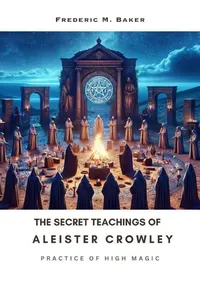
A Gnostic Mass is a liturgical Mass administered by a Gnostic church. There are several such churches, each with its own version of the Mass. Some of them are: The Gnostic Holy Eucharist, celebrated by Ecclesia Gnostica Liber XV, The Gnostic Mass, written by Aleister Crowley for Ecclesia Gnostica Catholica
How different paths see it
What it means today
The Gnostic Mass, as it exists today, is not an ancient artifact unearthed but rather a contemporary creation, a testament to the enduring human impulse to seek meaning through ritual. It stands as a fascinating example of how spiritual traditions can be both inherited and reinvented. The very act of composing and performing such a Mass by groups like the Ecclesia Gnostica or through the influential work of Aleister Crowley for the Ecclesia Gnostica Catholica, is a profound statement about the nature of religious authority and the pursuit of direct spiritual experience.
Mircea Eliade, in his seminal works on the history of religions, often highlighted the power of ritual to connect the human realm with the sacred, to make the mythical present. The Gnostic Mass, in its structured unfolding, aims to do precisely this. It uses the familiar architecture of the Christian Mass—the invocation, the scripture, the communion—but infuses it with Gnostic cosmology, with its emphasis on the Demiurge, the fallen divine spark (Sophia), and the ultimate ascent through knowledge. This isn't merely a reordering of prayers; it is a re-enchantment of the sacred space, a deliberate summoning of specific archetypal energies.
For the modern seeker, the Gnostic Mass offers a pathway that acknowledges the limitations of orthodox religious dogma while still valuing the transformative potential of communal worship and symbolic action. It suggests that the divine is not solely an external authority but an immanent presence, accessible through conscious effort and inner knowing. The ritual becomes a vehicle for this inner journey, a structured exploration of the soul's relationship with the divine, often framed by the Gnostic narrative of liberation from illusion. It’s a practice that invites participants to become active agents in their own spiritual unfolding, rather than passive recipients of grace.
RELATED_TERMS: Gnosis, Sophia, Demiurge, Ecclesia Gnostica Catholica, Thelema, Sophia Achamoth, Aeons
Related esoteric terms
Books on this concept




No reflections yet. Be the first.
Share your interpretation, experience, or question.
