Emerald Tablets of Thoth the Atlantean
A foundational Hermetic text attributed to the ancient Egyptian deity Thoth, the Emerald Tablets are said to contain alchemical secrets and the principles of the universe. Their purported origin predates Moses, and they are considered a primary source for Western esotericism, influencing alchemy, magic, and philosophy.
Where the word comes from
The name "Emerald Tablets" derives from the legendary green stone on which the text was supposedly inscribed. The attribution to Thoth, the Egyptian god of wisdom and writing, links it to ancient Egyptian hermeticism. The concept of a foundational, divinely revealed text is common across many ancient cultures.
In depth
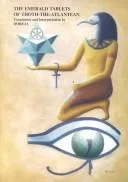
The Emerald Tablets of Thoth the Atlantean is a pseudohistorical book written by Maurice Doreal (1898–1963) and first published in the 1940s or early 1950s. Influenced by ancient Egyptian texts and Lovecraftian stories about part-reptilian civilizations emerging from ancient Egypt-like ruins, it deals with Atlantis, an ancient race of serpent-headed men, alchemy, and a variety of other topics.
How different paths see it
What it means today
The Emerald Tablets, often shrouded in legend and attributed to figures as ancient as Hermes Trismegistus himself, represent a potent distillation of Hermetic thought. Their core message, famously encapsulated in the adage "As above, so below," speaks to a profound interconnectedness between the celestial realms and the terrestrial, between the vastness of the cosmos and the intimate landscape of the human soul. This is not merely a poetic flourish; it suggests a fundamental blueprint for existence, a cosmic grammar that, once deciphered, can unlock the secrets of transformation.
Modern readers, accustomed to the fragmented nature of contemporary knowledge, might find the holistic vision of the Tablets both alien and alluring. They offer a counterpoint to reductionist science, proposing instead a unified field of understanding where the alchemical transmutation of base metals is not merely a metallurgical process but a profound metaphor for the spiritual purification of the self. The alchemist, in this view, is not just a chemist but a spiritual aspirant, meticulously working on the inner lead of ignorance and base desires to reveal the golden light of wisdom and liberation.
Scholars like Mircea Eliade have explored the universality of such symbolic transformations across cultures, noting how the quest for gold often mirrors the soul's yearning for divine perfection. The Tablets, in their enigmatic brevity, invite a contemplative engagement, a practice of inner observation and alignment. They suggest that the universe is not a random occurrence but a divinely ordered system, and that by understanding its laws, one can achieve a state of harmony and mastery. The wisdom of Thoth, then, becomes a call to recognize the divine spark within, the potential for gold that lies dormant in every soul, awaiting the alchemical fire of conscious effort and understanding. To engage with the Tablets is to participate in an ancient dialogue about the nature of reality and the potential for human evolution.
Related esoteric terms
Books on this concept




No reflections yet. Be the first.
Share your interpretation, experience, or question.
