Commentary on the Apocalypse
A medieval Latin commentary on the Book of Revelation, primarily known for its richly illustrated manuscripts. Written by Beatus of Liébana, it aimed to interpret apocalyptic prophecies, with its visual tradition influencing art across the Iberian Peninsula for centuries.
Where the word comes from
The term is Latin. "Commentarius" means "explanation" or "interpretation," derived from "commentari," meaning "to think over" or "to ponder." "Apocalypsis" is Greek, meaning "unveiling" or "revelation," from "apokalyptō," "to uncover." The work is attributed to Beatus of Liébana, a Spanish monk.
In depth
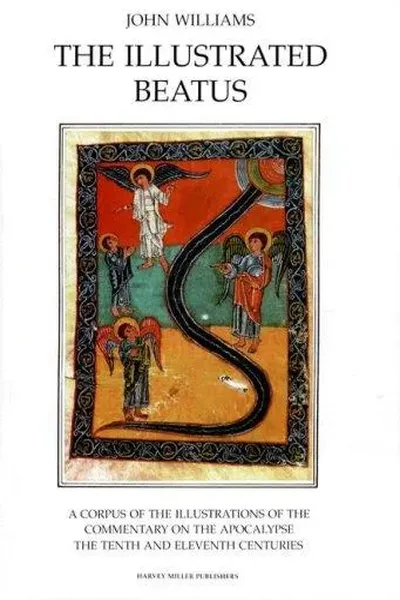
The Commentary on the Apocalypse (Commentaria in Apocalypsin) is a Latin commentary on the biblical Book of Revelation written around 776 by the Spanish monk and theologian Beatus of Liébana (c. 730–after 785). The surviving texts differ somewhat, and the work is mainly famous for the spectacular illustrations in a group of illustrated manuscripts, mostly produced on the Iberian Peninsula over the following five centuries. There are 29 surviving illustrated manuscripts (many incomplete or fragments...
How different paths see it
What it means today
The Commentary on the Apocalypse, penned by Beatus of Liébana, transcends its role as a mere theological treatise. It stands as a luminous example of how esoteric traditions translate abstract spiritual imperatives into tangible, resonant forms. In an era when the cosmos was often perceived as a direct stage for divine action, Beatus’s work, and more crucially, its subsequent illustrated manuscripts, offered a visual lexicon for the end times. Mircea Eliade, in his exploration of myth and ritual, illuminates how such narratives provide a cosmic map for human existence, grounding individuals within a grander, divinely orchestrated unfolding.
The sheer proliferation of these illustrated manuscripts across the Iberian Peninsula, spanning centuries, speaks to a deep-seated human need to grapple with the ultimate questions of existence, judgment, and salvation. These images were not merely decorative; they were mnemonic devices, theological primers, and devotional aids, embedding the complex symbolism of Revelation into the collective consciousness. Carl Jung’s concept of the archetype of the Self, often expressed through apocalyptic imagery in dreams and visions, finds a historical echo here. The Commentary, in its visual intensity, taps into a primal human engagement with transformation and renewal, mirroring the alchemical process of dissolution and reintegration.
For the modern seeker, divorced from the immediate eschatological anxieties of medieval Europe, the Commentary offers a profound lesson in the power of symbolic representation. It demonstrates how complex spiritual realities, when rendered through art and narrative, can become accessible, even visceral. The work invites us to consider how we, too, might translate our understanding of ultimate truths into forms that resonate beyond intellectual assent, fostering a deeper, more embodied spiritual practice. It reminds us that the unveiling of the divine is often a process of both intellectual inquiry and imaginative apprehension.
Related esoteric terms
Books on this concept



No reflections yet. Be the first.
Share your interpretation, experience, or question.
