Caroline Myss
Caroline Myss is a contemporary American author and speaker known for her work on mysticism, personal power, and archetypes. She describes herself as a medical intuitive, blending spiritual insight with practical advice for healing and self-discovery, particularly through her book "Anatomy of the Spirit."
Where the word comes from
The name "Caroline" is of Germanic origin, derived from the masculine name Karl, meaning "free man." "Myss" is a surname of likely English or Scottish origin. The term itself, as applied to the author, is a modern proper noun with no ancient linguistic roots in esoteric traditions.
In depth
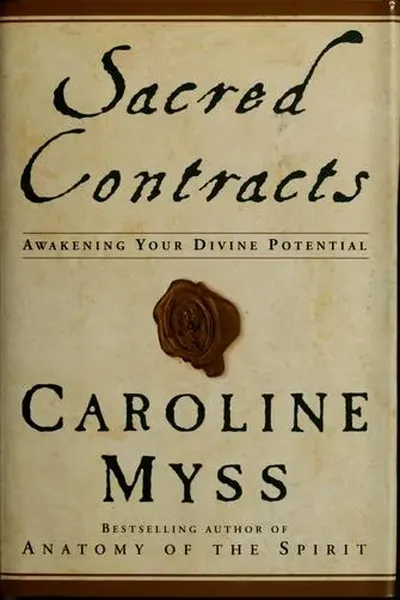
Caroline Myss (pronounced mace; born December 2, 1952) is an American author of 10 books and many audio recordings about mysticism and wellness. She is most well known for publishing Anatomy of the Spirit (1996). She also co-published The Creation of Health with Dr C Norman Shealy, MD, former Harvard professor of neurology. Myss describes herself as a medical intuitive and a mystic. She was on The Oprah Winfrey Show several times including her 2002 appearance. In 2001 she hosted a TV series titled...
How different paths see it
What it means today
Caroline Myss, a figure emergent from the latter half of the twentieth century, offers a compelling synthesis of ancient spiritual disciplines and contemporary psychological inquiry. Her work, particularly "Anatomy of the Spirit," functions as a kind of modern grimoire, not of spells and incantations, but of energetic blueprints for the human psyche and body. She posits a spiritual anatomy, a concept that echoes through various traditions, from the subtle body described in yogic philosophy with its chakras and nadis to the Kabbalistic Tree of Life, which maps divine emanations and human experience.
Myss's concept of archetypes, as explored in her "Four Archetypes of the Apocalypse," draws from Jungian psychology but imbues these universal patterns with a distinctly spiritual, almost prophetic, dimension. This echoes the hermetic principle of "As Above, So Below," suggesting that the macrocosmic dramas played out in myth and scripture are mirrored in the microcosm of the individual soul. Her description of the "shadow self" and the necessity of integrating it for wholeness is a direct descendant of alchemical principles of solve et coagula, the dissolution and coagulation of elements to achieve transformation.
What distinguishes Myss is her pragmatic approach, framing spiritual development not as an escape from the material world but as a means to master it. Her "medical intuition" is presented not as a supernatural gift divorced from understanding, but as a heightened perception of the energetic imbalances that precede physical ailments, aligning with the holistic healing traditions found in both Eastern medicine and the ancient Greek emphasis on the balance of humors. She bridges the gap between the ethereal and the embodied, suggesting that our spiritual journey is intimately tied to our physical well-being, a perspective that resonates with the burgeoning field of mind-body medicine. Her work encourages a personal responsibility for one's spiritual and physical health, empowering individuals to see themselves not as passive recipients of fate but as active co-creators of their reality, a notion deeply embedded in many mystical traditions that emphasize the divine spark within each being.
Her writings invite us to consider the energetic underpinnings of our existence, urging a conscious engagement with the forces that shape our lives, both seen and unseen.
Related esoteric terms
Books on this concept



No reflections yet. Be the first.
Share your interpretation, experience, or question.
