Magi
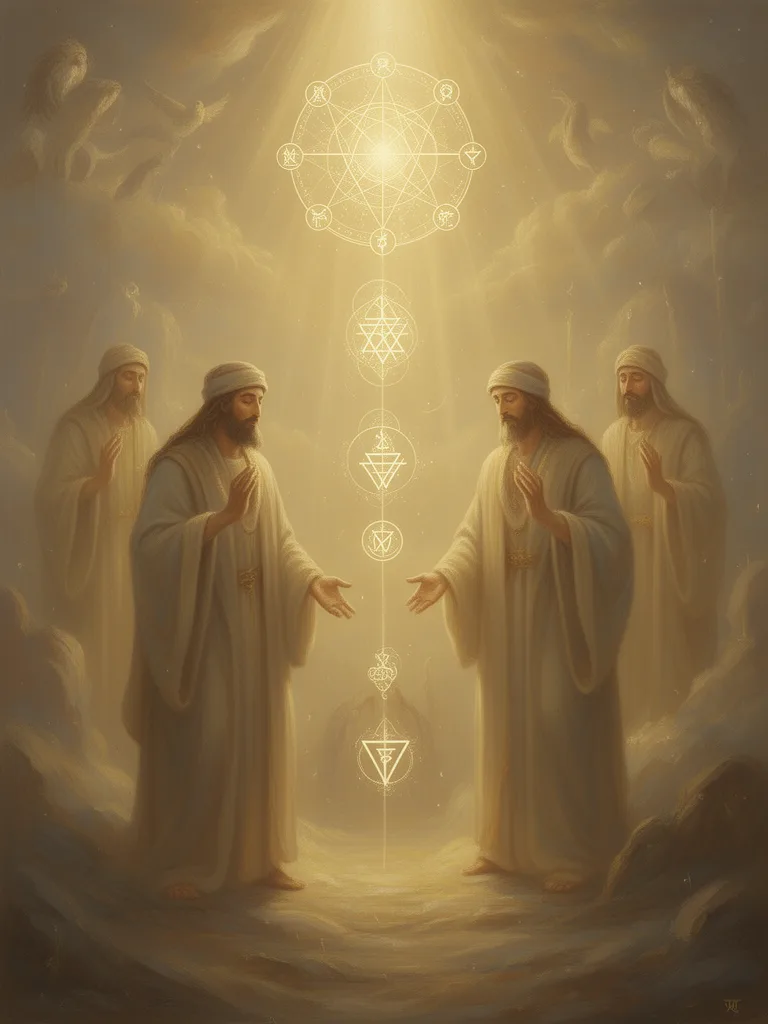
Magi were an ancient priestly and learned caste in Persia and Media, historically associated with wisdom, religious rites, and the practice of what was considered a sacred science or magic. They held a position of reverence and influence, often serving as advisors and spiritual guides.
Where the word comes from
The term "Magi" likely derives from the Old Persian maguš, meaning "priest" or "wise man." This root is connected to the Proto-Iranian magh-, implying power or ability. The word evolved into Middle Persian mōgh and later influenced terms for magician or sorcerer in various languages.
In depth
The name of tlie ancient hereditary priests and learned adepts in Persia and Media, a word derived from Mdha, great, which became later niog or mag, a priest in Pehlevi. Porphyry describes them {Ahst. iv. 16) as "The learned men who are engaged among the Persians in the .service of the Deity are called ]\Iagi", and Suidas informs us that "anuuig the Persians the lovers of wisdom (philalcthai) are called Magi". The Zrndavcsta (ii. 171, 261) divides them into three degrees: (1) The Hcrbeds or "Noviciates"; (2) Moheds or "Masters"; (3) Desttir Moheds, or "Perfect IMa.sters". The Chaldees had similar colleges, as also the p]gyptians, Destur Moheds being identical with the Ilierophants of the mysteries, as practised in Greece and Egypt. Magic. The great "Science". According to Deveria and other Orientalists, "magic was considered as a sacred science inseparable from ivligion" by tlie oldest and most civilized and learned nations. The Egyptians, for instance, were one of the most sincerely religious nations, as were and still are the Hindus. "IMagic consists of, and is acquired by the worship of tlie gods", said Plato. Could then a nation, which, owing to the irrefragable evidence of inscriptions and papyri, is proved to have firmly bclived in magic for thousands of years, have been deceived for so long a time. And it is likely that generations upon generations of a learned and pious hierarchy, many among wiiom led lives of selfmatrydom, lioliness and asceticism, would have gone on deceiving themselves and the people (or even only the latter) for the pleasure of perpetuating belief in "miracles"? Fanatics, we aj*e told, will do anything to enforce belief in their god or idols. To this we reply : in such case. Brahmans and Egyptian Ft khfj( t-(nn( us (q.v.) or Ilicropiiants would not have popularized belief in the power of man hy magic practices to commanel the services of the gods: which gods, are in truth, but the occult powers or potencies of Nature, personified by the
How different paths see it
What it means today
The figure of the Magi, as described by Blavatsky and historical sources, offers a potent reminder of a time when the pursuit of knowledge was inseparable from the sacred. They were not mere scholars in the modern sense, sequestered in ivory towers, but rather active participants in the spiritual life of their communities, wielding influence through their understanding of divine mysteries and the hidden workings of the cosmos. The etymological link to magh- suggests an inherent power or capacity, implying that their wisdom was not passive but active, capable of influencing the world.
Mircea Eliade, in his studies of shamanism and archaic religions, often highlights the role of the priest-sorcerer, an individual who bridges the human and divine realms through specialized knowledge and ritual practice. The Magi fit this mold, embodying a tradition where the "sacred science" was considered integral to religion itself, as Plato suggested. This contrasts sharply with the often secularized and fragmented nature of knowledge in contemporary society, where scientific inquiry and spiritual seeking are frequently seen as distinct, even opposing, endeavors.
The hierarchical structure described within the Magi, from "Noviciates" to "Perfect Masters," echoes the initiatory paths found in many esoteric traditions, including the Hermetic and mystery schools. This suggests a rigorous process of training and spiritual development, aimed at achieving a profound understanding and mastery of arcane principles. The comparison to Egyptian Hierophants and Chaldean colleges further situates them within a lineage of ancient wisdom keepers, hinting at a cross-cultural transmission of esoteric doctrines.
In a world saturated with information but often starved of wisdom, the concept of the Magi invites us to reconsider the nature of true learning. It suggests that profound insight arises not just from accumulating facts, but from a disciplined engagement with the sacred, a willingness to explore the unseen, and a commitment to integrating knowledge with spiritual practice. Their legacy beckons us to seek a more holistic understanding of reality, one that honors the potent synergy between the intellect and the numinous.
Related esoteric terms
Books on this concept



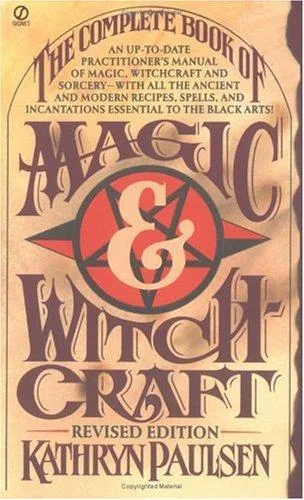

No reflections yet. Be the first.
Share your interpretation, experience, or question.
