Bibliotheca Philosophica Hermetica
A specialized library housing rare manuscripts and printed works on Hermeticism, particularly the Christian-Hermetic tradition. It serves as a research center and a public resource for exploring esoteric philosophical and spiritual texts, fostering a deeper understanding of ancient wisdom.
Where the word comes from
The name "Bibliotheca Philosophica Hermetica" is Latin for "Library of Hermetic Philosophy." It directly references the subject matter of its collection, focusing on texts related to Hermeticism, a philosophical and religious tradition attributed to Hermes Trismegistus. The term itself signifies a repository dedicated to this specific branch of esoteric thought.
In depth
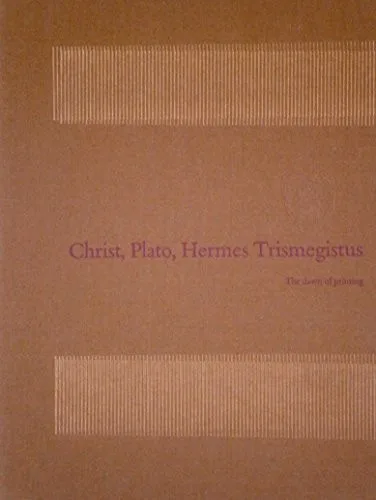
Bibliotheca Philosophica Hermetica (BPH) or The Ritman Library is a Dutch library founded by Joost Ritman located in the Huis met de Hoofden (House with the Heads) at Keizersgracht 123, in the center of Amsterdam. The Bibliotheca Philosophica Hermetica brings together manuscripts and printed works in the field of Hermeticism, more specifically what it likes to call the 'Christian-Hermetic tradition'. The Embassy of the Free Mind is a museum, library, and intellectual platform inspired by the collection.
How different paths see it
What it means today
In an era saturated with fleeting digital ephemera, the existence of institutions like the Bibliotheca Philosophica Hermetica offers a profound counterpoint—a tangible sanctuary for the slow, deliberate engagement with wisdom that has been painstakingly preserved through the ages. Mircea Eliade, in his explorations of the sacred and the profane, understood the power of such repositories, recognizing them as vessels that carry the echoes of forgotten cosmologies and the persistent human yearning for meaning beyond the mundane. The BPH, with its focus on the Christian-Hermetic tradition, highlights a fascinating confluence where ancient philosophical insights, often veiled in allegory and symbolic language, were woven into the fabric of Christian mysticism.
This is not simply about cataloging old books; it is about tending to the roots of Western esoteric thought, a lineage that informed figures from Pico della Mirandola to Giordano Bruno, and which continues to whisper to the modern seeker through the labyrinthine corridors of consciousness. The act of consulting these texts, much like the alchemist's patient distillation or the mystic's contemplative gaze, requires a particular kind of attention—an openness to paradox, a willingness to engage with ideas that challenge conventional rationalism. The library, in this sense, becomes a laboratory for the soul, a place where the scattered fragments of ancient gnosis can be reassembled, offering not ready-made answers, but the fertile ground for one's own profound inquiry into the nature of reality and the self. To explore its collection is to engage in a dialogue with those who sought to understand the divine immanence within the material world, a quest that remains as urgent today as it was in antiquity.
Related esoteric terms
Books on this concept




No reflections yet. Be the first.
Share your interpretation, experience, or question.
