At the Feet of the Master
"At the Feet of the Master" is a spiritual guide for aspirants, outlining the necessary qualities and disciplines for discipleship on the path to enlightenment. It emphasizes self-mastery, detachment, and the development of intuition as prerequisites for receiving wisdom from a spiritual teacher.
Where the word comes from
The phrase itself is descriptive rather than a single etymological root. It signifies a posture of humility and receptivity, mirroring ancient traditions where students physically sat at the feet of their guru to absorb knowledge. The concept of discipleship, from Latin 'discipulus' meaning 'learner', is universal.
In depth
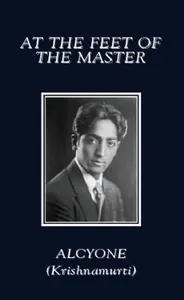
At the Feet of the Master is a book attributed to Jiddu Krishnamurti (1895–1986), authored when he was 14 years old. Written under the name Alcyone, it was first published in 1910. The work was closely related to the World Teacher Project, a contemporary messianic endeavor launched by the Theosophical Society. The book is considered a spiritual classic and was still in print in 2012. By that time it had been published in dozens of editions and had been translated in many languages; by 2004 early...
How different paths see it
What it means today
The evocative phrase "At the Feet of the Master" conjures an image of profound humility and focused attention, a posture that has been central to spiritual pedagogy across millennia. It speaks to a fundamental human yearning for guidance, for a hand to lead us through the labyrinthine pathways of existence towards a perceived light. This isn't simply about intellectual assent to a set of beliefs; it is about a deep, embodied receptivity, a willingness to set aside the clamor of the ego's pronouncements and attune oneself to a subtler, more profound frequency of wisdom.
Mircea Eliade, in his explorations of the sacred and the profane, often highlighted the significance of the master-disciple relationship as a conduit for the transmission of tradition, a living link to ancestral knowledge. The master, in this context, is not merely an instructor but a living embodiment of the teachings, a mirror reflecting the disciple's own potential for realization. The act of sitting at their feet signifies a conscious relinquishing of intellectual arrogance, an embrace of the beginner's mind that is so crucial for genuine insight. It is a recognition that some truths are not arrived at through syllogism or debate, but through a process of inner attunement, much like a musician learns to play by listening intently to a virtuoso.
The Theosophical context from which this particular articulation emerged, while rooted in a specific historical moment, taps into a universal archetype. The emphasis on self-discipline, detachment from worldly desires, and the cultivation of inner virtues—such as discrimination, desirelessness, and right conduct—are not unique to this teaching. They echo the Stoic's discipline of assent, the Buddhist's eightfold path, and the Sufi's arduous journey of spiritual purification. The "Master" becomes the focal point, the anchor that stabilizes the aspirant's often-turbulent inner landscape, providing a clear direction amidst the fog of confusion and illusion. This posture of receptivity is, in essence, an act of faith, a belief in the possibility of transformation and the presence of a wisdom that transcends the limitations of individual experience. It is a call to cultivate the inner space necessary for the seed of wisdom to sprout and flourish.
RELATED_TERMS: Guru, Disciple, Initiation, Sangha, Spiritual Authority, Gnosis, Aspiration, Inner Work
Related esoteric terms
Books on this concept







No reflections yet. Be the first.
Share your interpretation, experience, or question.
