Aslan
Aslan is a fictional character, a majestic lion representing divine authority and sacrifice in C. S. Lewis's Narnia chronicles. He embodies a Christ-like figure, a powerful, benevolent creator and redeemer who guides and protects his world.
Where the word comes from
The name "Aslan" derives from the Turkish word "arslan," meaning "lion." This term has ancient Turkic roots, appearing in various Turkic languages and Old Turkic inscriptions dating back to the 8th century CE. Its adoption by C. S. Lewis directly links the character to the symbolic power of the lion.
In depth
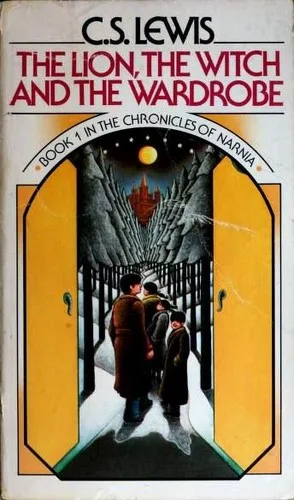
Aslan () is a major character in C. S. Lewis's The Chronicles of Narnia series. Unlike any other character in the Narnian series, Aslan appears in all seven chronicles. Aslan is depicted as a talking lion and is described as the King of Beasts, the son of the Emperor-Over-the-Sea, and the King above all High Kings in Narnia. C. S. Lewis often capitalises the word lion in reference to Aslan since he parallels Jesus as the "Lion of Judah" in Christian theology. The word aslan means "lion" in Turkish.
How different paths see it
What it means today
The figure of Aslan, a creation of C. S. Lewis, resonates deeply with ancient archetypes of the divine king and the sacrificial savior. While explicitly a literary construct, his portrayal taps into a primal human need for a benevolent, powerful force that governs existence with both justice and profound love. Mircea Eliade, in his studies of the sacred, often highlighted the recurring motif of the divine animal, a bridge between the human and the cosmic, embodying primal energies and wisdom. The lion, in particular, has been a symbol of royalty, strength, and solar power across numerous cultures, from ancient Egypt to the heraldry of European monarchies.
Lewis, a scholar of mythology and theology, masterfully synthesizes these threads. Aslan is not merely a character; he is the animating spirit of Narnia, its creator, its judge, and its redeemer. His sacrifice on the Stone Table, a brutal yet ultimately life-giving act, directly echoes the Christian narrative of the Passion and Resurrection, offering a potent, accessible metaphor for spiritual rebirth. This echoes the concept of mysterium tremendum et fascinans, the awe-inspiring and captivating mystery of the divine, as described by Rudolf Otto, which evokes both fear and profound attraction.
The Turkish etymology of "Aslan" adds a layer of subtle universality, drawing from a rich cultural history that itself has absorbed influences from East and West. It suggests that the archetype of the lion-king, the divine protector, is not confined to a single tradition but speaks across linguistic and cultural divides. For the modern seeker, Aslan offers a potent reminder that the quest for meaning often leads us to recognize profound truths in unexpected places, even within the pages of a children's story, urging us to look for the divine not only in ancient texts but in the enduring power of narrative itself.
RELATED_TERMS: Archetype, Divine King, Sacrifice, Redemption, Christ Figure, Logos, Theurgy
Related esoteric terms
Books on this concept







No reflections yet. Be the first.
Share your interpretation, experience, or question.
