Manu
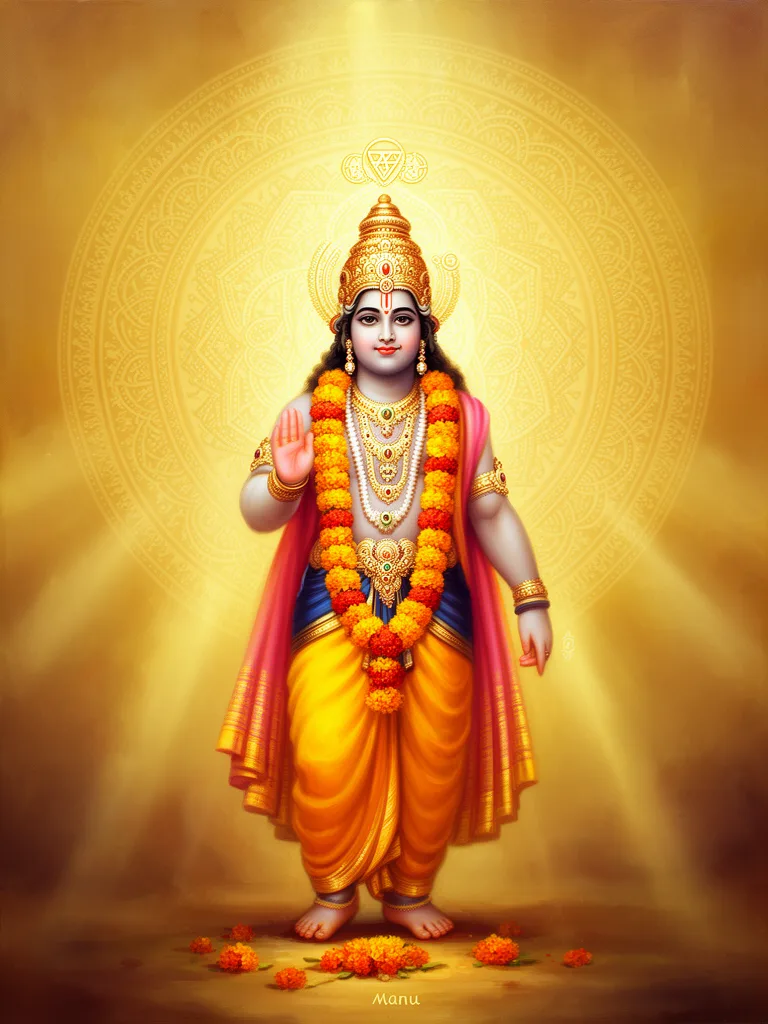
Manu is a primordial progenitor and lawgiver in Hindu cosmology, often identified with the first human and the source of cosmic order. He represents the archetypal man, the thinking principle, and the author of the Dharma Shastras, guiding humanity through cycles of existence.
Where the word comes from
The name "Manu" derives from the Sanskrit root man, meaning "to think" or "to ponder." This etymology links Manu to the intellect and consciousness, suggesting he is the embodiment of the thinking principle that organizes the cosmos and humanity. He is considered the progenitor of mankind, the first of the fourteen Manus who preside over cosmic epochs.
In depth
The great Indian legislator. The name comes from the Sanskrit root man "to think"— mankind really, but stands for Swayambhuva. the first of the :Manus, who started from Swdyamhhu. "the self-existent" hence the Logos, and the progenitor of mankind. Manu is the first Legislator, almost a Divine Being.
How different paths see it
What it means today
The figure of Manu, as presented in Hindu tradition and echoed in the vast lexicon of esoteric thought, offers a profound lens through which to examine the genesis of order, both cosmic and personal. His name, rooted in the Sanskrit verb man, "to think," immediately situates him not as a brute progenitor but as an intellectual and legislative force. This is not a passive creation, but an active, conscious ordering of reality. Mircea Eliade, in his exploration of myth and reality, would likely see Manu as embodying the primordial act of creation as a structured event, a divine thought made manifest.
Blavatsky's identification of Manu with Swayambhuva, the "self-existent," and with the Logos, resonates with the Hermetic principle of "As Above, So Below." The divine thought that initiates the cosmos is mirrored in the human capacity for reason and the establishment of law. This archetypal legislator, then, provides the blueprint for human society and individual conduct, a cosmic blueprint translated into the practicalities of dharma. The Manusmriti, attributed to him, is not merely a legal text but a guide to living in accordance with the cosmic rhythm, a concept that would find parallels in the Taoist notion of the Tao, the natural order of the universe.
For the modern seeker, Manu represents the inherent human drive to find meaning and structure in a seemingly chaotic existence. He is the embodiment of the principle that consciousness precedes and shapes matter, that the intellect is the architect of civilization and morality. Carl Jung's concept of archetypes is particularly relevant here; Manu can be understood as the archetype of the Lawgiver, the wise ancestor, the embodiment of cosmic consciousness that seeks to establish order and purpose. His legacy reminds us that the quest for knowledge and the establishment of ethical frameworks are not merely human inventions but reflections of a deeper, universal principle of intelligent design. To contemplate Manu is to contemplate the origin of law, the nature of consciousness, and the enduring human impulse to create meaning.
Related esoteric terms
Books on this concept






No reflections yet. Be the first.
Share your interpretation, experience, or question.
