100% Free & Public Domain 16,000+ Esoteric Books No Registration Needed
Home Collections Islamic Mysticism
📖

Explore Islamic Mysticism: Free Public Domain Books & Sufi Wisdom

The Esoteric Library invites you to explore the profound and transformative world of Islamic Mysticism. Often synonymous with Sufism, Islamic Mysticism represents the inner, esoteric dimension of Islam, focusing on spiritual purification and the direct, experiential knowledge of God. This rich tradition has inspired countless seekers throughout history, offering paths to divine love, wisdom, and inner peace. Our curated collection brings together a wealth of public domain texts, providing an unparalleled resource for understanding this captivating spiritual journey.

Tracing its origins back to the early days of Islam, Islamic Mysticism developed into a sophisticated system of thought and practice, producing some of the most beautiful poetry, philosophy, and spiritual guidance in human history. Central to this tradition is the concept of 'tariqa,' or spiritual path, guided by masters who lead disciples through various stages of spiritual development. Figures like the revered Jalal al-Din Rumi, Maulana, whose epic 'Mesnevi' is a cornerstone of mystical literature, exemplify the depth and beauty of this spiritual expression. Our library offers foundational works that illuminate the historical evolution and core tenets of Sufism, the most widely recognized form of Islamic Mysticism.

This collection offers a unique window into the rich tapestry of Islamic Mysticism, spanning diverse geographical and philosophical landscapes. From the practical advice found in 'Practical Sufism' by Smirna Si to regional studies like 'Sufi Saints Of Bijapur' by Mohammed Abdul Hafeez and 'Sufism in Central Asia,' readers can gain a comprehensive understanding of how these mystical traditions flourished across the globe. You'll find texts exploring the intricate 'Sufi Doctrine Of Man,' the spiritual dimensions of healing, and even the often-overlooked 'Sufi Political Thought,' demonstrating the pervasive influence of mystical principles on society and individual lives.

For those interested in the scholarly interpretations of this tradition, works by eminent orientalists such as Reynold Alleyne Nicholson, with his classic 'The Mystics of Islam,' provide critical insights. Similarly, 'Mystics and Saints of Islam' by Claud Field offers historical accounts of key figures. Our library also connects Islamic Mysticism to broader spiritual currents, offering related collections on Eastern Mysticism, Christian Mysticism, and Jewish Mysticism, inviting comparative study and a deeper appreciation for universal spiritual truths. The availability of these texts in the public domain ensures that this profound wisdom is accessible to all.

Whether you are an academic, a spiritual seeker, or simply curious about the esoteric heart of Islam, our collection on Islamic Mysticism provides an unparalleled resource. We invite you to explore these timeless works, to discover the teachings of the masters, and to find inspiration in the enduring quest for divine proximity that defines Islamic Mysticism. Begin your journey today and unlock the spiritual treasures within these pages.

Top Islamic Mysticism Books

25 Islamic Mysticism books

Reading Order

Three paths · pick by your level

🌱

Beginner

  1. Sufism. An Introduction Offers a foundational, easy-to-understand overview of Sufi concepts.
  2. Sufism Provides a general introduction to Sufism, its history, and core practices.
  3. The Mystics of Islam A classic scholarly introduction to the history and doctrines of Islamic mystics.
🌿

Intermediate

  1. al-Ghazali as Sufi Examines a pivotal figure's spiritual transformation, bridging theology and mysticism.
  2. Sufi Orders in Islam Details the structure and practices of various Sufi orders, providing deeper context.
  3. The Sufi Doctrine Of Man Explores the philosophical understanding of humanity within Sufi thought.
🌳

Advanced

  1. The Mesnevi A profound poetic masterpiece requiring careful reflection on its allegories.
  2. The Persian Mystics: Jámí Focuses on the intricate works of a specific, highly influential Persian mystic.
  3. Sufism in Central Asia Offers a specialized regional study, delving into unique cultural and historical contexts.

Why Each Book Matters

New_Sufi_Books

New_Sufi_Books

This compilation, 'New_Sufi_Books,' by an unknown author, likely gathers contemporary or recently rediscovered texts pertaining to Sufism. It may include modern interpretations, translations of previously inaccessible works, or a selection of articles exploring current perspectives on Sufi thought and practice. The collection aims to keep the tradition vibrant and relevant, offering fresh insights into the enduring wisdom of Islamic mysticism. Readers interested in the evolving landscape of Sufi scholarship will find this a valuable resource.

Sufi Book

Sufi Book

Titled 'Sufi Book,' this collection offers a compilation of teachings and insights from the Sufi tradition, presented by an unknown author. It likely contains aphorisms, short essays, or excerpts designed to convey core Sufi wisdom and spiritual guidance. The text aims to illuminate the path of inner knowledge and devotion, providing readers with practical reflections on self-awareness and the pursuit of truth. Its anonymous nature suggests a focus on the timelessness of the teachings rather than a specific individual's interpretation.

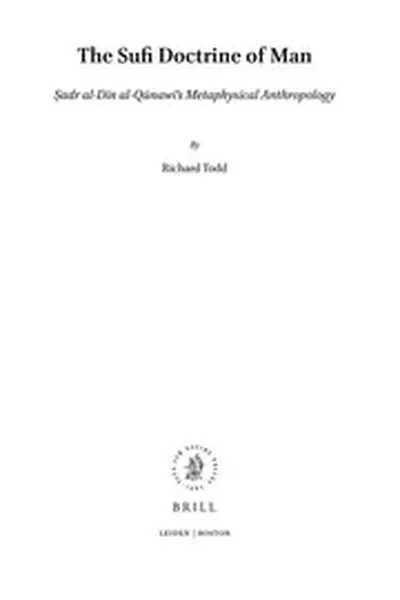
The Sufi Doctrine Of Man

The Sufi Doctrine Of Man

This anonymous text, 'The Sufi Doctrine Of Man,' delves into the intricate Sufi understanding of human nature, purpose, and potential. It explores concepts such as the 'perfect man' (al-insan al-kamil), the journey of self-discovery, and the process of spiritual evolution. The book elucidates how Sufism views humanity as a microcosm of the divine, capable of reflecting God's attributes and achieving profound spiritual realization through purification and devotion, guiding readers towards a deeper understanding of their inner self.

Sufi Political Thought

Sufi Political Thought

This anonymous work, 'Sufi Political Thought,' explores the often-overlooked dimension of how Sufi principles and ethics have influenced political theory and governance within Islamic societies. It examines how concepts like justice, compassion, and spiritual leadership, central to Sufism, were applied to statecraft and community organization. The book may delve into historical examples of Sufi masters advising rulers or leading social movements, demonstrating the practical implications of mystical ideals in the public sphere.

Sufism in the West

Sufism in the West

This anonymous work, 'Sufism in the West,' explores the fascinating phenomenon of Sufism's spread and adaptation beyond its traditional Islamic cultural contexts. It likely discusses how Sufi teachings have resonated with Western seekers, leading to the establishment of various Sufi orders and centers in Europe and the Americas. The book may examine the challenges and opportunities involved in transmitting and practicing Sufism in a different cultural milieu, highlighting its universal appeal and spiritual flexibility.

Sufi Path Of Love

Sufi Path Of Love

Authored anonymously, 'Sufi Path Of Love' explores the central role of divine love (ishq) in the Sufi tradition. This text delves into the concept of love as the driving force behind creation and the primary means for the soul's return to God. It elucidates how devotion, longing, and the purification of the heart lead to an ecstatic union with the Beloved. The book likely draws upon classical Sufi poetry and philosophical insights to articulate the transformative power of love in the mystical journey.

Muslim Saints And Mystics

Muslim Saints And Mystics

This anonymous collection, 'Muslim Saints And Mystics,' compiles biographies, anecdotes, and sayings of various prominent figures in Islamic Mysticism. It provides a rich tapestry of stories detailing the spiritual struggles, wisdom, and miraculous feats attributed to Sufi masters and saints throughout history. The book serves as an inspiring resource, showcasing the diverse personalities and profound spiritual experiences that have shaped the tradition of Islamic mysticism across different eras and regions.

Mystics and Saints of Islam

Mystics and Saints of Islam

by Field, Claud

Authored by Field, Claud, 'Mystics and Saints of Islam' provides a historical account of various Sufi figures and their contributions to Islamic spirituality. This book introduces readers to a range of mystics, detailing their lives, teachings, and the impact they had on their communities and the broader Islamic world. It offers a valuable overview of the human element within Sufism, showcasing the diverse individuals who embodied and propagated the mystical dimensions of Islam throughout its history.

The Mesnevi

The Mesnevi

by Jalal al-Din Rumi, Maulana

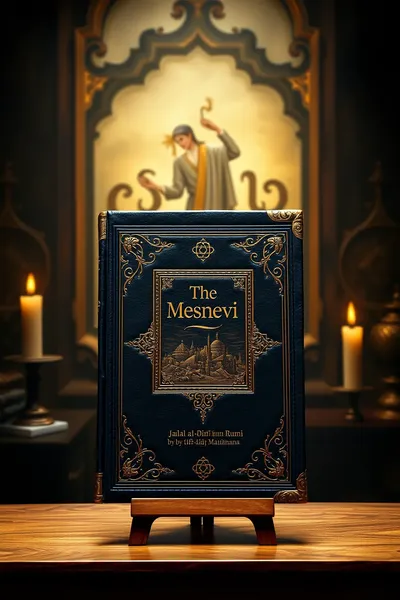
Authored by the revered Jalal al-Din Rumi, Maulana, 'The Mesnevi' (also known as the Masnavi) is an epic spiritual poem comprising six books and over 25,000 couplets. This monumental work is a cornerstone of Sufi literature, offering profound allegories, parables, and discourses on divine love, human longing, and the journey of the soul towards reunion with the Divine. Rumi's lyrical genius and deep mystical insight have made this text a timeless source of inspiration and spiritual reflection for centuries.

The Persian Mystics: Jámí

The Persian Mystics: Jámí

by Jami

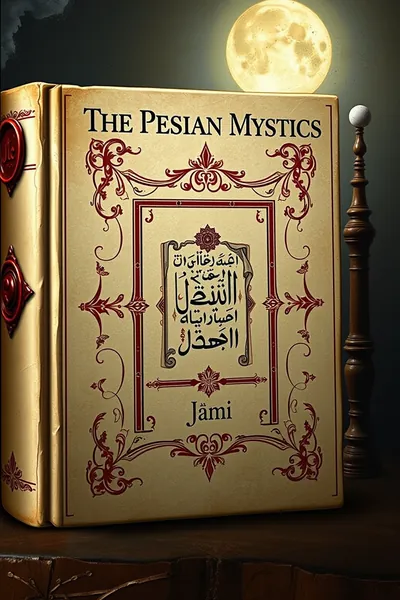
Authored by the esteemed Jami, 'The Persian Mystics: Jámí' offers a dedicated exploration of the life, works, and mystical philosophy of Nur al-Din Abd al-Rahman Jami (1414–1492), one of Persia's greatest Sufi poets and scholars. This book delves into his intricate poetry, prose, and his profound insights into divine love, metaphysics, and the spiritual journey. Jami's work is celebrated for its intellectual depth and lyrical beauty, making him a pivotal figure in Persian mystical literature.

Sufi Saints Of Bijapur

Sufi Saints Of Bijapur

by MOHAMMED ABDUL HAFEEZ

Authored by MOHAMMED ABDUL HAFEEZ, 'Sufi Saints Of Bijapur' offers a regional study of Sufism's impact in the historical city of Bijapur, located in present-day Karnataka, India. This book chronicles the lives, teachings, and miracles attributed to the Sufi saints who resided in the region, highlighting their influence on local culture, spirituality, and social harmony. It provides a fascinating glimpse into the localized expressions of Sufi devotion and community building.

Sufiism-MUSLIM-MYSTICISM

Sufiism-MUSLIM-MYSTICISM

by Muhammad Hassan Ali of Lahore

Titled 'Sufiism-MUSLIM-MYSTICISM,' this work by Muhammad Hassan Ali of Lahore directly asserts and explores Sufism as the core expression of Islamic Mysticism. The author provides an in-depth analysis of Sufi principles, practices, and their theological foundations within Islam. This book serves as a robust defense and explanation of Sufism's authenticity and spiritual significance, aiming to clarify its role as the inner dimension of the faith for a broad audience.

The Mystics of Islam

The Mystics of Islam

by Nicholson, Reynold Alleyne

A seminal work by Reynold Alleyne Nicholson, 'The Mystics of Islam' offers a scholarly yet accessible introduction to Sufism. Nicholson, a renowned orientalist, meticulously traces the historical development of Sufi thought, its core doctrines, and the lives of its major figures from the earliest ascetics to the great poets. This book is invaluable for understanding the intellectual and spiritual foundations of Islamic mysticism, providing a clear overview of its complex philosophical and theological underpinnings.

The mystics of Islam,

The mystics of Islam,

by Nicholson, Reynold Alleyne, 1868-1945

This is another edition of the classic work, 'The mystics of Islam,' by Nicholson, Reynold Alleyne, 1868-1945. As a foundational text, it meticulously explores the historical evolution of Sufi thought, from its ascetic beginnings to its sophisticated philosophical and poetic expressions. Nicholson's work is celebrated for its academic rigor and clarity, making complex mystical concepts understandable to a broad audience, and serves as a critical resource for anyone studying the subject.

Sufi Saints in Karnataka

Sufi Saints in Karnataka

by Smirna Si

Authored by Smirna Si, 'Sufi Saints in Karnataka' offers another regional exploration of Sufism's presence in India, specifically focusing on the state of Karnataka. Similar to the Bijapur study, this book details the lives, teachings, and spiritual contributions of prominent Sufi figures who established their centers in Karnataka. It sheds light on how these saints fostered interfaith harmony, attracted diverse followers, and left a lasting spiritual and cultural legacy in the region.

Sufi Orders in Islam

Sufi Orders in Islam

by Smirna Si

In 'Sufi Orders in Islam,' Smirna Si provides a detailed examination of the various Tariqas, or Sufi brotherhoods, that have shaped Islamic mysticism. The book explores the origins, founders, distinctive rituals, and spiritual practices of prominent orders such as the Qadiriyya, Naqshbandiyya, and Mevlevi. It offers insights into their organizational structures, their roles in society, and how each order guides its disciples on the path towards divine knowledge and spiritual realization.

The Persian Mystics - Rumi

The Persian Mystics - Rumi

by Smirna Si

Authored by Smirna Si, 'The Persian Mystics - Rumi' focuses specifically on the unparalleled contributions of Mevlana Jalal al-Din Rumi to Persian mystical thought and poetry. This book delves into Rumi's life, his transformative encounter with Shams-i Tabrizi, and the profound spiritual philosophy embedded within his 'Divan-i Shams-i Tabrizi' and 'Mesnevi.' It offers insights into his teachings on divine love, spiritual ecstasy, and the path of the whirling dervishes, cementing his legacy as a timeless mystic.

The Whirling Ecstacy

The Whirling Ecstacy

by Smirna Si

Authored by Smirna Si, 'The Whirling Ecstacy' focuses specifically on the Sema ritual of the Mevlevi Order, founded by Rumi. This book delves into the spiritual significance of the whirling dance, explaining its symbolism as a journey towards mystical union with God. It explores the intricate movements, the musical accompaniment, and the profound meditative state achieved by the dervishes, offering readers a window into one of the most iconic and visually striking practices in Sufism.

Elements of Sufi Healing

Elements of Sufi Healing

by Smirna Si

In 'Elements of Sufi Healing,' Smirna Si explores the spiritual and holistic dimensions of healing within the Sufi tradition. This book discusses how Sufism approaches physical, emotional, and spiritual well-being through practices like dhikr (remembrance of God), meditation, and the cultivation of virtues. It highlights the belief that true healing originates from aligning oneself with divine will and purifying the heart, offering insights into traditional Sufi therapeutic methods and their underlying philosophy.

al-Ghazali as Sufi

al-Ghazali as Sufi

by Smirna Si

Authored by Smirna Si, 'al-Ghazali as Sufi' examines the profound spiritual transformation of the influential Islamic scholar Abu Hamid al-Ghazali (1058–1111). This book traces al-Ghazali's intellectual and spiritual crisis, his eventual abandonment of traditional scholasticism, and his embrace of Sufism as the true path to certainty and knowledge. It highlights his critical role in synthesizing orthodox Islamic theology with Sufi mysticism, making the esoteric accessible to the broader Muslim community and firmly establishing Sufism within mainstream Islam.

Sufism. An Introduction

Sufism. An Introduction

by Smirna Si

An accessible entry point, 'Sufism. An Introduction' by Smirna Si provides a clear and concise overview of the Sufi path. This book introduces fundamental Sufi concepts, such as the nature of God, the human soul, divine love, and the various stages of spiritual purification. It aims to demystify Sufism for beginners, offering a foundational understanding of its philosophy, practices, and historical context without overwhelming the reader with overly complex details.

Sufism in Central Asia

Sufism in Central Asia

by Smirna Si

In 'Sufism in Central Asia,' Smirna Si investigates the unique development and profound impact of Sufism within the Central Asian region. This study highlights how Sufi orders played a crucial role in the Islamization of Central Asia, influencing local customs, arts, and political structures. It explores the specific characteristics of Central Asian Sufism, its prominent figures, and its enduring legacy in the cultural and spiritual landscape of countries like Uzbekistan, Tajikistan, and Kazakhstan.

Practical sufism

Practical sufism

by Smirna Si

In 'Practical sufism,' Smirna Si provides a guide to integrating Sufi principles into daily life. This book focuses on the actionable aspects of the Sufi path, offering exercises, meditations, and advice for cultivating spiritual awareness and ethical conduct. It moves beyond theoretical discussions to emphasize the lived experience of Sufism, addressing how seekers can apply mystical teachings to foster inner peace, compassion, and a deeper connection with the divine in their everyday existence.

Sufism

Sufism

by Sufism

This foundational text, simply titled 'Sufism,' serves as an excellent introduction to the mystical dimension of Islam. It provides a comprehensive overview of Sufi principles, historical development, and the spiritual practices central to the path. Readers will find explanations of key concepts such as divine love, asceticism, and the pursuit of inner purification, making it an accessible starting point for understanding this rich tradition. The book also touches upon the various schools of thought within Sufism, offering a broad perspective on its diverse expressions.

Books on Sufism part 3

Books on Sufism part 3

by http://almuada.mam9.com/

Titled 'Books on Sufism part 3,' this work, credited to http://almuada.mam9.com/, is likely a continuation or part of a larger series dedicated to Sufi literature. It probably contains a selection of texts, articles, or excerpts from various authors, contributing to a broader understanding of Sufi teachings and history. As part of a series, it offers additional perspectives and expands upon themes introduced in previous volumes, providing further depth for the dedicated reader.

Glossary

Sufism
The mystical branch of Islam, emphasizing inner spiritual purification and the direct, experiential knowledge of God through love, devotion, and esoteric practices. It is the primary expression of Islamic Mysticism.
Tariqa
A Sufi order or brotherhood, representing a specific spiritual path or methodology for seekers. Each tariqa has its own lineage of masters, rituals, and practices aimed at spiritual development.
Dhikr
A form of devotion in Islam, literally meaning 'remembrance' of God. It involves rhythmic repetition of divine names or phrases, often performed collectively, to achieve spiritual concentration and connection.
Fana
A central concept in Sufism referring to the 'annihilation' of the self or ego, a state of complete absorption in the Divine presence, leading to a profound experience of unity with God.
Maqamat
The 'stations' or stages on the Sufi path, representing different states of spiritual attainment. These include repentance, patience, gratitude, trust in God, and satisfaction, each requiring effort and discipline.

FAQ

What is Islamic Mysticism?

Islamic Mysticism, often called Sufism, is the inner, mystical dimension of Islam, emphasizing spiritual purification and direct experience of God through love and devotion. It is characterized by practices aimed at purifying the heart, cultivating virtues, and attaining a deeper, experiential knowledge of the Divine.

How do I start with Islamic Mysticism?

Begin by exploring introductory texts that provide an overview of Sufi principles and historical context before delving into specific authors. Our collection offers several excellent starting points, such as 'Sufism. An Introduction' or 'The Mystics of Islam,' which provide foundational knowledge.

What's the best book on Islamic Mysticism?

There isn't a single 'best' book, but 'The Mesnevi' by Rumi offers profound poetic insights for those ready for a deeper experience. For a scholarly overview, Reynold Alleyne Nicholson's 'The Mystics of Islam' is highly recommended as a comprehensive introduction.

Is Islamic Mysticism difficult to learn?

While its concepts can be profound, Islamic Mysticism is accessible through patient study and reflection on its core teachings. Many texts, especially introductory ones, simplify complex ideas, making the spiritual journey understandable for dedicated seekers of all backgrounds.

Can I download Islamic Mysticism books for free?

Yes, our Esoteric Library provides a diverse collection of public domain Islamic Mysticism texts available for free download. You can access and read these valuable spiritual resources without any cost, supporting open access to knowledge.

Esoteric Library
Browse Esoteric Library
📚 All 16,000+ Books 🜍 Alchemy & Hermeticism 🔮 Magic & Ritual 🌙 Witchcraft & Paganism Astrology & Cosmology 🃏 Divination & Tarot 📜 Occult Philosophy ✡️ Kabbalah & Jewish Mysticism 🕉️ Mysticism & Contemplation 🕊️ Theosophy & Anthroposophy 🏛️ Freemasonry & Secret Societies 👻 Spiritualism & Afterlife 📖 Sacred Texts & Gnosticism 👁️ Supernatural & Occult Fiction 🧘 Spiritual Development 📚 Esoteric History & Biography
Esoteric Library
📑 Collections 📤 Upload Your Book
Account
🔑 Sign In Create Account
Info
About Esoteric Library