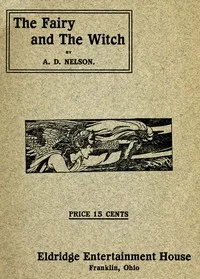
Which Switch is the Switch, Miss, for Ipswich?: From Rosy Rapture
 66
66

Which Switch is the Switch, Miss, for Ipswich?: From Rosy Rapture


Aurelia Blackwood (Occult Philosophy Critic) — This curious volume, "Which Switch is the Switch, Miss, for Ipswich?: From Rosy Rapture," is a delightful and unexpected excavation of occult undercurrents within early 20th-century popular music. The unknown author masterfully weaves a tapestry where the ephemeral strains of bygone melodies become conduits for potent, often overlooked, spiritual energies. It offers profound insights into how folk traditions and nascent occult practices found expression, albeit subtly, in the cultural milieu of the era. For scholars of esotericism and musicology, this book is a treasure trove, revealing hidden symbolic language and the enduring power of ritual embedded in communal experience. Its strength lies in its nuanced exploration of seemingly simple songs as potent vessels of ancient magic.
📝 Description
66
This 1900s manuscript connects early 20th-century popular music with witchcraft and paganism.
This manuscript, appearing around the turn of the 20th century, examines the relationship between popular music of the era and currents of witchcraft and paganism. The unknown author suggests that forgotten incantations are woven into popular songs, and that elemental forces are invoked through simple refrains. It posits a connection to nature that existed beneath the surface of early 20th-century modernity.
The text invites contemplation on the power of collective consciousness, the resonance of shared experience, and the echoes of ancient rites in everyday life. It is aimed at readers interested in esoteric subjects, hidden traditions, and the connection between music and subtle energies.
The work emerges from a period of significant interest in occultism and esoteric thought in the West, a time when figures like Aleister Crowley and movements like Theosophy were gaining traction. It appears to position itself within traditions that sought to uncover hidden spiritual currents in everyday life, suggesting that even popular culture could carry ancient magical resonances. The focus on music as a conduit for such energies aligns with broader esoteric ideas about vibration, sound, and their effects on consciousness and the material world.
💡 Why Read This Book?
Uncover the hidden magical resonance within early 20th-century popular music. This book is for seekers of esoteric connections, scholars of forgotten traditions, and practitioners interested in the intersection of art and occultism. Discover how ancient symbols and energies manifested in the cultural landscape, offering a unique perspective on the enduring power of the mystical.
⭐ Reader Reviews
Honest opinions from readers who have explored this book.
❓ Frequently Asked Questions
What is the primary focus of this book?
The primary focus is the exploration of hidden witchcraft and pagan symbolism within popular music from the 1911-1920 era, revealing esoteric connections.
Who is the author of this work?
The author is currently unknown, adding to the mystique and enigmatic nature of this rare manuscript.
What makes this book unique within the Esoteric Library?
Its unique position lies in its specific focus on the esoteric dimensions of early 20th-century popular music, a subject rarely explored in occult literature.
Is this book suitable for beginners in occult studies?
Yes, it can be suitable for beginners with an interest in music and symbolism, offering an accessible yet profound entry point into esoteric concepts.
What kind of knowledge can one expect to gain from reading this book?
Readers can expect to gain insights into the symbolic language of music, the enduring presence of pagan themes, and the subtle manifestations of occult practices in popular culture.
🔮 Key Themes & Symbolism
The Resonant Power of Music
This theme explores the profound, often overlooked, capacity of music to act as a vessel for spiritual and energetic currents. It posits that melodies, harmonies, and rhythms are not merely auditory experiences but potent tools for invocation, transformation, and connection to deeper realities. The text suggests that popular music of the era, even in its seemingly innocent form, carried elements of ancient sonic magic, capable of influencing collective consciousness and subtly manipulating the subtle energies of existence. It’s about understanding music as a living, breathing force imbued with intention and the potential for ritualistic application.
Symbolism in the Ephemeral
This theme studies the hidden symbolic language woven into the fabric of popular songs from the early 20th century. It argues that seemingly simple lyrics and musical structures often concealed deeper meanings, correspondences, and even veiled instructions related to witchcraft and pagan practices. The 'switch' in the title can be interpreted as a metaphor for these hidden transitions, the subtle shifts in perception that reveal the esoteric beneath the exoteric. It encourages readers to look beyond the surface, to decipher the archetypal patterns and ancient wisdom embedded within the ephemeral art form.
Elements of Ancient Rites
This theme investigates how the primal energies and rituals of ancient pagan traditions continued to resonate and manifest within the burgeoning modern world, specifically through popular music. It suggests that the communal experience of listening to and singing songs provided a modern-day parallel to ancient ceremonies, fostering a sense of shared spiritual connection and tapping into collective archetypes. The text hints at how the themes of nature, fertility, and the cyclical patterns of life, central to paganism, found subtle but persistent expression in the cultural output of the era, particularly within the songs that captured the public imagination.
💬 Memorable Quotes
Direct passages from the work, attributed to the author.
“Each note a whispered invocation.”
— This implies that musical notes, beyond their aesthetic appeal, can carry intentionality and function as subtle forms of magical incantation, influencing the spiritual realm.
“Melody’s thread, tying unseen forces.”
— This metaphor suggests that the flow of a melody possesses the power to connect and manipulate the invisible energies that govern our reality.
“The chorus, a circle of souls.”
— This points to the communal aspect of music, framing shared singing as a modern ritual that binds individuals together in a shared spiritual experience.
💡 Key Ideas
Editorial paraphrase of the work's core concepts — not direct quotes.
The rhythm beats the ancient drum of the earth.
This quote highlights the primal connection between music's cadence and the fundamental pulse of nature, suggesting a deep, almost subconscious, resonance with the earth's energies.
Ipswich’s switch, the turning of perception.
This quote suggests that the 'switch' to Ipswich represents a shift in consciousness, a moment of revelation where hidden esoteric truths become visible.
🌙 Esoteric Significance
Tradition
This work draws implicitly from a broad spectrum of Western esoteric traditions, including folk magic, neopaganism, and possibly elements of ceremonial magic. It reflects a period where occult knowledge was often disseminated through less formal channels, permeating everyday life and cultural expressions like popular music. The emphasis on natural rhythms, elemental forces, and the power of collective consciousness aligns with ancient pagan practices and the Hermetic principle of 'As Above, So Below,' suggesting that the mundane world holds keys to understanding the spiritual.
Symbolism
Key symbols likely revolve around the transformative power of sound and rhythm, the cyclical nature of life and seasons (often implicit in folk melodies), and the idea of hidden knowledge accessible through altered states of perception. The 'switch' itself serves as a potent symbol of transition, revelation, and the ability to shift between ordinary reality and a more mystical understanding. The location 'Ipswich' might carry its own regional or historical symbolic weight, acting as a focal point for this esoteric awakening or a coded reference within the text.
Modern Relevance
In an age saturated with digital noise and superficial distractions, "Which Switch is the Switch, Miss, for Ipswich?" offers a profound reminder of the enduring power of sound and intention. It encourages us to re-examine our relationship with music, to listen for the deeper currents beneath the surface, and to recognize the potential for magic in everyday cultural expressions. The book's exploration of collective consciousness and shared experience is highly relevant in our interconnected world, urging us to consider the spiritual impact of what we create and consume collectively.
👥 Who Should Read This Book
This book is a treasure for the discerning reader. **Beginners** with an interest in the occult and music will find an accessible yet profound entry point into esoteric concepts. **Scholars** of cultural history, musicology, and comparative religion will discover a unique and under-explored area of study. **Seekers** of hidden knowledge and spiritual connections will be drawn to its exploration of subtle energies and ancient wisdom. **Practitioners** of witchcraft and paganism may find inspiration in its unique perspective on the ritualistic potential of music and everyday cultural phenomena.
📜 Historical Context
The period of 1911-1920 was a fascinating crucible of change, marked by the lingering Victorian era's formality juxtaposed with the burgeoning spirit of modernity and artistic innovation. It was a time of significant societal shifts, technological advancements, and the rise of mass media, including the increasing popularity of recorded music and radio. Simultaneously, this era witnessed a quiet resurgence of interest in occultism and spiritualism, as many sought deeper meaning and connection amidst rapid industrialization and the looming shadow of World War I. This cultural milieu provided fertile ground for the subtle integration of esoteric themes into popular culture, where traditional folklore, pagan echoes, and nascent occult philosophies could find expression in ways that were both accessible and intriguing to the general public.
📔 Journal Prompts
Reflect on a song that has always evoked a strong, almost mystical feeling in you. What elements of its melody, lyrics, or rhythm might be contributing to this effect?
Consider the concept of a 'switch' in your own life – a moment or realization that fundamentally changed your perception of reality. How did this shift occur?
Explore the idea of 'hidden knowledge' in contemporary popular culture. Where do you suspect esoteric themes or energies might be subtly embedded?
Imagine you are an occultist from the early 20th century. How might you have encoded spiritual messages within the popular songs of your time?
What personal rituals or practices do you engage in that involve music? How do these activities connect you to deeper energies or states of being?
🗂️ Glossary
Esoteric
Relating to or accessible only by a select group of people initiated into special knowledge or mysteries. Often pertains to hidden meanings and inner spiritual truths.
Paganism
A broad term encompassing indigenous, pre-Christian religions, often characterized by polytheism, nature worship, and cyclical views of time and life.
Witchcraft
A broad term referring to the practice of magic, especially folk magic, often associated with nature-based spiritual traditions and a connection to the earth.
Symbolism
The use of symbols to represent ideas and qualities, imparting spiritual, mystical, or abstract meanings beyond their literal interpretation.
Invocation
The act of calling upon a divine power, spirit, or deity for assistance, protection, or inspiration, often through prayer, ritual, or song.
This book appears in 2 collections
🔮 Readers Also Liked
Browse all →





From the “Witchcraft” Collection
View all →



More Free Witchcraft & Paganism Books
View all →