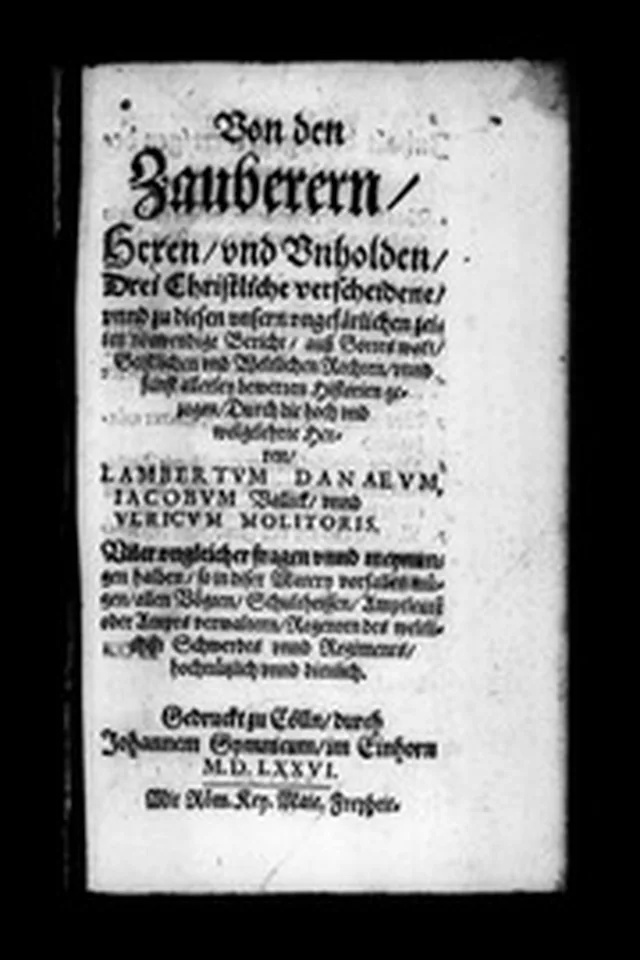
Von den Zauberern, Hexen, vnd Vnholden, drei christliche verscheidene, ... 1576: Iss 244
 80
80

Von den Zauberern, Hexen, vnd Vnholden, drei christliche verscheidene, ... 1576: Iss 244


Ophelia Vance (Mystical Literature Reviewer) — Lambert Daneau's 'Von den Zauberern, Hexen, vnd Vnholden' is a cornerstone text for understanding the historical discourse on witchcraft. Far from a mere condemnation, Daneau provides an intricate dissection of the perceived mechanisms of magic and demonic pacts, offering invaluable insights into the theological framework of the late Renaissance. His work reveals the symbolic lexicon and fear-driven narratives that shaped early modern perceptions of the occult. This edition is a crucial resource for scholars and practitioners alike, offering a window into the intellectual currents that defined the era's approach to the supernatural. Its strength lies in its comprehensive, albeit biased, documentation of beliefs.
📝 Description
80
Lambert Daneau published 'Von den Zauberern, Hexen, vnd Vnholden' in 1576, a study of witchcraft and demonic activity.
Lambert Daneau's 1576 work, 'Von den Zauberern, Hexen, vnd Vnholden', examines the beliefs and societal fears surrounding sorcery, witchcraft, and demonic influence in the 16th century. Daneau, a theologian, addresses the theological justifications and popular anxieties of his time concerning these perceived forbidden arts. The book systematically lists and describes various beliefs and practices associated with what was then considered 'unholy.' It details the perceived supernatural world of the era, moving beyond simple condemnation to a catalog of what constituted witchcraft and its associated phenomena.
This text offers a historical perspective on the roots of Western occultism and the relationship between religious belief, societal fear, and the perceived forces governing human existence. It reflects a period when the boundary between the physical and supernatural was considered fragile. The work reveals symbolic language and deep-seated archetypes present in the era's understanding of the occult, which continue to inform mystical traditions. It is valuable for understanding the historical development of witchcraft lore and its lasting effect.
Published in 1576, Lambert Daneau's work situates itself within the Christian theological discourse of the late Renaissance concerning the supernatural. It engages with demonology and the perceived realities of witchcraft, reflecting a worldview where spiritual forces were actively understood to influence the material world. This book is part of a broader tradition of demonological literature that sought to categorize, condemn, and explain perceived malevolent spiritual activity, influencing both popular belief and learned discourse on magic and occult phenomena during its time.
💡 Why Read This Book?
Uncover the historical roots of Western witchcraft beliefs and the theological anxieties of the Renaissance. This text offers a detailed, albeit biased, glimpse into the perceived supernatural world, revealing the symbolic language and societal fears that shaped early occultism. Essential for scholars, practitioners, and seekers of hidden knowledge interested in the genesis of magical discourse.
⭐ Reader Reviews
Honest opinions from readers who have explored this book.
❓ Frequently Asked Questions
What is the primary focus of this book?
The book primarily focuses on the author's theological perspective on sorcery, witchcraft, and demonic entities, detailing perceived practices and beliefs of the time.
Who was Lambert Daneau?
Lambert Daneau (c. 1530-1595) was a French theologian and jurist, known for his contributions to Calvinist theology and his writings on legal and religious matters, including this treatise on witchcraft.
What is the historical context of this publication?
Published in 1576, the book reflects the intense religious and social anxieties of the late Renaissance, a period marked by widespread witch hunts and theological debates surrounding the supernatural.
Is this book a guide to practicing witchcraft?
No, this book is a theological and polemical work intended to condemn and explain witchcraft from a Christian perspective, not to instruct practitioners.
What does 'Vnholden' refer to?
'Vnholden' is an archaic German term that can be translated as 'evil spirits,' 'demons,' or 'unholy beings,' referring to supernatural entities believed to be associated with witchcraft.
🔮 Key Themes & Symbolism
Theological Framework of Witchcraft
Daneau meticulously frames witchcraft within a strict Christian theological context, dissecting its perceived origins in demonic pacts and divine permission. He explores how these perceived transgressions against God were understood and categorized, providing a framework for identifying and combating perceived practitioners of dark arts. The text reveals a profound concern with maintaining doctrinal purity and warding off perceived spiritual corruption, highlighting the era's emphasis on theological vigilance against perceived supernatural threats.
Symbolism of the Demonic
The work examines the symbolic representations of demonic entities and their influence. Daneau describes the perceived attributes, forms, and methods by which these malevolent forces allegedly operated, often through intermediaries like witches. This exploration of demonic symbolism provides insight into the collective unconscious of the period, revealing the archetypal fears and anxieties projected onto these perceived agents of evil. Understanding this symbolism is key to deciphering the era's understanding of the sacred and profane.
Societal Fear and Persecution
This treatise serves as a potent historical document reflecting the pervasive fear of witchcraft that gripped European society in the 16th century. Daneau's writing, while intended as a theological exposition, inadvertently illuminates the societal anxieties, moral panics, and the subsequent persecution that arose from these beliefs. It offers a critical lens through which to examine how fear, coupled with religious dogma, could lead to the stigmatization and persecution of individuals and communities, making it a vital text for understanding historical witch trials.
💬 Memorable Quotes
Direct passages from the work, attributed to the author.
“Whence comes the power to conjure and to curse?”
— This rhetorical question probes the perceived source of magical abilities, pointing towards a belief in supernatural or infernal origins for such powers.
“The shadow of unholiness falls upon the land.”
— This evocative phrase signifies a widespread sense of spiritual malaise or corruption, implying that the presence of witchcraft and demonic forces has a tangible, negative impact on society.
“Wisdom sought from forbidden wells runs bitter.”
— This metaphor warns against seeking knowledge from illicit or occult sources, suggesting that such pursuits lead to negative and undesirable consequences.
“The innocent may bear the mark of the accused.”
— This poignant statement reflects the tragic reality of witch hunts, where the innocent could be falsely accused and condemned due to fear and misjudgment.
💡 Key Ideas
Editorial paraphrase of the work's core concepts — not direct quotes.
The devil's snares are subtle, his whispers insidious.
This quote highlights the perceived cunning and deceptive nature of demonic influence, suggesting that evil operates through insidious means, preying on human weakness.
🌙 Esoteric Significance
Tradition
This work is situated within the broader tradition of Christian demonology and theological discourse surrounding the occult. While not a grimoire or a guide to esoteric practices, its detailed cataloging of perceived demonic influence, witchcraft, and sorcery provides a crucial historical lens into the beliefs that underpinned many early modern European occult traditions. It reveals the fear-based cosmology that often interacted with nascent forms of folk magic and learned magic.
Symbolism
The symbolism in Daneau's text revolves around the binary of divine order versus demonic chaos. 'Vnholden' (unholy beings) represent corruption, subversion of natural law, and the antithesis of Christian virtue. Witchcraft is depicted as a perversion of God's gifts, often involving pacts with infernal powers symbolized by dark rituals, familiars (demonic spirits in animal form), and the inversion of sacred rites. The 'shadow' and 'snares' are potent symbols of unseen, insidious evil.
Modern Relevance
For modern esotericists, this text offers invaluable insight into the historical roots of Western witchcraft narratives and the psychological underpinnings of fear and belief. Understanding these historical constructs helps to contextualize contemporary occult practices, deconstruct ingrained archetypes of the 'witch,' and appreciate the evolution of magical and spiritual thought. It provides a critical counterpoint for those exploring modern paganism and witchcraft, highlighting the historical baggage and evolving interpretations of these ancient arts.
👥 Who Should Read This Book
Scholars of religious history, theology, and the occult will find this a foundational text for understanding Renaissance demonology. Practitioners of witchcraft and paganism seeking to understand the historical context and societal anxieties surrounding their traditions will find it informative. Seekers of esoteric knowledge interested in the evolution of belief systems and the historical perception of the supernatural will gain a deep appreciation for the era's worldview. Beginners in occult studies can use this to grasp the historical fears and theological frameworks that influenced early modern magical practices.
📜 Historical Context
Published in 1576, 'Von den Zauberern, Hexen, vnd Vnholden' emerges from a period of intense religious upheaval and societal anxiety across Europe. The Reformation had fractured Christendom, leading to fervent theological debates and a heightened awareness of perceived spiritual warfare. This era witnessed a surge in witch hunts, fueled by a combination of religious dogma, folk beliefs, and social tensions. Theological treatises like Daneau's played a significant role in shaping public opinion and providing justifications for the persecution of those accused of witchcraft. The intellectual climate was one where the supernatural was not merely a matter of faith but a tangible force believed to actively interfere in human affairs, making such detailed explorations of its perceived workings both necessary and terrifying.
📔 Journal Prompts
How does Daneau's portrayal of 'Vnholden' reflect common fears of the unknown in the 16th century?
What are the most striking symbolic representations of demonic influence in this text, and how do they compare to modern depictions?
Consider the societal anxieties that might have contributed to the widespread belief in witchcraft during this period.
If Daneau were alive today, how might his theological framework interpret modern phenomena or belief systems?
Analyze the power dynamics inherent in Daneau's condemnation of witchcraft and its potential impact on accused individuals.
🗂️ Glossary
Zauberer
German for 'sorcerer' or 'magician,' referring to individuals believed to possess supernatural powers, often through illicit means.
Hexen
German for 'witches,' typically referring to individuals, often women, accused of making pacts with the devil and practicing malevolent magic.
Vnholden
An archaic German term referring to 'unholy beings,' 'evil spirits,' or 'demons' believed to be associated with witchcraft and demonic influence.
Theological Discourse
The systematic and reasoned discussion or writing about the nature of God, religious beliefs, and practices, often within a specific doctrinal framework.
Demonology
The study of demons or beliefs about demons. In historical contexts, it often refers to theological or philosophical treatises that categorize and describe these supernatural entities.
This book appears in 2 collections
🔮 Readers Also Liked
Browse all →





More by DANEAU, Lambert, ca. 1530-1595.
All books →
From the “Witchcraft” Collection
View all →





![The old colony town [Plymouth, Mass.], and other sketches. 1893: Iss 118](/img/thumb/the-old-colony-town-plymouth-mass-and-other-sketches-1893-iss-118-bliss-william-root-1825-1906.webp)
More Free Witchcraft & Paganism Books
View all →