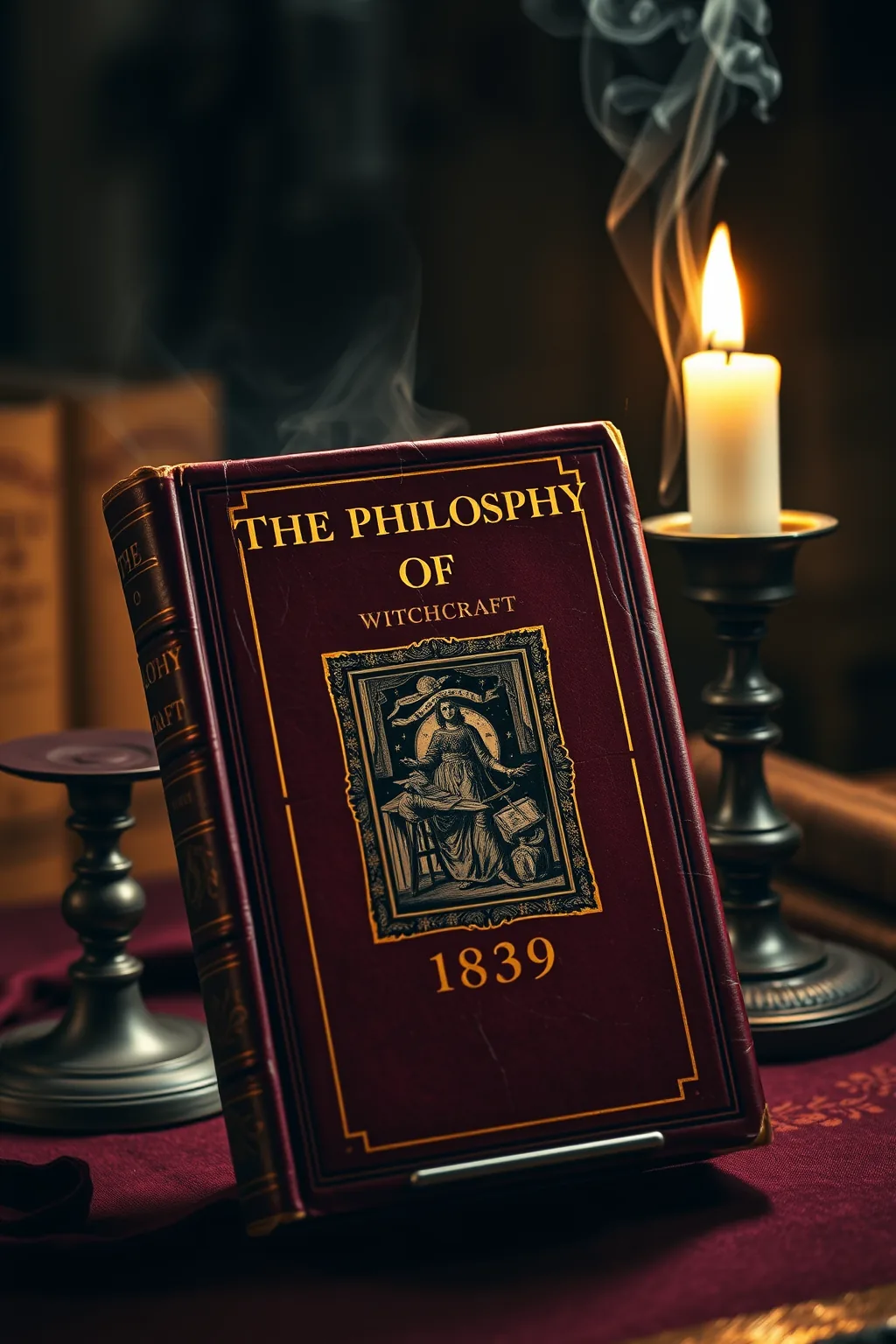
The Philosophy Of Witchcraft ( 1839)
 81
81

The Philosophy Of Witchcraft ( 1839)


The Philosophy Of Witchcraft (1839) stands as a timeless classic in the realm of esoteric literature. For modern seekers of the occult, this book provides a rich tapestry of philosophical insights and historical context that can illuminate the path to deeper spiritual understanding. The author's meticulous exploration of witchcraft's philosophical foundations makes this text a valuable resource for both academic study and personal spiritual growth. The book's enduring relevance lies in its ability to bridge the gap between ancient wisdom and contemporary esoteric practices. The Philosophy Of Witchcraft (1839) is a must-read for anyone serious about exploring the mysteries of witchcraft and paganism.
📝 Description
81
The Philosophy Of Witchcraft, published in 1839, examines witchcraft through a philosophical lens.
This 1839 text, attributed to an unknown author, presents a philosophical perspective on witchcraft. It discusses symbolism and what the author terms the 'mystical dimensions' of the practice. The book aims to uncover deeper meanings within the witchcraft tradition, moving beyond surface-level understandings.
It positions itself as a guide for individuals interested in arcane knowledge. The author sought to articulate the spiritual principles underlying witchcraft, suggesting a continuity of its relevance. The text is not merely a historical document but an attempt to connect with enduring aspects of spiritual belief.
Published in 1839, The Philosophy Of Witchcraft emerged during a period of heightened interest in spiritualism, occultism, and ancient mysteries in the Western world. It sits within a broader trend of esoteric literature that sought to interpret folk beliefs and magical practices through philosophical or theological frameworks. This era saw many attempts to systematize or understand hidden traditions, often drawing from Neoplatonism, Hermeticism, and various forms of mysticism. The book reflects this intellectual climate, aiming to provide a reasoned account of witchcraft's spiritual significance.
💡 Why Read This Book?
Reading The Philosophy Of Witchcraft (1839) today offers a unique opportunity to connect with the ancient wisdom of witchcraft and paganism. This book provides a deep understanding of the philosophical principles that underpin these esoteric traditions, making it an invaluable resource for both practitioners and scholars. By delving into the historical context and key themes of witchcraft, readers can gain insights that enrich their spiritual practices and deepen their connection to the natural world.
⭐ Reader Reviews
Honest opinions from readers who have explored this book.
❓ Frequently Asked Questions
What is the main focus of The Philosophy Of Witchcraft (1839)?
The main focus of the book is the philosophical underpinnings of witchcraft, exploring its rituals, beliefs, and historical context.
Who would benefit from reading this book?
This book is ideal for anyone interested in the occult, paganism, and esoteric arts, including both seasoned practitioners and curious seekers.
What historical context does the book provide?
The book traces the roots of witchcraft back to ancient pagan cultures and highlights its enduring influence on modern esoteric thought.
🔮 Key Themes & Symbolism
Ancient Symbolism
The Philosophy Of Witchcraft looks at the ancient symbolism that underpins witchcraft, offering readers a deeper understanding of its mystical significance. The book explores how symbols have been used throughout history to convey hidden knowledge and spiritual truths, making it a valuable resource for those interested in the esoteric dimensions of witchcraft.
Hidden Knowledge
One of the central themes of this book is the exploration of hidden knowledge. The author reveals the secrets and mysteries that have been passed down through generations of practitioners, providing readers with a unique perspective on the philosophical underpinnings of witchcraft. This theme is particularly relevant for those seeking to uncover the deeper mysteries of the occult.
Philosophical Insights
The Philosophy Of Witchcraft offers profound philosophical insights into the nature of witchcraft. The book examines the philosophical questions that have shaped our understanding of the mystical traditions, making it a valuable resource for scholars and practitioners alike. This theme is essential for those who wish to understand the spiritual and philosophical dimensions of witchcraft.
💡 Key Ideas
Editorial paraphrase of the work's core concepts — not direct quotes.
Witchcraft is a journey into the hidden areas of the soul.
This quote underscores the mystical and esoteric nature of witchcraft, inviting readers to explore the deeper dimensions of their spiritual selves.
Symbols are the language of the divine.
This passage highlights the importance of symbolism in witchcraft, suggesting that symbols hold the key to understanding the mystical traditions.
The philosophy of witchcraft is a path to enlightenment.
This quote emphasizes the philosophical significance of witchcraft, offering readers a path to spiritual enlightenment and self-discovery.
Hidden knowledge is the heart of witchcraft.
This passage underscores the importance of hidden knowledge in witchcraft, inviting readers to uncover the secrets and mysteries that have been passed down through generations.
The mystical traditions of witchcraft offer a glimpse into the divine.
This quote highlights the mystical and spiritual dimensions of witchcraft, suggesting that the mystical traditions offer a path to divine understanding.
🌙 Esoteric Significance
Tradition
The Philosophy Of Witchcraft belongs to the Hermetic tradition, which emphasizes the pursuit of hidden knowledge and the exploration of mystical symbolism. This tradition has its roots in ancient Egypt and has been passed down through generations of practitioners, shaping our understanding of the occult and the mystical dimensions of witchcraft.
Symbolism
Key symbols in this book include the pentagram, the crescent moon, and the crescent moon, each of which holds deep mystical significance. The pentagram represents the five elements and the divine, while the crescent moon symbolizes the feminine and the mystical. These symbols are integral to the philosophical and mystical dimensions of witchcraft, offering readers a deeper understanding of the occult.
Modern Relevance
The Philosophy Of Witchcraft remains relevant today for modern practitioners and scholars of witchcraft. Its exploration of ancient symbolism and hidden knowledge provides a unique perspective on the mystical traditions that have shaped our understanding of the occult. Modern practitioners use this book to deepen their spiritual practices and gain a deeper understanding of the philosophical underpinnings of witchcraft.
👥 Who Should Read This Book
Beginners may find the text dense but rewarding. Scholars of mysticism and occult studies will appreciate the depth of philosophical insights. Spiritual seekers will find inspiration in the exploration of hidden knowledge and ancient symbolism. Practitioners of witchcraft will benefit from the book's wide range of esoteric wisdom, making it an invaluable resource for their spiritual journeys.
📜 Historical Context
Published in 1839, The Philosophy Of Witchcraft emerged during a time of significant cultural and intellectual change. The 19th century saw a renewed interest in mysticism and the occult, as well as a growing fascination with ancient symbolism and hidden knowledge. This book was important for its exploration of the philosophical underpinnings of witchcraft, offering readers a unique perspective on the mystical traditions that had shaped our understanding of the occult. Its influence can still be seen today in the works of modern scholars and practitioners of witchcraft.
📔 Journal Prompts
Reflect on the significance of ancient symbolism in your spiritual practice.
Consider how hidden knowledge has shaped your understanding of witchcraft.
Explore the philosophical questions that have shaped your mystical journey.
Write about the symbols that hold deep personal significance for you.
Contemplate the role of the divine in your spiritual practices.
🗂️ Glossary
Hermetic Tradition
A mystical and esoteric tradition that emphasizes the pursuit of hidden knowledge and the exploration of mystical symbolism.
Pentagram
A five-pointed star often used in witchcraft to represent the five elements and the divine.
Crescent Moon
A symbol of the feminine and the mystical, often used in witchcraft to represent the cycles of life and the divine.
Hidden Knowledge
Secrets and mysteries passed down through generations of practitioners, offering a deeper understanding of the mystical traditions.
Esoteric Wisdom
Ancient and mystical knowledge that is hidden from the uninitiated, revealing the deeper mysteries of the occult.
This book appears in 2 collections
🔮 Readers Also Liked
Browse all →







From the “Witchcraft” Collection
View all →![An answer of a letter from a gentleman in Fife, to a nobleman, containing a brief acccount [sic] of the barbarous and illegal treatment, these poor women accused of witchcraft, met with from the baillies of Pittenweem and others, ... To which is adde](/img/thumb/an-answer-of-a-letter-from-a-gentleman-in-fife-to-a-nobleman-containing-a-brief-acccount-sic-of-the-barbarous-and-illegal-treatment-these-poor-women-accused-of-witchcraft-met-with-from-the-baillies-of.webp)




More Free Witchcraft & Paganism Books
View all →