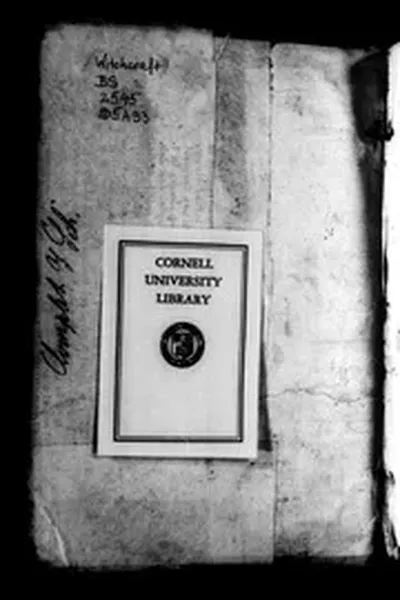
The last great assize: or grand jubilee. In which we shall be freed from all our miseries, ... To which is added, two sermons upon the first of the Canticles, ... By Sympson Smith, ... 1737
 79
79

The last great assize: or grand jubilee. In which we shall be freed from all our miseries, ... To which is added, two sermons upon the first of the Canticles, ... By Sympson Smith, ... 1737



Lorelei Sage (Contemplative Literature Editor) — Sympson Smith's 'The Last Great Assize' is a luminous beacon for those navigating the labyrinth of spiritual evolution. This 1737 publication offers not merely theological exposition, but a profound esoteric meditation on ultimate release and divine reunion. The sermons on the Canticles are particularly potent, revealing layers of mystical interpretation often obscured by literal readings. Smith's prose, imbued with the fervor of his era, invites readers to engage with concepts of spiritual jubilee and transcendence. It is a work that rewards patient contemplation, speaking directly to the seeker yearning for a deeper understanding of their cosmic inheritance. An essential addition for any serious student of theological esotericism.
📝 Description
79
Samuel Smith's 1737 work, 'The Last Great Assize; or Grand Jubilee,' envisions a final judgment as a spiritual emancipation.
Published in 1737, Samuel Smith's 'The Last Great Assize; or Grand Jubilee' presents a unique perspective on eschatology. Smith frames the concept of a final judgment not as a moment of retribution, but as a grand jubilee, a liberation from all earthly miseries. This interpretation suggests a spiritual emancipation for souls, moving beyond conventional understandings of divine reckoning. The volume also includes two sermons that interpret passages from the Song of Solomon. These sermons explore veiled allegories related to divine love and spiritual union, aiming to illuminate the path of the awakened spirit.
Smith's work appeals to those interested in scriptural interpretation and hidden meanings. It addresses concepts of celestial realms and the ultimate destination of consciousness, suggesting a profound sense of hope for universal peace and homecoming. The text invites contemplation on existence beyond material limitations, offering a vision of absolute tranquility.
This 1737 text emerges from a period where religious and esoteric thought often intertwined. Smith's reframing of the Last Judgment as a 'Grand Jubilee' aligns with certain mystical traditions that emphasize universal salvation and spiritual reunion over punitive measures. The use of allegorical interpretation, particularly drawing from the Song of Solomon, is a common practice in esoteric exegesis, seeking deeper spiritual meanings within sacred texts. Such approaches often aim to reveal hidden divine principles and guide the reader toward inner transformation and connection with the divine.
💡 Why Read This Book?
Unveil the esoteric promise of ultimate liberation from suffering. Decipher hidden spiritual allegories within the Song of Solomon. This book is ideal for seekers of divine truth, scholars of religious history, and practitioners exploring themes of spiritual redemption and the grand cosmic cycle. Experience a profound journey towards spiritual emancipation and inner peace.
⭐ Reader Reviews
Honest opinions from readers who have explored this book.
❓ Frequently Asked Questions
What is the central theme of 'The Last Great Assize'?
The central theme is the promise of ultimate liberation from all miseries through a spiritual 'grand jubilee,' symbolizing a profound epochal release and spiritual emancipation for all souls.
What is the significance of the sermons on the Canticles?
The sermons on the Song of Solomon are crucial for unlocking esoteric and allegorical interpretations of divine love, spiritual union, and the ecstatic journey of the soul towards union with the divine.
Who is the intended audience for this book?
The book is intended for individuals seeking profound spiritual knowledge, those interested in theological esotericism, scholars of religious literature, and seekers of ultimate truth and liberation.
What historical period does this book reflect?
Published in 1737, the book reflects the intellectual and spiritual currents of the early Georgian era, a time of significant theological discourse and burgeoning interest in mystical interpretations of scripture.
Is this book readily available for study?
Yes, this digitized volume from the Esoteric Library offers a valuable opportunity to study this significant text, making it accessible for contemporary readers and researchers interested in its unique insights.
🔮 Key Themes & Symbolism
The Grand Jubilee of Souls
This theme explores the profound concept of an ultimate, universal liberation from earthly suffering and spiritual bondage. It posits a transformative epoch, a 'grand jubilee,' where souls are freed from the cycle of misery, ushering in an era of ultimate peace and spiritual fulfillment. This is not merely a theological pronouncement but an esoteric promise of cosmic redemption, inviting contemplation on the nature of consciousness and its eventual homecoming. It speaks to a universal yearning for release and the divine blueprint for spiritual ascension, a concept that resonates across various mystical traditions seeking an end to worldly travail.
Allegorical Interpretations of the Canticles
Smith meticulously unpacks the Song of Solomon, revealing its profound esoteric dimensions. Beyond its literal narrative, the Canticles become a body of allegory, symbolizing the ecstatic union between the divine and the human soul. These sermons offer a guide to deciphering veiled meanings, translating the language of celestial love into practical spiritual understanding. It highlights the power of sacred texts to serve as conduits for higher knowledge, where every verse can unlock deeper mystical truths about divine intimacy, spiritual awakening, and the journey towards ultimate oneness with the Creator.
Spiritual Liberation and Transcendence
Fundamentally, , 'The Last Great Assize' is a treatise on achieving spiritual liberation. Smith guides the reader towards understanding that true freedom lies not in external circumstances, but in the transcendence of worldly attachments and the attainment of a higher consciousness. The 'grand jubilee' represents this ultimate state of being, where the soul is no longer bound by the illusions of the material world. This theme encourages a profound internal exploration, prompting readers to seek their own path to freedom through spiritual discipline, unwavering faith, and the embrace of divine grace, ultimately leading to a state of perpetual bliss.
💬 Memorable Quotes
Direct passages from the work, attributed to the author.
“In which we shall be freed from all our miseries”
— This phrase expresses the core promise of the text: ultimate liberation from suffering and the attainment of a state of blissful freedom from all earthly woes.
“The last great assize: or grand jubilee”
— This title signifies a final, transcendent reckoning that is not a judgment of condemnation, but a joyous celebration and release for all souls.
“Two sermons upon the first of the Canticles”
— This indicates a focus on the opening verses of the Song of Solomon, suggesting a deep dive into foundational mystical themes of divine love and spiritual yearning.
“To which is added”
— This signifies an expansion of the primary theme, offering complementary spiritual insights and deepening the reader's understanding of the overarching message.
“By Sympson Smith”
— Identifies the author, a key figure whose perspective and theological framework are central to the work's esoteric interpretations and spiritual guidance.
🌙 Esoteric Significance
Tradition
This work is deeply rooted in Christian Esotericism, particularly within traditions that emphasize allegorical interpretation of scripture and the pursuit of spiritual union with the divine. It aligns with mystical theology that views biblical texts, especially the Song of Solomon, as encoded spiritual guides. The concept of a 'grand jubilee' also echoes millenarian and Gnostic ideas of a final liberation and a perfected spiritual state, transcending the limitations of the material world. It speaks to a lineage of Christian mystics who sought direct experience of the divine and interpreted scripture as a map for the soul's journey.
Symbolism
The 'Last Great Assize' itself is a potent symbol, transforming a potentially fearful concept of judgment into one of ecstatic release and divine reunion. The 'Grand Jubilee' signifies a state of absolute freedom, a cosmic reset where all discord is resolved. The Canticles, as a symbol, represent the profound and intimate relationship between the divine and the soul, a love affair that transcends earthly understanding. Smith uses these symbols to guide the reader towards an understanding of spiritual perfection, the shedding of worldly burdens, and the ultimate triumph of divine love over all forms of suffering and separation.
Modern Relevance
In an age often characterized by existential anxiety and a search for meaning, 'The Last Great Assize' offers a timeless message of hope and ultimate redemption. Its exploration of spiritual liberation and transcendence appeals to contemporary seekers grappling with the complexities of modern life. The emphasis on deciphering hidden meanings within sacred texts provides a valuable framework for re-engaging with spiritual traditions in a deeper, more personal way. Furthermore, the book’s invitation to contemplate a universal reunion and an end to suffering speaks to a collective yearning for peace and harmony, making its esoteric insights remarkably relevant today.
👥 Who Should Read This Book
This volume is a profound offering for the dedicated spiritual seeker yearning for ultimate liberation and a deeper understanding of divine love. Scholars of religious history and comparative mysticism will find invaluable insights into 18th-century theological esotericism and biblical interpretation. Practitioners of contemplative prayer and meditation may discover new frameworks for their spiritual journey, particularly through the allegorical readings of the Canticles. While beginners might find the language and concepts challenging, those with an open heart and a serious desire for spiritual growth will be richly rewarded by Smith's profound vision of cosmic jubilee and soul emancipation.
📜 Historical Context
Published in 1737, 'The Last Great Assize' emerges from the fertile intellectual and spiritual field of early Georgian England. This era was marked by a continued engagement with theological debates, a flourishing of dissenting religious movements, and a persistent undercurrent of mystical and esoteric thought. While the Enlightenment emphasized reason, there remained a significant audience for works that explored spiritual mysteries, biblical allegories, and the promise of ultimate salvation. Authors like Smith often drew upon a rich tradition of Christian mysticism, seeking to reconcile scriptural revelation with the inner experience of the divine. The context of the early 18th century provides a backdrop of both intellectual curiosity and deep-seated spiritual longing, making works like this a vital window into the era's complex relationship with faith and the unseen.
📔 Journal Prompts
Reflect on the concept of a 'grand jubilee' in your personal spiritual journey. What does ultimate liberation from suffering mean to you?
How do the allegorical interpretations of the Song of Solomon speak to your understanding of divine love and your own spiritual connections?
Consider the idea of a 'last great assize.' Does it evoke fear or hope for you, and why? Explore this duality.
What are the 'miseries' from which you most desire to be freed, and what esoteric or spiritual practices could aid in that liberation?
How can the pursuit of spiritual union, as symbolized in the Canticles, inform your daily interactions and your perception of the world?
🗂️ Glossary
Assize
In a historical context, an assize was a session of a court, often a superior court. In this text, 'Last Great Assize' signifies a final, ultimate spiritual judgment or reckoning, reframed as a celebratory event.
Jubilee
A special anniversary, especially one marking fifty years. In a religious context, a jubilee often signifies a time of liberation, remission of sins, and rejoicing, mirroring the biblical concept of the Year of Jubilee.
Canticles
Refers to the Song of Solomon, a book in the Hebrew Bible and the Old Testament, traditionally interpreted allegorically as representing the love between God and Israel, or Christ and the Church, or the soul and the divine.
Esoteric
Intended for or likely to be understood by only a small number of people with a specialized knowledge or interest. Pertaining to hidden, inner, or mystical teachings.
Transcendence
Existence or experience beyond the normal or physical level. The state of being or going beyond limitations, particularly those of the material world or the ego.
This book appears in 2 collections
🔮 Readers Also Liked
Browse all →








From the “Witchcraft” Collection
View all →






More Free Witchcraft & Paganism Books
View all →