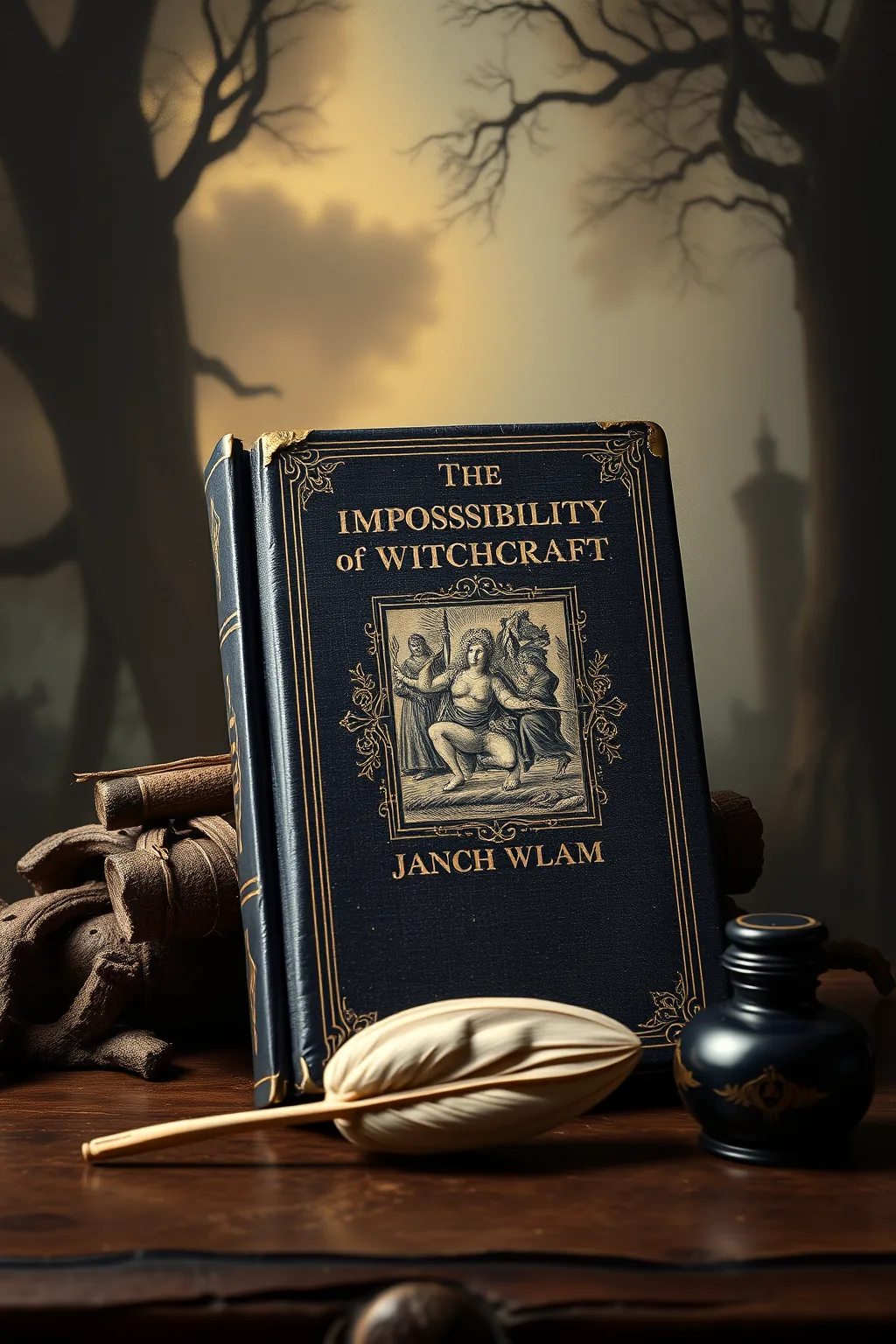
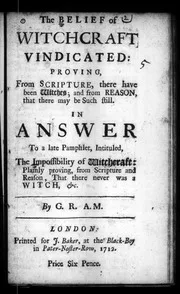
The impossibility of witchcraft, plainly proving, from Scripture and reason, that there never was a witch; ... In which the depositions against Jane Wenham, ... are confuted and expos'd. 1712
 79
79

The impossibility of witchcraft, plainly proving, from Scripture and reason, that there never was a witch; ... In which the depositions against Jane Wenham, ... are confuted and expos'd. 1712



Ophelia Vance (Mystical Literature Reviewer) — This incisive 1712 treatise offers a rare glimpse into the intellectual battles fought against the tide of witch hysteria. Eschewing superstition for rigorous scriptural and rational analysis, the anonymous author masterfully deconstructs the very notion of witchcraft. Its particular strength lies in its detailed confutation of the Jane Wenham depositions, exposing the fallacies and biases inherent in such accusations. While seemingly a work of skepticism, it indirectly illuminates the power dynamics and societal fears that fueled witch trials. Essential reading for scholars of occult history, early modern philosophy, and anyone interested in the evolution of critical thought.
📝 Description
79
Published in 1712, this book argues witchcraft is impossible, using scripture and reason.
This anonymous 1712 text directly confronts the belief in witchcraft, asserting its impossibility based on both scriptural interpretation and logical deduction. It specifically targets the accusations made against Jane Wenham, dissecting the evidence presented against her and exposing its weaknesses. The author uses these cases as a lens to examine broader societal fears and the methods by which accusations were made and accepted.
The work functions as a defense against prevailing superstitions, employing rational argument to challenge deeply held beliefs. It prompts reflection on how evidence is constructed and validated, particularly in matters concerning the supernatural. By confuting the depositions against Wenham, the author aims to dismantle the foundations of witch belief, advocating for a more reasoned approach to understanding unexplained phenomena. This book stands as an example of early modern skepticism engaging with folk beliefs and religious doctrine.
This work engages with early modern skepticism and the intellectual currents challenging supernatural beliefs. While not overtly occult in its own practice, it arises within a period where anxieties about magic and witchcraft were prevalent, often intertwined with religious and folk traditions. The book's rationalist approach contrasts with contemporary magical or alchemical texts, yet its dissection of belief systems and the mechanisms of accusation places it within the broader historical context of how the unseen and the supernatural were understood and debated.
💡 Why Read This Book?
Uncover the historical foundations of skepticism towards witchcraft. This book offers a sharp, reasoned critique of early modern beliefs and legal proceedings, making it vital for understanding the transition from superstition to rational inquiry. Ideal for scholars, history buffs, and seekers of intellectual clarity on the enduring fascination with the occult.
⭐ Reader Reviews
Honest opinions from readers who have explored this book.
❓ Frequently Asked Questions
What is the primary argument of this book?
The book's central thesis is that witchcraft, as commonly understood and prosecuted, is impossible, arguing from both scriptural interpretation and logical reasoning that no true witches exist.
What historical event does this book address?
It directly confronts and refutes the depositions made against Jane Wenham, a woman accused of witchcraft in Hertfordshire, England.
Who is the intended audience for this work?
The intended audience likely includes educated individuals, clergy, legal scholars, and anyone interested in theological, philosophical, and legal debates of the early 18th century.
Does the author deny the existence of supernatural forces?
The book focuses on the impossibility of 'witchcraft' as a human practice, not necessarily on denying all forms of supernatural phenomena or divine intervention mentioned in scripture.
Is this book a defense of accused witches?
While it refutes the accusations against Jane Wenham and argues against the existence of witches, its primary aim is a logical and scriptural demonstration rather than an emotional defense.
🔮 Key Themes & Symbolism
The Impossibility of Witchcraft
This core theme studies the author's meticulously constructed argument that the very concept of human witchcraft is logically and biblically untenable. It explores how the perceived power attributed to witches is either misinterpretation, delusion, or demonic deception, rather than inherent capability. The text challenges the foundations of belief in malevolent magic wielded by individuals, urging readers to apply critical faculties to accusations and confessions.
Scriptural Interpretation and Reason
A paramount theme is the reliance on both divine revelation and human intellect. The author positions Scripture not as a literal handbook for identifying witches, but as a text to be understood through reason. This dual approach seeks to demonstrate that a careful reading of sacred texts, combined with sound philosophical principles, leads to the conclusion that witchcraft is a fabrication, thus safeguarding faith from superstitious corruption.
Critique of Legal and Social Hysteria
The work serves as a powerful indictment of the prevailing social anxieties and legal practices that led to witch trials. By meticulously exposing the flaws in the depositions against Jane Wenham, the author highlights the dangers of uncritical acceptance of testimony, the influence of fear, and the potential for injustice. It underscores the importance of evidence, logic, and due process in matters of accusation and conviction.
💬 Memorable Quotes
Direct passages from the work, attributed to the author.
“There never was a witch.”
— A bold, declarative statement challenging centuries of belief and fear, serving as the book's central thesis.
“Proving, from Scripture and reason...”
— Highlights the author's dual methodology: appealing to divine authority alongside human intellect to dismantle the concept of witchcraft.
“The depositions against Jane Wenham... are confuted and expos'd.”
— Indicates a direct, critical engagement with a specific historical case, promising a detailed refutation of damning evidence.
“plainly proving”
— Emphasizes the author's intent to present clear, unambiguous evidence and logical deduction, leaving no room for doubt.
“that there never was a witch”
— Reiterates the absolute nature of the author's claim, aiming to eradicate the belief in witches from the minds of readers.
🌙 Esoteric Significance
Tradition
While outwardly a rationalist text, its engagement with scripture and its dissection of belief systems can be seen as a form of intellectual hermeneutics, a practice found in various esoteric traditions that seek deeper, hidden meanings within sacred texts. It engages with the *idea* of the occult by deconstructing its perceived reality, thus clear the mechanisms of belief itself.
Symbolism
The 'witch' in this context becomes a symbol of societal fear, projection, and the dangers of unchecked credulity. The book's 'proofs' from Scripture and reason symbolize the triumph of intellect and divine truth over superstitious darkness. The critique of depositions symbolizes the exposure of illusion and the unveiling of hidden flaws in fabrications.
Modern Relevance
In an era still susceptible to misinformation, conspiracy theories, and the manipulation of belief, this book's emphasis on critical thinking, evidence-based reasoning, and scrutinizing accusations remains profoundly relevant. It serves as a historical touchstone for understanding how societal fears can be weaponized and how rational discourse is essential for justice and truth.
👥 Who Should Read This Book
This work is indispensable for scholars of early modern English history, particularly those studying witchcraft, law, and the Enlightenment. Aspiring practitioners of critical thinking and logic will find its arguments compelling. Seekers of philosophical depth will appreciate its exploration of belief, reason, and evidence. Furthermore, anyone fascinated by the historical evolution of occult beliefs and the societal impact of fear will discover a rich and rewarding read.
📜 Historical Context
Published in 1712, this book emerges from a period of significant intellectual ferment in England, bridging the Age of Enlightenment's burgeoning rationalism with lingering medieval superstitions. The early 18th century witnessed a decline in large-scale witch trials, yet anxieties and beliefs persisted. The case of Jane Wenham in 1712, one of the last notorious witch trials in England, provides the immediate backdrop and a focal point for this author's critique. The text reflects a growing confidence in human reason and empirical observation, challenging established dogmas and the uncritical acceptance of folklore. It stands as a evidence of the intellectual currents pushing back against superstition, even as the fear of the unseen continued to hold a place in the popular imagination.
📔 Journal Prompts
Analyze the author's definition of 'witchcraft' and how it differs from common perceptions of the time.
Examine the interplay between scriptural evidence and rational argument presented in the text.
How do the criticisms of the Jane Wenham depositions reflect broader issues in the justice system of the early 18th century?
Consider the societal anxieties that might have fueled the belief in witchcraft during this period.
Reflect on how the arguments presented here can be applied to contemporary debates involving misinformation or unsubstantiated claims.
🗂️ Glossary
Deposition
A formal written or spoken statement, especially one given in court or under oath, detailing evidence or testimony.
Confuted
To prove a person or an assertion to be wrong; to refute.
Expos'd
Made public, revealed, or shown up, often in a way that exposes flaws or wrongdoings.
Scripture
The sacred writings of the Christian or Jewish religion; the Bible or the Old Testament.
Reason
The power of the mind to think, understand, and form judgments logically and coherently.
This book appears in 2 collections
🔮 Readers Also Liked
Browse all →





From the “Witchcraft” Collection
View all →

![An answer of a letter from a gentleman in Fife, to a nobleman, containing a brief acccount [sic] of the barbarous and illegal treatment, these poor women accused of witchcraft, met with from the baillies of Pittenweem and others, ... To which is adde](/img/thumb/an-answer-of-a-letter-from-a-gentleman-in-fife-to-a-nobleman-containing-a-brief-acccount-sic-of-the-barbarous-and-illegal-treatment-these-poor-women-accused-of-witchcraft-met-with-from-the-baillies-of.webp)


More Free Witchcraft & Paganism Books
View all →