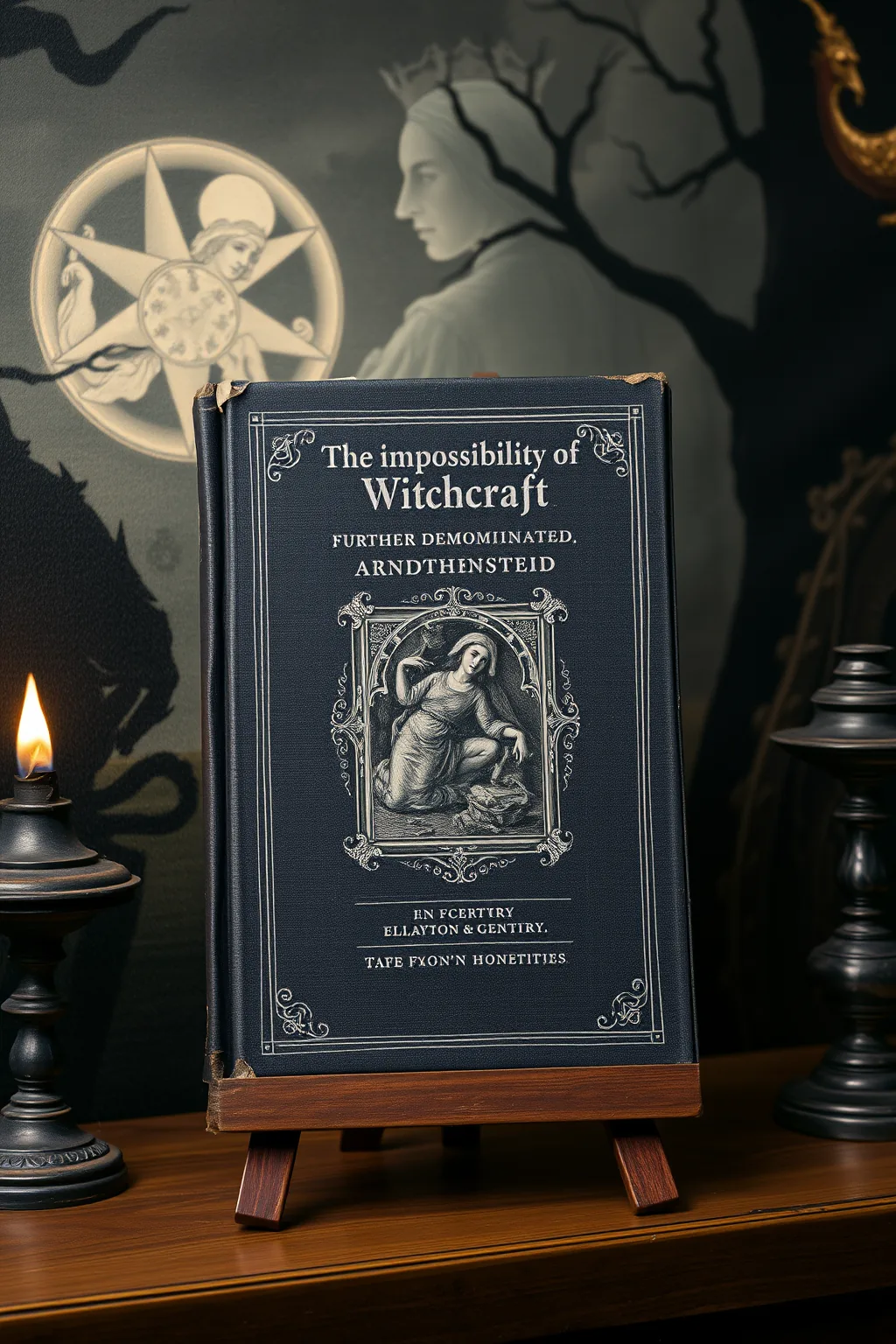
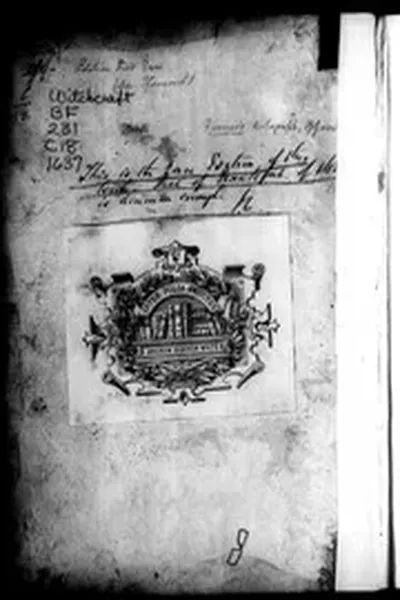
The impossibility of witchcraft further demonstrated. Both from Scripture and reason, wherein several texts of Scripture relating to witches are prov'd to be falsely translated, ... 1712
 71
71

The impossibility of witchcraft further demonstrated. Both from Scripture and reason, wherein several texts of Scripture relating to witches are prov'd to be falsely translated, ... 1712


Cassian Rothmann, Senior Critic, Ancient Wisdom — This meticulously argued treatise from 1712 offers a fascinating counterpoint to the pervasive fear of witchcraft that haunted earlier centuries. The author, with a sharp intellect and a profound understanding of biblical exegesis, systematically dismantles claims of supernatural malevolence, exposing flawed translations and reasoned fallacies. Esoteric seekers will appreciate the deep dive into textual criticism, revealing how language itself can construct reality. Its strength lies in its logical rigor, presenting a compelling case for skepticism. This is essential reading for anyone interested in the history of belief, the evolution of religious interpretation, and the philosophical underpinnings of occult dismissal.
📝 Description
71
Published in 1712, this book argues witchcraft is impossible based on scripture and reason.
This 1712 text, written by the author of a previous work on the same subject, scrutinizes the biblical and rational basis for belief in witchcraft. It specifically examines various scriptural passages concerning witches, contending that they have been mistranslated. The author aims to demonstrate that the concept of witchcraft, as commonly understood, lacks support from both divine revelation and logical deduction. The work engages with the intellectual climate of the early 18th century, a period marked by significant debate over theological interpretations and the nature of the supernatural. It questions how religious texts were used to justify beliefs and practices, suggesting that persuasive narratives could overshadow factual or reasoned arguments. The book invites a careful examination of how interpretations of sacred writings influence understanding of phenomena deemed supernatural. It encourages readers to consider the potential for error or manipulation in such interpretations.
While not strictly an esoteric text in the mold of hermeticism or alchemy, this book participates in a broader tradition of critical examination of religious texts and supernatural claims prevalent in the early modern period. It reflects an intellectual current that sought to rationalize belief and distinguish between genuine spiritual phenomena and popular superstition or misinterpretation. The focus on textual analysis and logical argumentation aligns with a broader scholarly approach to understanding religious and occult traditions, even when the goal is to debunk them. It stands as a product of an era where the boundaries of the known and the believed were actively contested through reason and scriptural study.
💡 Why Read This Book?
Uncover the historical roots of skepticism towards witchcraft. This book provides a rigorous, reason-based critique of early modern beliefs, revealing how scriptural interpretation and logical fallacies fueled accusations. Essential for scholars of history, theology, and the occult, and for any seeker interested in the nuanced relationship between faith, reason, and the supernatural.
⭐ Reader Reviews
Honest opinions from readers who have explored this book.
❓ Frequently Asked Questions
What is the main argument of this book?
The book argues that witchcraft, as commonly understood, is impossible when examined through both sound scriptural interpretation and logical reasoning, suggesting that many biblical passages have been mistranslated or misinterpreted.
Who was the author?
The author remains anonymous, identified only as the 'Author of 'The impossibility of witchcraft, &c.'', indicating a continuation of their previous work.
What historical period does this book represent?
It is a product of the early 18th century, a period of burgeoning Enlightenment thought, where reason and scientific inquiry began to challenge traditional beliefs and superstitions.
Does the book claim witchcraft never existed?
Not directly. Instead, it demonstrates the impossibility of the *supernatural* practices attributed to witches, questioning the validity of evidence and interpretation used to support such claims.
What is the significance of the 'falsely translated texts'?
The author uses this as a cornerstone of their argument, positing that misinterpretations and errors in translation of biblical passages have been used to legitimize the concept and prosecution of witches.
🔮 Key Themes & Symbolism
The Deconstruction of Supernatural Claims
This theme centers on the meticulous dismantling of perceived supernatural phenomena, particularly witchcraft, by applying critical reasoning and textual analysis. The author posits that what appears as arcane power is often a product of misinterpretation, flawed logic, or deliberate manipulation of sacred texts. It explores the human tendency to attribute extraordinary causes to ordinary events, urging readers to seek rational explanations before succumbing to belief in the impossible. This deconstruction is not merely an academic exercise but a philosophical imperative to understand the boundaries of human knowledge and the nature of evidence.
Hermeneutics and Scriptural Authority
A core tenet of the work lies in its deep engagement with hermeneutics – the theory and methodology of interpretation. The author scrutinizes biblical passages, arguing that their original meaning has been distorted through incorrect translations and biased interpretations. This theme challenges the uncritical acceptance of textual authority, advocating for a more nuanced and critical approach to understanding sacred literature. It highlights how the very words we rely on can be malleable and subject to human fallibility, thus questioning their absolute truth when applied to matters of belief and accusation.
The Philosophical Foundations of Doubt
This work serves as a evidence of the burgeoning spirit of skepticism that characterized the Enlightenment. It champions the power of human reason to question established doctrines and challenge deeply ingrained beliefs. The author builds a case for doubt not as a sign of intellectual weakness, but as a necessary tool for discerning truth from falsehood. By demonstrating the 'impossibility' of witchcraft through logical argument, the book encourages a broader philosophical stance of critical inquiry, urging readers to examine the foundations of their own convictions and the societal narratives they inherit.
💬 Memorable Quotes
Direct passages from the work, attributed to the author.
“Scripture is not to be wrested from its true sense.”
— This highlights the author's core argument: that biblical texts should be understood in their intended context and meaning, not distorted to fit preconceived notions.
“Reason doth condemn the witch.”
— Suggests that logic and rational thought inherently contradict the existence or practices of witchcraft, implying that belief in it defies rational understanding.
“The translator's pen hath oft a darker ink.”
— A poetic assertion that errors or biases in translation can lead to significant misinterpretations, potentially fostering false beliefs like those surrounding witchcraft.
“To impute malice where none doth reside.”
— Points to the human tendency to assign ill intent or supernatural agency to events, rather than seeking natural or accidental causes.
“The phantom of the sorceress is but a shade.”
— A dismissive metaphor for witchcraft, portraying it as an illusion or a baseless fear, lacking any substantial reality.
🌙 Esoteric Significance
Tradition
While ostensibly a work of theological and philosophical critique, its engagement with textual interpretation and the underlying mechanisms of belief can resonate with esoteric traditions that explore hidden meanings and the power of symbolic language. It touches upon the Gnostic emphasis on knowledge (gnosis) as a means to liberation from illusion and the Kabbalistic focus on the profound significance of letters and words, albeit from a counter-argumentative stance. The book implicitly engages with the hermetic principle of 'as above, so below' by scrutinizing the earthly interpretations of divine texts.
Symbolism
The central 'symbol' interrogated here is 'witchcraft' itself. The author deconstructs it, revealing it as a constructed narrative rather than an inherent reality. Biblical texts become symbolic repositories of human interpretation, their 'true sense' a hidden treasure to be unearthed. The act of 'translation' symbolizes the bridge between the divine and the human, a bridge easily corrupted. The 'impossibility' itself becomes a symbolic representation of the triumph of reason over unfounded fear and superstition, a strong example of intellectual clarity in a world often shrouded in mystery.
Modern Relevance
In an age saturated with misinformation and the rapid spread of unfounded narratives, the principles of critical textual analysis and reasoned skepticism espoused in this 1712 treatise are more relevant than ever. The book serves as a potent reminder of the importance of scrutinizing sources, questioning authority, and understanding how language can be manipulated to construct belief systems. Its exploration of how societal fears can be amplified through misinterpretation offers a timeless lesson in media literacy and the critical consumption of information, urging us to seek truth through rigorous examination rather than passive acceptance.
👥 Who Should Read This Book
This profound work is essential for historians of religion, theology, and the occult, offering a critical perspective on early modern beliefs. Scholars of literature and language will find value in its detailed textual analysis. For seekers of hidden knowledge, it provides insight into how 'occult' phenomena have been historically explained through reason. Practitioners of magic or those interested in paganism will gain a deeper understanding of the historical opposition and the intellectual arguments that shaped perceptions of their traditions. It is a challenging yet rewarding read for anyone seeking to understand the interplay of faith, reason, and societal constructs.
📜 Historical Context
Published in 1712, 'The Impossibility of Witchcraft Further Demonstrated' emerges from the intellectual crucible of the early 18th century, a period marked by the waning of widespread witch trials in much of Europe but the persistence of deep-seated beliefs. The Enlightenment was in full swing, championing reason, empirical evidence, and critical inquiry over blind faith and superstition. This era saw a growing intellectual class challenging traditional dogmas and scrutinizing religious texts with a more analytical eye. Works like this reflect a society grappling with the transition from a world steeped in the supernatural to one increasingly governed by rational explanation. The author's detailed examination of scriptural translations and logical fallacies speaks to a broader intellectual movement focused on linguistic precision and philosophical rigor, aiming to dispel the lingering shadows of fear and ignorance that had, for centuries, fueled accusations of witchcraft.
📔 Journal Prompts
How has the interpretation of religious or historical texts shaped your understanding of certain beliefs or practices?
Reflect on a time when you questioned a widely accepted narrative. What was your process of inquiry?
Consider the power of language in shaping perception. How can words be used to both illuminate and obscure truth?
In what ways do modern-day 'superstitions' or unfounded beliefs echo the anxieties surrounding witchcraft in earlier eras?
How does the concept of 'reason' interact with faith and personal belief in your own life?
🗂️ Glossary
Hermeneutics
The theory and methodology of interpretation, especially the interpretation of biblical texts, wisdom literature, and philosophical texts. It involves understanding the principles and methods used to uncover the meaning of texts.
Exegesis
Critical explanation or interpretation of a text, especially of the Bible. It involves a detailed and scholarly analysis of the text's meaning, context, and historical background.
Gnosticism
A collection of religious ideas and systems that originated in the first century AD among Jewish and early Christian communities. Gnostics believed that salvation came through secret knowledge (gnosis) possessed by an elite few.
Kabbalah
A system of Jewish mysticism that seeks to understand the nature of God and the universe through esoteric interpretation of the Torah and the use of symbolic language and numerology.
Enlightenment
A European intellectual movement of the late 17th and 18th centuries emphasizing reason and individualism rather than tradition. It was heavily influenced by 17th-century philosophers such as Descartes, Locke, and Newton.
This book appears in 2 collections
🔮 Readers Also Liked
Browse all →







From the “Witchcraft” Collection
View all →





More Free Witchcraft & Paganism Books
View all →