Salem Witchcraft
 78
78

Salem Witchcraft
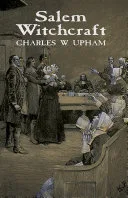
Charles Wentworth Upham’s "Salem Witchcraft" remains a foundational text for understanding the 1692 hysteria, not for its occult revelations, but for its stark portrayal of human fallibility and societal breakdown. Upham, a former mayor of Salem, approaches the subject with a historian's rigor, meticulously detailing the legislative squabbles and personal animosities that festered in Salem Village. His focus on the local rivalries, particularly between factions supporting Reverend Samuel Parris and those opposing him, provides crucial context for the accusations. A significant strength is Upham's methodical dissection of the testimonies, revealing the flimsy basis for many charges. However, the work occasionally suffers from its late 19th-century perspective, sometimes offering explanations that feel dated to a modern reader. The passage describing the initial accusations against Tituba, Sarah Good, and Sarah Osborne, and the subsequent legal machinations, exemplifies the book's detailed yet perhaps overly earnest approach. It is a sobering, essential, though not always comfortable, read for anyone seeking to grasp the roots of this dark episode.
Verdict: A vital, if occasionally dated, historical dissection of the Salem Witch Trials.
📝 Description
78
Charles Wentworth Upham's 1867 work analyzes the 1692-1693 Salem witch trials.
Charles Wentworth Upham's "Salem Witchcraft" examines the notorious witch trials of 1692-1693 in colonial Massachusetts. Upham moves beyond sensationalism to anchor his account in the region's social, political, and economic stresses. He shows how disputes over land, church matters, and local feuds fostered an environment where suspicion and accusations could flourish.
The book places the Salem events within the wider context of 17th-century Puritan New England. This era was defined by anxieties over conflicts with Native Americans, political shifts after the Glorious Revolution, and a strong belief in the Devil's active influence. Upham details how these external pressures and internal community divisions converged to create the circumstances for the accusations and subsequent trials in Salem Village.
While focused on historical events, "Salem Witchcraft" touches on the historical belief in malevolent spiritual forces and their perceived influence on human affairs. Upham's work provides a detailed look at how widespread fear, coupled with deeply held religious convictions and social anxieties, could manifest in accusations of witchcraft. It illustrates a period where the boundaries between the mundane and the supernatural were blurred in the public consciousness, leading to severe real-world consequences for those accused.
💡 Why Read This Book?
• Gain a granular understanding of the socio-political climate of 1692 Salem Village, moving beyond simplistic notions of mass hysteria to explore specific land disputes and church factionalism that Upham details. • Analyze the legal and evidential precedents set during the trials, particularly Upham's exploration of the controversial use of spectral evidence, which directly impacted the accused. • Understand the psychological and community dynamics that fueled the witch hunt, as Upham meticulously documents the escalating fear and suspicion among the inhabitants of Salem.
⭐ Reader Reviews
Honest opinions from readers who have explored this book.
❓ Frequently Asked Questions
What were the primary causes of the Salem Witch Trials according to Upham?
Upham argues the trials stemmed from a complex interplay of factors, including local hostilities, economic rivalries, land disputes, and religious anxieties within Salem Village. He emphasizes that these societal pressures created fertile ground for fear and suspicion.
How does Charles Wentworth Upham differentiate his work from other accounts of the Salem Witch Trials?
Upham differentiates his work through painstaking research into the legislative and economic problems of Salem, and by detailing the specific local conflicts that preceded and fueled the witch hunt, rather than focusing solely on the sensational aspects.
What role did spectral evidence play in the trials as described by Upham?
Upham describes spectral evidence as testimony about the accused's spirit or shape appearing to the witness, often in a dream. He highlights its controversial and often baseless nature, which nevertheless held significant weight during the trials.
When were the Salem Witch Trials?
The Salem Witch Trials primarily took place in 1692 and extended into 1693 in colonial Massachusetts, leading to the arrest of over 200 individuals and the execution of twenty.
Is Charles Wentworth Upham's 'Salem Witchcraft' considered an objective historical account?
While Upham strove for historical accuracy and meticulously researched the period, his work reflects the perspectives and biases of his time. It is considered a valuable primary historical source but should be read with an awareness of its 19th-century context.
What does Upham reveal about the accusers in Salem?
Upham reveals that the accusers were often young women and girls whose testimonies, while believed at the time, were frequently influenced by personal grudges, societal pressures, and perhaps even psychological distress, contributing to the spiral of accusations.
🔮 Key Themes & Symbolism
Social and Economic Pressures
Upham meticulously details how disputes over land, church leadership, and economic standing created a volatile environment in Salem Village. These pre-existing tensions, often fueled by personal animosities and rivalries between families, provided fertile ground for suspicion. The work illustrates how underlying societal anxieties, rather than purely supernatural beliefs, could be weaponized to target individuals. This theme highlights the practical, earthly causes that often underpin historical accusations of witchcraft.
The Mechanics of Accusation
The book offers a stark look at how accusations escalated during the 1692 trials. Upham examines the role of key figures, the legal procedures (or lack thereof), and the psychological impact of spectral evidence. He shows how initial accusations, often against marginalized individuals like Tituba, could quickly snowball, drawing in more prominent members of the community as fear and group dynamics took hold. This theme explores the procedural and psychological mechanisms of mass hysteria.
Fear and Religious Extremism
Upham connects the Salem events to the prevalent religious beliefs and anxieties of 17th-century Puritan New England. The conviction that the Devil was actively seeking to undermine the Puritan experiment created a climate where witchcraft was taken very seriously. This theme explores how intense religious fervor, combined with external threats like conflicts with Native Americans, could lead to extreme interpretations of events and justify harsh persecutions in the name of spiritual purity.
Legal and Evidentiary Failures
A significant focus of Upham's work is the flawed legal process that characterized the Salem Witch Trials. He critically examines the acceptance of testimony based on dreams and visions (spectral evidence) and the lack of due process for the accused. The book demonstrates how legal structures, intended to uphold justice, were perverted by fear and societal pressure, leading to wrongful convictions and executions.
💬 Memorable Quotes
“The Salem Witchcraft delusion, in its rise and progress, was the result of a combination of causes.”
— This statement encapsulates Upham's thesis: the trials were not a spontaneous eruption of madness but a consequence of interacting social, economic, and psychological factors endemic to the community.
“Local hostilities were sown among villagers, fueling suspicion, fear, and resentment.”
— This interpretation highlights Upham's emphasis on pre-existing community divisions as a crucial catalyst for the witch hunt, suggesting that personal grievances played a significant role.
“Spectral evidence was readily admitted, despite its dubious nature.”
— This paraphrase points to a key procedural failing discussed by Upham: the acceptance of testimony about apparitions, which allowed accusations to flourish without tangible proof.
“The trials reflected the anxieties of a community under pressure.”
— This conceptual summary captures Upham's view that the events in Salem were exacerbated by external threats and internal instabilities facing the Puritan settlers.
“Legislative and economic problems plagued Salem Village prior to the trials.”
— This interpretation underscores Upham's focus on the practical, mundane issues within Salem that contributed to the tense atmosphere, grounding the narrative in material realities.
🌙 Esoteric Significance
Tradition
While Upham's work is primarily historical and sociological, it touches upon themes relevant to the study of historical occult beliefs and societal responses to perceived supernatural threats. It doesn't align with a specific esoteric lineage like Hermeticism or Kabbalah but serves as a crucial historical document for understanding the societal manifestations of fear and belief in witchcraft, which is a perennial subject within many esoteric traditions.
Symbolism
The primary 'symbolism' Upham explores is not overtly mystical but rather socio-psychological. The accusations themselves function as symbols of community anxieties and scapegoating. The spectral form, as a concept, symbolizes the intangible nature of the 'evidence' used and the perceived threat from an unseen, malevolent force. The accusers' afflictions symbolized the community's collective fear and distress.
Modern Relevance
Contemporary scholars and practitioners of historical studies, sociology, and psychology continue to draw on Upham's meticulous research. His work remains a cornerstone for understanding the psychological dynamics of mass hysteria, the role of social pressures in belief systems, and the historical roots of paranoia, which are themes revisited in modern analyses of cult behavior and collective delusion.
👥 Who Should Read This Book
• Students of American colonial history seeking a detailed, foundational account of the Salem Witch Trials, moving beyond sensationalism to understand the underlying social and political factors. • Researchers in psychology and sociology interested in historical case studies of mass hysteria, group dynamics, and the mechanisms of fear and accusation within communities. • Readers of folklore and the history of magic looking for a grounded, historically-contextualized examination of witchcraft beliefs and persecutions in early modern America.
📜 Historical Context
Charles Wentworth Upham's "Salem Witchcraft" emerged in the latter half of the 19th century, a period of both burgeoning historical inquiry and lingering cultural memory of the colonial era. The work was written long after the 1692-1693 trials, allowing for a more detached, analytical perspective than was possible for contemporaries. Upham, a former mayor of Salem, approached the subject with considerable local knowledge and a historian's intent. The intellectual currents of his time included a growing interest in psychology and social dynamics, which likely informed his focus on community tensions and mass hysteria. While not directly engaging with a specific contemporary esoteric school, his work contributed to a broader historical discourse on religious fanaticism and the darker aspects of human nature, a subject also explored by scholars like Henry Charles Lea in his studies of historical persecution. Upham’s detailed recounting of the events and his attempts to explain their causes represent a significant effort to rationalize a chaotic historical episode.
📔 Journal Prompts
The interplay of local hostilities and the Salem Witch Trials.
The psychological impact of spectral evidence on the accused and accusers.
Upham's analysis of the economic factors contributing to the 1692 hysteria.
The role of Reverend Samuel Parris in the escalating accusations.
Reflecting on the community's collective fear and its consequences.
🗂️ Glossary
Spectral Evidence
Testimony given during the Salem Witch Trials that described the accused person's spirit or 'specter' appearing to the witness, often in a dream or vision, to torment them. This form of evidence was highly controversial and central to many accusations.
Witch Hunt
A prolonged campaign, often fueled by mass hysteria or moral panic, to identify, accuse, and persecute individuals believed to be witches or engaging in malevolent magic.
Puritanism
A religious reform movement in the 16th and 17th centuries that sought to purify the Church of England of Roman Catholic practices, emphasizing biblical authority and a strict moral code. Key in early American colonial society.
Accused
Individuals targeted and formally charged with witchcraft during the Salem events. The work details their backgrounds and the nature of the accusations brought against them.
Accusers
Primarily young women and girls in Salem Village who initiated the accusations of witchcraft, often claiming to be tormented by the specters of the accused.
Tituba
An enslaved woman of South American or Caribbean origin, who was among the first accused in the Salem Witch Trials. Her confession, likely coerced, played a significant role in validating the proceedings.
Spectral Afflictions
The physical and psychological symptoms (fits, hallucinations, pain) reported by the accusers, which were attributed by the community and magistrates to the supernatural influence of the accused witches.