Elemental Magick

 78
78

Elemental Magick
D. J. Conway’s *Elemental Magick*, first published in 2020, presents a structured approach to the fundamental forces that underpin much of Western esoteric thought. The work’s strength lies in its clear articulation of elemental correspondences and their practical application, particularly in the sections detailing elemental invocation and banishing. Conway avoids overly esoteric jargon, making the concepts accessible. However, the book’s limitation is its occasional reliance on generalizations that could benefit from more specific historical or comparative magical references. For instance, while referencing the classical elements, a deeper dive into how specific traditions, like Golden Dawn ceremonial magic, adapted these concepts would have enriched the text. A particularly effective passage discusses the energetic properties of Water, linking it to emotions and intuition with tangible examples. Ultimately, *Elemental Magick* serves as a solid, if not groundbreaking, primer on a crucial aspect of occult study.
📝 Description
78
D. J. Conway's Elemental Magick examines the four classical elements as active forces in the cosmos.
This book looks at Earth, Air, Fire, and Water not just as symbols, but as fundamental powers in magical practice. Conway goes beyond simple associations to explain how these elements interact, how they appear in both the material world and in energy, and how to use them in rituals and for self improvement. The text treats the elements as living parts of the universe that practitioners can access through focused will and understanding. It is written for those who want to build on their basic knowledge of Western magic. Readers who have seen elemental ideas before but want a deeper look will find it useful. The book also offers practical advice for spellcasting, energy work, and aligning with natural rhythms. It works as a starting point for beginners in elemental studies and as a resource for experienced practitioners.
The concept of elemental theory traces back to ancient Greek philosophers like Empedocles. This system was later woven into traditions such as Hermeticism, alchemy, and Renaissance magic. Conway's writing connects to this lineage, situating elemental magic within a historical flow that influenced thinkers and practitioners from medieval alchemists to late 19th century occult revivalists.
💡 Why Read This Book?
• Gain a clear understanding of the four classical elements (Earth, Air, Fire, Water) and their distinct energetic signatures, moving beyond basic associations to grasp their dynamic interplay as presented in chapter 3. • Learn practical techniques for elemental invocation and banishing, as detailed in the ritualistic sections, enabling you to consciously work with these forces for personal development. • Understand the historical lineage of elemental theory, recognizing its roots in ancient philosophy and its influence on subsequent magical traditions, providing context beyond its 2020 publication date.
⭐ Reader Reviews
Honest opinions from readers who have explored this book.
❓ Frequently Asked Questions
When was D. J. Conway's Elemental Magick first published?
D. J. Conway's *Elemental Magick* was first published in 2020, making it a contemporary exploration of ancient magical principles.
What are the main elements discussed in Elemental Magick?
The book primarily focuses on the four classical elements: Earth, Air, Fire, and Water, exploring their characteristics and applications in magical practice.
Is Elemental Magick suitable for beginners?
Yes, the book is designed to be accessible to both beginners seeking foundational knowledge and experienced practitioners looking for a structured reference on elemental work.
Does the book cover practical spells?
While it emphasizes understanding and working with elemental energies, the book provides practical applications for ritual, energy work, and spellcraft.
What historical periods influence the concepts in Elemental Magick?
The work draws upon ancient Greek philosophy and later Hermetic and alchemical traditions, tracing the evolution of elemental theory through centuries of esoteric thought.
Does D. J. Conway offer a unique perspective on elemental forces?
Conway presents elemental forces not just as symbols but as active, tangible energies that can be consciously engaged with for personal and magical ends.
🔮 Key Themes & Symbolism
The Four Classical Elements
The core of the work revolves around Earth, Air, Fire, and Water, not as mere concepts but as dynamic, living forces. Conway details their inherent qualities—such as solidity for Earth, movement for Air, transformation for Fire, and flow for Water—and how these manifest in the physical world and within the practitioner's energetic field. The book emphasizes understanding the balance and interplay between these elements, essential for effective magical work and personal equilibrium.
Elemental Invocation and Banishing
A significant focus is placed on the practical techniques for working with elemental energies. This includes methods for safely calling forth the presence and qualities of each element for specific magical purposes (invocation) and for clearing or neutralizing their influence when necessary (banishing). These practices are presented as fundamental tools for energy management and ritual structure within Western esotericism.
Elemental Correspondences and Applications
The text systematically outlines the correspondences associated with each element, including directions, colors, tools, and their influence on human temperament and the environment. It extends this to practical applications, showing how knowledge of these correspondences can enhance spellcraft, meditation, and the creation of sacred space, thereby grounding abstract principles in tangible results.
The Balance of Forces
Conway stresses the importance of maintaining a harmonious balance among the elemental forces within oneself and in one's magical workings. Imbalance is presented as a source of ineffectiveness or unintended consequences. The book guides the reader toward achieving equilibrium, recognizing when one element may be dominant and how to gently restore the natural order.
💬 Memorable Quotes
Direct passages from the work, attributed to the author.
“The elements are not static; they are living energies constantly in motion.”
— This highlights Conway's view of the elements as dynamic forces, akin to living beings or currents, rather than inert symbolic representations. It suggests an interactive approach to magic, where practitioners engage with these active energies.
“Fire represents transformation and passion, driving change and action.”
— This interpretation emphasizes the active, dynamic nature attributed to the Fire element within the text. It portrays Fire as the catalyst for metamorphosis and the source of motivation necessary for undertaking magical work.
“Earth provides grounding and stability, anchoring us to the material world.”
— This reflects the book's conceptualization of the Earth element as a foundation. It underscores its role in providing stability, security, and a connection to the physical plane, crucial for any magical endeavor.
💡 Key Ideas
Editorial paraphrase of the work's core concepts — not direct quotes.
Water governs emotions and intuition, connecting us to the subconscious.
This paraphrase captures the essence of how the book links the Water element to the area of feelings and inner knowing. It suggests that understanding and working with Water can unlock deeper emotional awareness and intuitive abilities.
Air facilitates communication and intellect, connecting mind and spirit.
This paraphrase points to the book's association of the Air element with mental processes and communicative abilities. It suggests that Air is the medium through which thoughts are formed, exchanged, and spiritual insights are conveyed.
🌙 Esoteric Significance
Tradition
This work fits within the broad lineage of Western Esotericism, particularly drawing from Neoplatonic and Hermetic philosophical underpinnings that view the classical elements as fundamental building blocks of the cosmos. While not strictly adhering to any single codified tradition like Golden Dawn ceremonialism or specific Qabalistic systems, Conway's approach to elemental magick speaks to practices found in various forms of witchcraft and nature-based spirituality that emphasize direct interaction with elemental forces.
Symbolism
The four classical elements—Earth, Air, Fire, and Water—are central. Earth symbolizes stability, grounding, and the physical realm; Air represents intellect, communication, and the ethereal; Fire embodies transformation, passion, and will; Water signifies emotion, intuition, and the subconscious. Conway explores their associated directions, colors, and energies, presenting them as active forces to be understood and balanced within magical practice.
Modern Relevance
Contemporary practitioners of witchcraft, nature-based spiritualities, and even those exploring Jungian psychology often find value in Conway's structured approach to the elements. Her emphasis on practical application and personal balance makes elemental magick accessible for modern rituals, energy work, and self-understanding in a fast-paced world. The work provides a clear framework for individuals seeking to connect with fundamental forces often overlooked in more complex systems.
👥 Who Should Read This Book
• Aspiring practitioners of witchcraft and nature-based spiritualities seeking a foundational understanding of elemental forces and their practical application. • Students of Western Esotericism interested in the historical and philosophical underpinnings of elemental theory beyond its basic correspondences. • Experienced occultists looking for a clear, accessible reference on invoking, banishing, and balancing the classical elements for ritual enhancement.
📜 Historical Context
D. J. Conway's *Elemental Magick*, published in 2020, arrives in an era where interest in foundational esoteric principles has seen a resurgence, often driven by accessible online resources and a desire for practical, grounded magical systems. While Conway's work engages with the classical four elements—Earth, Air, Fire, and Water—its approach is distinct from the highly codified ceremonial magic systems popularized by figures like Aleister Crowley and the Hermetic Order of the Golden Dawn in the late 19th and early 20th centuries. These earlier traditions often integrated complex Qabalistic and astrological frameworks into their elemental work. Conway, by contrast, tends towards a more direct, nature-focused application, perhaps reflecting a broader trend in contemporary Pagan and Wiccan-inspired practices. The book's reception, given its recent publication, is likely part of the ongoing dialogue within modern witchcraft and esoteric communities regarding the core tenets of magical practice.
📔 Journal Prompts
Reflect on the core qualities of Earth as described in chapter 2, considering its role in your personal stability.
Analyze the dynamic interplay between Fire and Water as presented in the text; how might this dynamic manifest in your life?
Consider the practical applications of Air's association with communication, as detailed in chapter 4, for your interpersonal relationships.
Explore the concept of elemental balance discussed throughout the book, identifying areas where one element might be dominant in your energetic field.
Meditate on the symbolic meaning of the cardinal directions linked to each element, as outlined in the text, and their personal significance.
🗂️ Glossary
Earth Element
Representing stability, grounding, physicality, and endurance. Associated with the directions North and the color Green or Brown in many traditions.
Air Element
Symbolizing intellect, communication, movement, and thought. Often linked to the East and colors Yellow or White.
Fire Element
Embodying transformation, passion, will, and action. Typically associated with the South and the color Red.
Water Element
Representing emotion, intuition, subconscious, and flow. Commonly linked to the West and the color Blue or Silver.
Invocation
The act of calling upon a specific energy, entity, or element to manifest and work within a ritual space or with a practitioner.
Banishing
A ritual process used to dismiss, neutralize, or clear away specific energies, entities, or elements from a space or person.
Correspondences
The symbolic relationships between various elements, colors, directions, tools, and concepts within magical and esoteric systems.
🔮 Readers Also Liked
Browse all →







More by D. J. Conway
All books →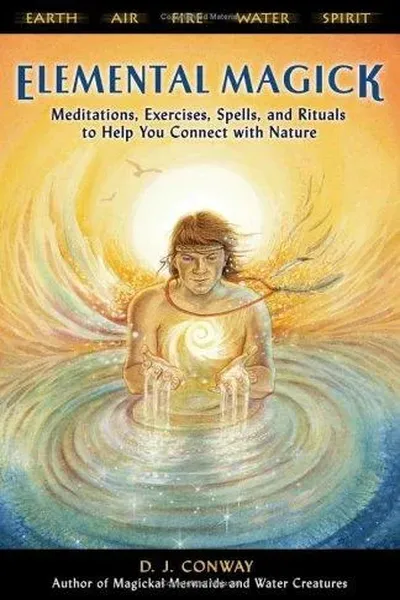





More Free Witchcraft & Paganism Books
View all →