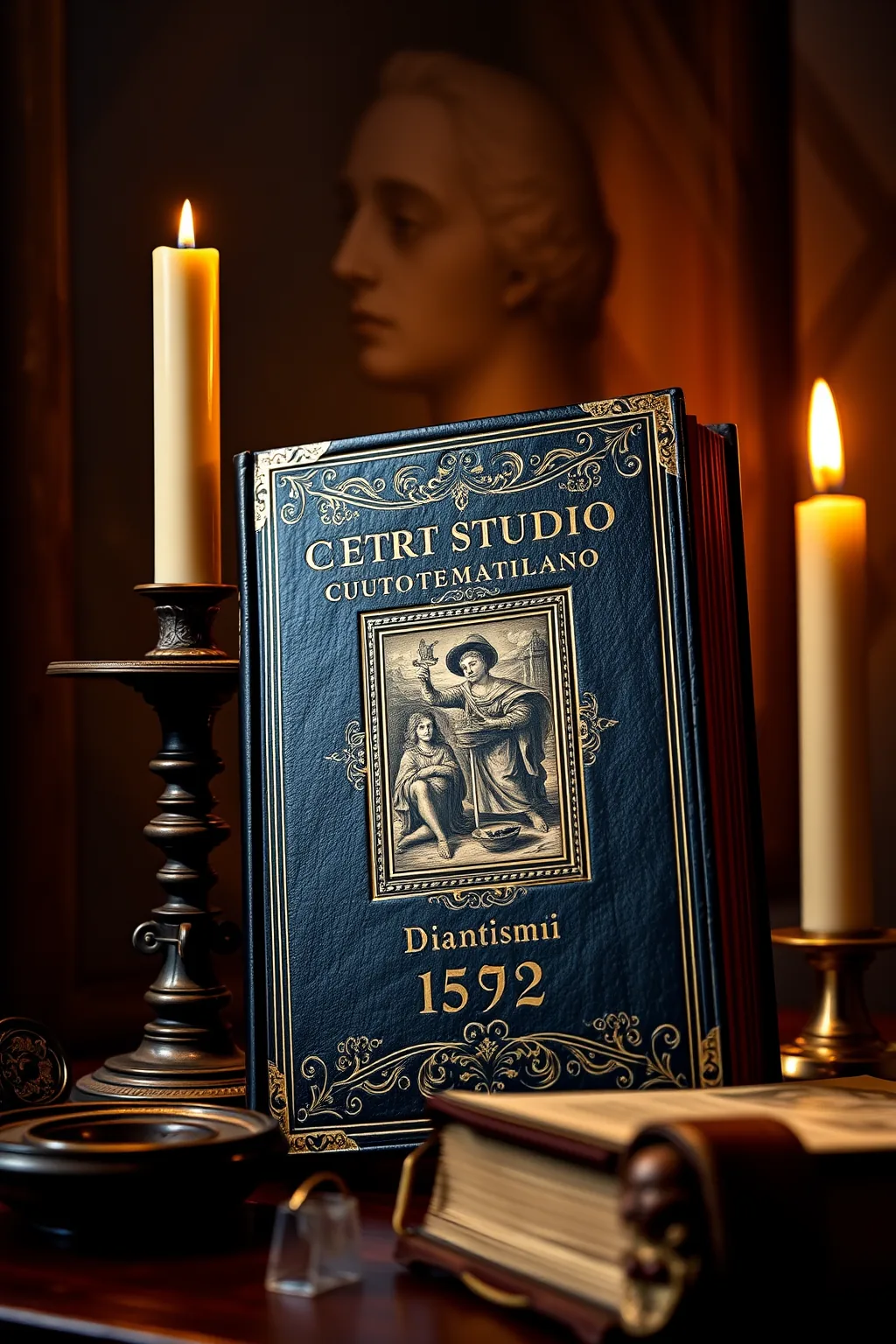
Del vero studio christiano contra l'arte planetaria, ... 1592: Iss 62
 81
81

Del vero studio christiano contra l'arte planetaria, ... 1592: Iss 62



Aurelia Blackwood (Occult Philosophy Critic) — Battista's 'Del vero studio christiano' is a vital counterpoint in the discourse on Renaissance esotericism. It masterfully articulates the orthodox theological response to the growing influence of astrological and 'planetary' arts. Battista’s rigorous approach, while seemingly condemnatory, inadvertently reveals the sophisticated intellectual engagement with these practices. He doesn't merely dismiss them but systematically dismantles their philosophical basis from a Christian framework. This work is essential for understanding the defensive mechanisms of established religion against emergent occult philosophies and is a must-read for anyone studying the historical tensions between science, religion, and magic. Its clarity and directness make it a powerful statement from a pivotal era.
📝 Description
81
In 1592, Giovanni Battista wrote 'Del vero studio christiano contra l'arte planetaria' against the rising influence of astrology.
Giovanni Battista's 1592 work, 'Del vero studio christiano contra l'arte planetaria,' addresses the perceived dangers of astrological practices from a Christian viewpoint. The book was issued as number 62 in a historical series. Battista argues that celestial divination can distract individuals from their spiritual path, advocating instead for a faith-centered approach to religious study. The text reflects late Renaissance concerns about hidden knowledge and occult practices, while also demonstrating a thorough understanding of the ideas it opposes.
This book is valuable for students of historical theology, Renaissance occultism, and the intellectual history surrounding witchcraft. It shows how faith, reason, and a growing interest in esoteric arts interacted during that era. Its availability in a digital format now allows contemporary researchers and those interested in these subjects to access this important historical document.
This text engages with the late Renaissance fascination with celestial influences and divination, a period where astrological thought was often intertwined with both learned philosophy and popular belief. Battista's work positions itself within a tradition of Christian apologetics that sought to reconcile or reject occult practices based on theological doctrine. It stands as an example of how esoteric inquiries, even those deemed heretical or dangerous by established authorities, prompted detailed theological responses and debates.
💡 Why Read This Book?
Uncover the historical Christian perspective on planetary arts and occultism. Understand the intellectual battles of the Renaissance concerning faith versus divination. This book is ideal for scholars of religious history, occult studies, and anyone seeking to comprehend the complex spiritual landscape of the late 16th century. Read free online.
⭐ Reader Reviews
Honest opinions from readers who have explored this book.
❓ Frequently Asked Questions
What is 'planetary art' as discussed by Battista?
'Planetary art' refers primarily to astrology and the belief that celestial bodies exert a direct influence on human destiny and events, often seen by religious authorities as a form of divination that usurped divine providence.
What is the main argument of the book?
Battista argues that true Christian study and faith are antithetical to 'planetary art,' asserting that reliance on celestial influences distracts from divine guidance and true spiritual understanding.
Who was Giovanni Battista?
While specific biographical details are scant for this period, Giovanni Battista was likely a theologian or scholar deeply invested in defending Christian doctrine against perceived esoteric or pagan influences prevalent in the late Renaissance.
What is the historical context of this text?
Published in 1592, the book emerged during a period of intense religious upheaval, the Counter-Reformation, and a burgeoning, yet often feared, interest in occult sciences, alchemy, and astrology across Europe.
Is this book a defense of witchcraft or paganism?
No, quite the opposite. This book is a strong theological condemnation and refutation of what the author considered harmful pagan or astrological practices, defending Christian orthodoxy.
🔮 Key Themes & Symbolism
Theological Purity and Divine Providence
This theme centers on Battista's fervent assertion that genuine Christian study must remain solely focused on divine revelation and God's will, uncorrupted by external or earthly influences. He argues that 'planetary art,' by attributing power and destiny to celestial bodies, directly challenges the absolute sovereignty and omnipotence of God. The text emphasizes the importance of faith as the sole conduit to salvation and understanding, positioning it as a pure, unadulterated source of truth superior to any system that relies on the mutable positions of stars.
Critique of Astrological Determinism
Battista systematically dismantles the concept of astrological determinism, the idea that human lives and events are predetermined by celestial configurations. He views this as a dangerous philosophical and spiritual fallacy that undermines human free will and moral accountability. The work presents a counter-argument rooted in Christian theology, highlighting the freedom of the soul and the capacity for individuals to choose their spiritual path, guided by divine grace rather than cosmic inevitability. This critique reveals the intellectual anxieties surrounding fatalistic belief systems emerging during the period.
The Dangers of Esoteric Knowledge
This theme explores Battista's perspective on the perceived perils associated with esoteric knowledge, particularly that derived from astrological interpretations and other forms of 'planetary art.' He suggests that such knowledge, while potentially alluring, serves as a deceptive pathway, leading individuals away from the straightforward truths of Christian doctrine. The text warns of the spiritual dangers of seeking hidden meanings in the cosmos, portraying them as distractions that can foster pride, superstition, and ultimately, spiritual alienation from God. It reflects the era's profound fear of forbidden or 'magical' knowledge.
💬 Memorable Quotes
Direct passages from the work, attributed to the author.
“Let not celestial charts chart the soul's course.”
— A powerful metaphor highlighting the danger of allowing astrological predictions to dictate one's spiritual or life decisions, advocating for faith-based guidance instead.
“The heavens declare God's glory, not man's fate.”
— Battista distinguishes between the theological understanding of the cosmos as a evidence of divine creation and its use for personal divination, rejecting the latter.
“Seek not power in the spheres, but solace in the Spirit.”
— An admonition against seeking worldly or occult power through celestial studies, redirecting the seeker towards spiritual comfort and strength found in divine connection.
💡 Key Ideas
Editorial paraphrase of the work's core concepts — not direct quotes.
True study finds its light not in the stars, but in the divine word.
This quote captures Battista's central thesis, contrasting the external, potentially misleading knowledge sought through astrology ('stars') with the internal, pure truth found in scripture ('divine word').
Faith is the compass; planetary art, a siren's call.
This quote uses the metaphor of navigation and temptation to illustrate the superiority of faith as a guide and the deceptive nature of astrological pursuits.
🌙 Esoteric Significance
Tradition
While Battista's work is fundamentally a theological polemic *against* esoteric practices, its significance lies in its engagement with the very traditions it critiques. It represents the orthodox Christian theological tradition's attempt to define its boundaries and refute competing or perceived heretical belief systems. By dissecting 'planetary art,' Battista inadvertently illuminates the philosophical underpinnings and allure of these esoteric pursuits from the perspective of those who sought to suppress them, thus becoming a valuable source for understanding the historical context of Western esotericism.
Symbolism
The primary symbolism discussed, though often negatively, revolves around celestial bodies. Stars, planets, and constellations are presented as symbols of divine creation's order, but also as elements that 'planetary art' misinterprets to signify human destiny. Battista likely employs Christian symbols of light, divine providence, and the cross as counter-symbols representing true spiritual guidance and salvation, contrasting them with the perceived darkness or deception inherent in astrological charts and influences.
Modern Relevance
In an age where astrology and esoteric interests have seen a resurgence, Battista's text offers a historical lens through which to examine the enduring tension between scientific/rationalistic inquiry, spiritual belief, and the human search for meaning. It prompts reflection on how different eras grapple with questions of fate versus free will, the nature of knowledge, and the role of faith. For contemporary practitioners and scholars of esoteric traditions, it provides critical historical context, revealing the intellectual battles that shaped the perception and practice of these arts.
👥 Who Should Read This Book
This critical examination of Renaissance theological discourse is essential for **academic scholars** of religious history, the history of science, and occult studies, providing primary source material on the Counter-Reformation's intellectual defenses. **Occult practitioners and enthusiasts** will find value in understanding the historical opposition and arguments against practices like astrology, offering deeper context for their own pursuits. **Seekers of philosophical and spiritual knowledge** will benefit from exploring the historical debates on faith, destiny, and divine guidance. **Students of late Renaissance culture** will gain insight into the anxieties and intellectual currents of the period, particularly regarding the boundaries of acceptable knowledge and belief.
📜 Historical Context
Published in 1592, 'Del vero studio christiano contra l'arte planetaria' emerges from the turbulent intellectual and religious climate of late Renaissance Europe. This era was marked by the ongoing aftermath of the Reformation, the fervent activities of the Counter-Reformation, and a pervasive societal anxiety surrounding witchcraft, heresy, and the occult. While the Church sought to consolidate its authority, a parallel surge in interest in astrology, alchemy, Kabbalah, and other esoteric disciplines captivated many scholars and thinkers. Giovanni Battista's work stands as a evidence of the theological resistance against these burgeoning occult interests, reflecting a deep-seated concern that such practices were not only intellectually unsound but also spiritually dangerous, potentially leading souls away from orthodox Christian salvation. The text is a crucial artifact for understanding the complex interplay between religious dogma, philosophical inquiry, and the popular fascination with hidden knowledge during a period of profound societal transformation.
📔 Journal Prompts
How does Battista's critique of 'planetary art' reflect broader anxieties about knowledge and control in the late Renaissance?
Compare and contrast Battista's view of divine providence with astrological determinism. What are the implications for human agency?
In what ways might Battista's arguments, though intended to condemn, inadvertently reveal the sophistication of the 'planetary arts' he opposed?
How has the relationship between religious faith and esoteric practices evolved since the 16th century?
Reflect on a time you sought guidance from external sources (e.g., horoscopes, advice) versus internal conviction. How does this relate to Battista's dichotomy?
🗂️ Glossary
Arte planetaria
Literally 'planetary art,' this term primarily refers to astrology and the practice of divining future events or character traits based on the positions and movements of celestial bodies, viewed by Battista as a deviation from Christian truth.
Studio Christiano
Christian study. Battista advocates for a form of scholarly or spiritual inquiry that is exclusively focused on Christian doctrine, scripture, and divine revelation, untainted by pagan or occult influences.
Divination
The practice of seeking knowledge of the future or the unknown by supernatural means. Battista categorizes 'planetary art' and similar practices as forms of illicit divination.
Providence
The protective care of God or of nature as a spiritual power. Battista argues that belief in 'planetary art' undermines the concept of divine providence by suggesting that fate is dictated by celestial mechanics rather than God's will.
Heretical
Holding or subscribing to a belief or opinion that is contrary to orthodox religious doctrine. Battista likely views the reliance on 'planetary art' as a potentially heretical deviation from established Christian theology.
This book appears in 2 collections
🔮 Readers Also Liked
Browse all →




![CIA Reading Room cia-rdp75-00149r000200590003-6: PROTECTING [PRIVACY AND FREEDOM]](/img/thumb/cia-reading-room-cia-rdp75-00149r000200590003-6-protecting-privacy-and-freedom-cia-reading-room.webp)

From the “Witchcraft” Collection
View all →







More Free Witchcraft & Paganism Books
View all →