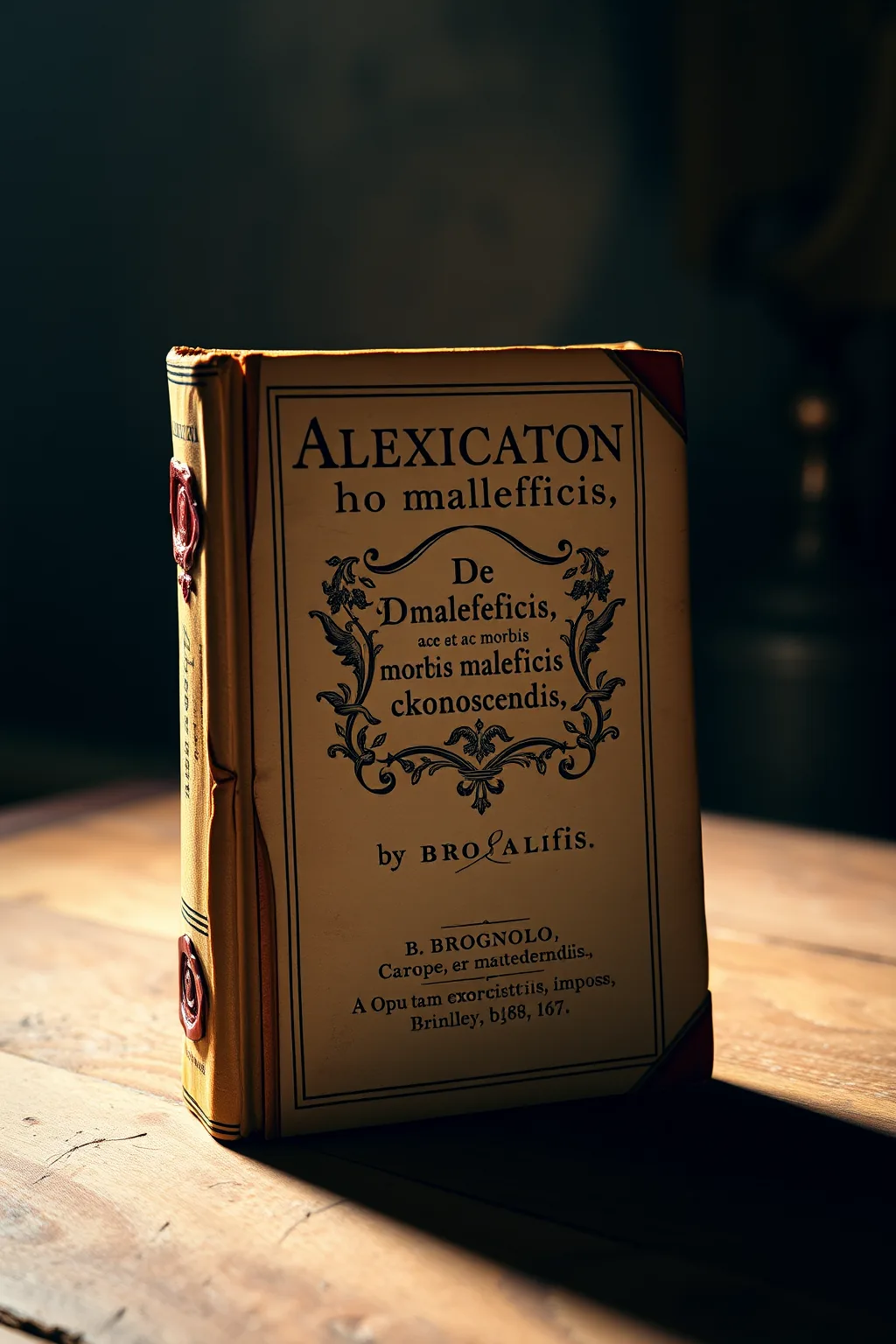
Alexicacon hoc est De maleficiis, ac morbis maleficis cognoscendis. Opus tam exorcistis, quam medicis, ... 1714: Vol 1 Iss 168
 83
83

Alexicacon hoc est De maleficiis, ac morbis maleficis cognoscendis. Opus tam exorcistis, quam medicis, ... 1714: Vol 1 Iss 168



Candido Brognolo's "Alexicacon" is a masterful exploration of the intersection between spiritual affliction and physical ailment, a cornerstone text for those navigating the complex tapestry of early modern demonology and ecclesiastical law. Brognolo’s meticulous approach, addressing both the spiritual exorcist and the learned physician, reveals a profound understanding of the holistic nature of perceived maledictions. His work offers invaluable insights into the diagnostic methodologies and therapeutic strategies employed during a period when the veil between the seen and unseen was remarkably thin. For practitioners and scholars of esoteric traditions, this treatise is an indispensable resource, illuminating the historical underpinnings of spiritual warfare and the intricate dance of forces that govern human well-being. A truly illuminating, albeit challenging, read.
📝 Description
83
Candido Brognolo's 1714 treatise, "Alexicacon hoc est De maleficiis, ac morbis maleficis cognoscendis," addresses malefic influences and associated diseases.
This 1714 volume by Candido Brognolo functions as a detailed guide for identifying and treating ailments caused by malefic forces. Brognolo writes for both exorcists and physicians, presenting a structured approach to what he terms "occult pathology." The work examines how subtle energies can affect individuals, moving beyond popular superstition to offer a systematic analysis. It reveals the connections between the human psyche, spirit, and physical body, suggesting methods for spiritual diagnosis and healing. The book provides insight into early modern European thought, where theological, medical, and magical concepts were closely linked. It is a resource for those interested in understanding the historical intersection of these disciplines and the hidden causes of suffering. This text aims to illuminate once guarded knowledge for contemporary readers.
Published in 1714, Brognolo's work belongs to a tradition of demonological and medical texts that sought to explain and combat perceived supernatural influences on health. It engages with the historical belief systems that linked spiritual affliction to physical illness, a common concern in early modern Europe. Such texts often served as manuals for clergy and physicians grappling with phenomena that defied conventional medical understanding. This book reflects a period where the boundaries between natural philosophy, theology, and the occult were fluid, and attempts were made to create rational frameworks for dealing with perceived malevolent forces.
💡 Why Read This Book?
Uncover forgotten knowledge on diagnosing and treating spiritual afflictions. Understand the historical synthesis of occultism, medicine, and theology. Ideal for scholars of witchcraft, demonology, and early modern esotericism, as well as practitioners seeking deeper historical context for spiritual healing and protection rituals.
⭐ Reader Reviews
Honest opinions from readers who have explored this book.
❓ Frequently Asked Questions
What is the primary focus of 'Alexicacon'?
The primary focus is on the identification and understanding of 'maleficia' (witchcraft or evil spells) and the diseases believed to be caused by them, offering guidance for both spiritual and medical practitioners.
Who is the intended audience for this book?
The work is explicitly intended for both exorcists, who deal with the spiritual and demonic aspects, and physicians, who address the physical manifestations of these afflictions.
What historical period does this book represent?
Published in 1714, it reflects the intellectual and spiritual climate of early modern Europe, a time when beliefs in witchcraft and demonic influence were deeply intertwined with scientific and medical understanding.
Does this book contain practical spells or rituals?
While it discusses methods of diagnosis and treatment, it primarily focuses on the theoretical and diagnostic aspects of understanding maleficia, rather than providing explicit spellcasting instructions. It's more of a guide to recognition and remediation.
What is the significance of 'Alexicacon' in the study of witchcraft?
It offers a crucial perspective on how learned individuals of the era approached the phenomenon of witchcraft, integrating theological, legal, and medical frameworks to explain and combat perceived supernatural harm.
🔮 Key Themes & Symbolism
The Intertwined Nature of Spiritual and Physical Affliction
Brognolo meticulously argues that spiritual malevolence, or 'maleficia,' is not merely an ethereal concept but has tangible, often debilitating, physical consequences. This volume looks at how unseen forces can manifest as observable diseases, challenging the conventional separation between the spiritual and corporeal. It posits that true healing requires addressing both the 'malefice' and its somatic symptoms, treating the soul's wound as intrinsically linked to the body's ailment. This holistic view reflects a pre-Enlightenment understanding where the divine and demonic held significant sway over human health and misfortune.
The Art of Esoteric Diagnosis and Counter-Measures
Central to 'Alexicacon' is the sophisticated methodology for discerning the presence of occult influences. Brognolo outlines diagnostic techniques that would have been employed by both clergy and physicians, focusing on subtle signs, behavioral anomalies, and the nature of the suffering. The work serves as a manual for identifying the signature of demonic interference or curses, providing a framework for understanding the 'how' and 'why' of such afflictions. It further explores the corresponding counter-measures, emphasizing the power of faith, ritual, and learned intervention to repel and neutralize these malevolent forces.
Bridging the Disciplines: Exorcism and Medicine
This treatise stands as a powerful proof of the era's effort to harmonize seemingly disparate fields: theology, demonology, and empirical medicine. Brognolo's intention was to equip both the spiritual healer (exorcist) and the empirical healer (physician) with the knowledge to effectively combat witchcraft-induced illnesses. By presenting a unified approach, the book highlights a time when the boundaries between science, faith, and the supernatural were fluid, and understanding the occult was considered essential for comprehending the full spectrum of human experience and suffering. It underscores the belief that divine and natural laws were often influenced by spiritual actors.
💬 Memorable Quotes
Direct passages from the work, attributed to the author.
“Morbos maleficos cognoscere, et sanare.”
— To know and to heal magically-induced illnesses. This succinct phrase captures the core purpose of the work: providing the knowledge to identify and then cure ailments believed to stem from supernatural or malevolent sources.
“Opus tam exorcistis, quam medicis...”
— A work for both exorcists and physicians. This highlights the book's unique aim to bridge spiritual and medical expertise, recognizing the dual nature of afflictions in the early modern worldview.
“De maleficiis, ac morbis maleficis.”
— On witchcraft, and witchcraft-induced illnesses. This directly states the subject matter, focusing on the causes (maleficia) and their effects (morbis maleficis), the central thesis of the text.
“Veritas lumen est.”
— Truth is light. A foundational philosophical statement suggesting that understanding and knowledge, particularly of hidden forces, brings clarity and the ability to overcome darkness or deception.
“Nihil sine causa.”
— Nothing happens without a cause. This principle underlies the diagnostic approach, insisting that even seemingly inexplicable ailments have specific origins, often supernatural in this context.
🌙 Esoteric Significance
Tradition
This work is deeply rooted in the Catholic tradition of demonology and exorcism, but it also engages with nascent forms of empirical observation and the burgeoning interest in the occult sciences of the early modern period. It bridges the gap between formal religious doctrine and the practical, often hidden, knowledge sought by those who believed in and actively combated spiritual malevolence. It reflects a period where theological treatises on the demonic were considered essential reading for any learned person concerned with the welfare of souls and bodies.
Symbolism
While not overtly symbolic in the manner of alchemical texts, 'Alexicacon' deals with potent symbolic concepts: 'maleficia' represents the corruption of divine order through malevolent intent, and the resulting 'morbi' (diseases) symbolize the tangible disruption of natural harmony. The text implicitly uses the symbolism of light versus darkness, healing versus decay, and spiritual purity versus demonic contamination, framing the struggle against witchcraft as a cosmic battle with wide implications for individual and societal well-being.
Modern Relevance
In an age often characterized by skepticism, 'Alexicacon' offers a valuable historical lens into how pre-modern societies understood and responded to suffering, anxiety, and the unknown. For contemporary practitioners of esoteric arts, it provides historical context for the development of spiritual warfare, protective rituals, and the holistic approach to health that acknowledges psychological and spiritual factors. Scholars can gain insights into the evolution of medical and theological thought, and the enduring human need to make sense of misfortune through frameworks that encompass both the visible and invisible worlds.
👥 Who Should Read This Book
Scholars of early modern history, religious studies, and the history of medicine will find "Alexicacon" an invaluable primary source. Those fascinated by witchcraft, demonology, and the evolution of occult sciences will discover a meticulously argued perspective from the period. Practitioners of esoteric traditions seeking to understand the historical roots of spiritual healing, protection, and the diagnosis of energetic imbalances will find deep resonance. Even general readers interested in the complex interplay of faith, reason, and the supernatural in shaping human understanding will be captivated by this profound exploration.
📜 Historical Context
Published in 1714, Candido Brognolo's "Alexicacon" emerges from a period of intense intellectual and spiritual ferment in Europe, a time when the scientific revolution was beginning to challenge traditional worldviews, yet belief in witchcraft, demonology, and divine intervention remained deeply ingrained. This era saw a complex interplay between emerging rationalism and persistent supernatural beliefs. Learned individuals, including physicians and theologians, grappled with understanding and explaining phenomena that transcended ordinary experience. The widespread witch trials of previous centuries had waned, but the underlying anxieties about malevolent forces and their impact on human life persisted. Brognolo's work exemplifies the sophisticated attempts to synthesize theological doctrine, legal frameworks, and medical observation in an effort to comprehend and combat these perceived threats, reflecting a world where the spiritual and material realms were not yet rigidly separated.
📔 Journal Prompts
Reflect on a time when you felt an 'affliction' that seemed to have both physical and emotional/spiritual components. How did you approach understanding and healing it?
Consider the historical tension between scientific explanation and supernatural belief. Where do you see this tension manifesting in contemporary society?
Brognolo addresses both exorcists and physicians. How might a modern approach to well-being integrate spiritual, psychological, and physiological perspectives?
What does the concept of 'maleficia' (evil influence) mean to you today, beyond its historical context? How do we conceptualize and combat negative forces in our lives?
Imagine you are an exorcist or physician in 1714 reading this text. What would be your immediate reactions, concerns, and potential applications of Brognolo's teachings?
🗂️ Glossary
Maleficia
Latin term for evil deeds, witchcraft, or malevolent magical acts believed to cause harm, illness, or misfortune.
Morbis Maleficis
Diseases or ailments specifically caused by or attributed to maleficia; occult or bewitched illnesses.
Exorcist
An individual, typically a cleric, authorized to perform exorcisms, expelling demons or evil spirits from a person or place.
Physician
A medical practitioner, especially one who is qualified to practice medicine; in this context, a learned individual who diagnoses and treats physical ailments.
Cognoscere
Latin for 'to know,' 'to recognize,' or 'to understand.' In this context, it refers to the process of discerning or identifying maleficia and their effects.
This book appears in 2 collections
🔮 Readers Also Liked
Browse all →





More by BROGNOLO, Candido, b. 1607.
All books →

From the “Witchcraft” Collection
View all →





More Free Witchcraft & Paganism Books
View all →