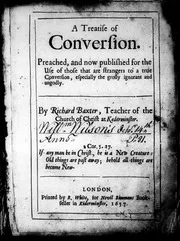
A treatise of conversion. 1657
 83
83

A treatise of conversion. 1657



Alaric Kestrel, Metaphysical Studies Reviewer — Richard Baxter’s 'A Treatise of Conversion' is a cornerstone text for understanding the dynamics of spiritual transformation. Far from a simple theological tract, it offers profound insights into the soul’s journey from darkness to light, exploring the intricate pathways of divine intervention and human agency. Baxter’s rigorous examination of the conversion process reveals a sophisticated understanding of psychological and spiritual mechanics, making it invaluable for scholars and practitioners alike. Its strength lies in its methodical approach, guiding the reader through the nuanced stages of awakening. This work is a vital resource for anyone seeking to comprehend the profound shifts that define spiritual growth and the hidden architecture of the soul's reorientation.
📝 Description
83
Richard Baxter's 1657 'A Treatise of Conversion' examines the mechanics of spiritual transformation.
Richard Baxter's 1657 work, 'A Treatise of Conversion,' details the process by which a soul moves from a state of spiritual dormancy to one of awakened awareness. Baxter, a prominent theologian of his time, focuses on the internal workings of this change. He describes how divine influence and the interplay of human will and divine grace contribute to this redirection of the soul. The book is structured not as a simple exhortation, but as a guide for understanding the complexities of the human heart. It aims to help readers move beyond ordinary concerns toward a more enlightened spiritual state.
This treatise invites contemplation on the fundamental nature of existence and the potential for significant personal change. It addresses a desire for deeper purpose and the search for the inner spark that leads to spiritual clarity. Baxter's approach offers a method for comprehending individual metamorphosis and the deeper mysteries associated with spiritual renewal. The text unfolds with a deliberate pace, encouraging reflection on essential questions of being.
Published in 1657, Baxter's treatise engages with a tradition of Christian thought concerned with the inner life and the direct experience of the divine. While not overtly mystical in the vein of some continental mystics, it shares an interest in the soul's active participation in its own salvation and its response to divine promptings. This aligns with a broader Protestant emphasis on personal faith and the internal spiritual state, a current within the period that often intersected with more contemplative or 'experimental' forms of religion.
💡 Why Read This Book?
Unlock the secrets of profound personal transformation and spiritual awakening. 'A Treatise of Conversion' offers a profound exploration of the soul’s journey from spiritual dormancy to vibrant consciousness. Ideal for seekers of esoteric wisdom, scholars of religious history, and practitioners of spiritual disciplines who wish to understand the mechanics of inner change and divine grace.
⭐ Reader Reviews
Honest opinions from readers who have explored this book.
❓ Frequently Asked Questions
What is the primary focus of this treatise?
The primary focus is the intricate process of spiritual conversion, detailing the soul's journey from a state of sin and spiritual unawareness to one of grace and divine connection.
Who is the intended audience for this book?
The book is intended for earnest individuals seeking spiritual understanding, theologians, and those interested in the historical evolution of Christian thought on spiritual transformation.
What makes this treatise relevant to esoteric studies?
Its exploration of inner transformation, the soul's mechanics, and the subtle influences of divine will aligns with core esoteric principles of spiritual alchemy and personal evolution.
Is this book difficult to understand for a modern reader?
While written in 17th-century English, its profound themes of spiritual change are universally accessible, particularly for those with a foundational interest in theological or metaphysical concepts.
What is the historical significance of this work?
Published in 1657, it reflects a critical period of religious and intellectual ferment, offering insights into Puritan theology and the prevailing views on salvation and spiritual experience.
🔮 Key Themes & Symbolism
The Alchemy of the Soul
This treatise looks at the profound process of spiritual alchemy, viewing conversion not as a singular event but as a transformative journey of the soul. Baxter meticulously dissects the inner workings, illustrating how the spiritual essence of an individual can be transmuted from a state of impurity to one of divine radiance. It speaks to the hidden potentials within, the capacity for profound change that mirrors the alchemical pursuit of perfecting base metals into gold, but on a spiritual plane. This theme invites readers to consider their own inner landscape as a crucible for divine work, a space where transformation is not only possible but divinely ordained.
The Unseen Architecture of Grace
Baxter illuminates the subtle yet powerful forces of divine grace that guide and effect spiritual transformation. He presents grace not as a passive force but as an active, guiding presence that shapes the contours of the soul. This theme explores the intricate 'architecture' of divine intervention, revealing how it interacts with human will and understanding. For the esoteric seeker, this offers a glimpse into the unseen currents that govern spiritual progress, the hidden mechanisms by which souls are drawn towards their highest potential. It underscores the notion of a divinely ordered cosmos where transformation is guided by an intelligent, benevolent force.
The Labyrinth of Inner Will
Central to conversion is the complex interplay between divine influence and the individual's will. Baxter navigates the 'labyrinth' of the human psyche, examining the resistance, the yearning, and the ultimate surrender that characterize the path to spiritual awakening. This theme speaks to practitioners who understand the importance of intention and directed will in spiritual practice. It explores how conscious choice, coupled with divine prompting, leads to profound shifts in perception and being. The treatise offers a nuanced perspective on free will within a divinely guided framework, a crucial concept for anyone undertaking a path of conscious evolution.
💬 Memorable Quotes
Direct passages from the work, attributed to the author.
“Grace, a hidden architect, rebuilds the fallen edifice of the heart.”
— Illustrates the active, shaping force of divine grace in rectifying the spiritual damage caused by sin, emphasizing its restorative and creative power.
“To turn the heart is to turn the world within.”
— Highlights the profound internal shift that conversion signifies, suggesting that internal spiritual change reorients one's entire perception of reality.
“The path to conversion is paved with both divine summons and personal resolve.”
— Emphasizes the dual nature of spiritual transformation, requiring both God's initiative and the individual's active participation and commitment.
“In surrender lies the seed of true spiritual strength.”
— Suggests that relinquishing egoic control and yielding to a higher power is the foundation for authentic spiritual power and growth.
💡 Key Ideas
Editorial paraphrase of the work's core concepts — not direct quotes.
The soul's true awakening is the dawn of divine light.
This quote captures the transformative power of conversion, likening the soul's realization of spiritual truth to the arrival of morning light after darkness.
🌙 Esoteric Significance
Tradition
While rooted in Puritan theology, Baxter's treatise resonates deeply with esoteric traditions that focus on inner transformation and the 'Great Work.' Its methodical exploration of the soul's journey from a lower to a higher state of consciousness aligns with concepts found in Gnosticism, Hermeticism, and certain branches of Christian mysticism, all of which emphasize spiritual alchemy and the unfolding of divine potential within the individual.
Symbolism
The text employs powerful symbolism, framing conversion as a journey from darkness to light, from death to resurrection, and from bondage to freedom. The 'heart' is depicted as a battleground and a garden to be cultivated, while 'grace' acts as a divine sculptor or architect. These metaphors evoke alchemical processes of purification, refinement, and the creation of a new spiritual substance, inviting readers to interpret the spiritual process through a rich symbolic language.
Modern Relevance
In an age often characterized by spiritual seeking and personal development, Baxter's treatise offers enduring relevance. Its examination of the psychological and spiritual mechanics of change provides a timeless framework for understanding personal growth. For modern practitioners of mindfulness, meditation, and self-cultivation, the treatise offers insights into the deeper currents of consciousness and the potential for profound, lasting transformation of the self.
👥 Who Should Read This Book
This key work is essential for a diverse readership. For **spiritual seekers** and those on a path of personal evolution, it offers a profound roadmap to inner transformation and a deeper understanding of divine connection. **Scholars of religious history, theology, and philosophy** will find it an indispensable primary source for understanding 17th-century Puritan thought and its emphasis on spiritual experience. **Practitioners of esoteric disciplines** seeking to integrate theological frameworks with their practices will appreciate its detailed exposition of soul mechanics and grace. **Beginners** in spiritual study will find a clear, albeit challenging, introduction to the fundamental concepts of conversion and spiritual awakening, illuminated by Baxter's rigorous yet compassionate prose.
📜 Historical Context
Published in 1657, 'A Treatise of Conversion' emerges from the turbulent spiritual and political field of mid-17th century England. This era, marked by the English Civil War and the subsequent Commonwealth, was a crucible for intense theological debate and fervent religious experience. Puritanism, with its emphasis on personal piety, predestination, and the transformative power of God's grace, deeply influenced thinkers like Richard Baxter. The period saw a proliferation of devotional literature and theological treatises aimed at guiding individuals through the complexities of faith and salvation. Baxter's work stands as a significant contribution to this tradition, reflecting the era's deep concern with the state of the soul and the arduous, yet vital, process of spiritual rebirth. It provides a window into the intellectual and spiritual preoccupations of a society grappling with profound societal upheaval and seeking solace and meaning in religious conviction.
📔 Journal Prompts
Reflect on the 'alchemy of the soul': what aspects of yourself do you wish to transmute, and how might divine grace facilitate this process?
Consider the 'unseen architecture of grace' in your life. Where have you experienced subtle divine guidance or intervention?
Explore the 'labyrinth of inner will.' How do you work through the balance between your personal desires and the call towards spiritual growth?
Baxter speaks of the soul's journey from darkness to light. Describe a personal experience that felt like a transition from spiritual obscurity to clarity.
What does 'surrender' mean to you in a spiritual context? How can embracing surrender lead to genuine strength?
🗂️ Glossary
Conversion
In a theological context, the profound spiritual transformation of an individual, involving a turning away from sin and towards God, often characterized by a renewed sense of purpose and divine connection.
Grace
Divine assistance, favor, or love bestowed by God upon humanity, often seen as the enabling power for spiritual growth, salvation, and virtuous living.
Soul
The immaterial essence of a human being, believed to be the seat of consciousness, emotion, will, and spiritual identity, capable of existing independently of the physical body.
Edifice
In this context, a metaphorical term referring to the structure or framework of the human heart or spiritual being, often implying something that can be built, damaged, or rebuilt.
Labyrinth
A complex network of paths or passages, used metaphorically to describe the intricate, often confusing, inner workings of the human mind, will, and spiritual life.
This book appears in 2 collections
🔮 Readers Also Liked
Browse all →


![Cruels effets de la vengeance du Cardinal de Richelieu, ou Histoire des diables de Loudun, de la possession des religieuses ursulines, et de la condamnation et du suplice [sic] d'Urbain Grandier, curé de la même ville. 1716: Iss 53](/img/thumb/cruels-effets-de-la-vengeance-du-cardinal-de-richelieu-ou-histoire-des-diables-de-loudun-de-la-possession-des-religieuses-ursulines-et-de-la-condamnation-et-du-suplice-sic-d-urbain-grandier-cur-de-la-.webp)






From the “Witchcraft” Collection
View all →








More Free Witchcraft & Paganism Books
View all →