Views from the Real World by G. I. Gurdjieff

 72
72

Views from the Real World by G. I. Gurdjieff



Silas Hawthorne (Hermetic Studies Editor) — 'Views from the Real World' is an indispensable cornerstone for any serious student of Gurdjieff's Work. These early talks, captured in their nascent vibrancy, offer a rare, unmediated access to the foundational principles of self-observation and conscious awareness. The compilation, though student-generated, possesses an undeniable authenticity, reflecting the potent, often startling, nature of Gurdjieff's direct method. For practitioners seeking to deepen their understanding of the Work's practical application and the underlying metaphysical framework, this volume is an invaluable, illuminating resource. Its raw power resonates profoundly.
📝 Description
72
G. I. Gurdjieff's early public talks, transcribed by pupils, form the core of 'Views from the Real World'.
This collection presents G. I. Gurdjieff's early public addresses, transcribed by his students. The talks took place in various cities, from Russia during its revolution to intellectual centers in Europe and America. The book aims to convey Gurdjieff's cosmology and teachings directly. It includes an essay, 'Glimpses of Truth,' written by a Russian student. This essay provides context for the period and the early development of Gurdjieff's work.
The content is not abstract philosophy but practical instruction. Gurdjieff's language is described as direct and unadorned, intended to help listeners see beyond everyday perceptions. The goal is to awaken a different kind of awareness and to understand the mechanics of consciousness. The book targets individuals seeking a deeper understanding of their inner capabilities and the nature of reality.
G. I. Gurdjieff's teachings, often termed the 'Fourth Way,' stand apart from more common spiritual paths. Unlike monastic or purely intellectual traditions, his system emphasizes work on oneself within everyday life. The collected talks in 'Views from the Real World' originate from a period when Gurdjieff was establishing his core ideas in post-revolutionary Russia and later in Europe. This approach to spiritual development, focusing on conscious effort and the observation of one's inner states, influenced later movements and thinkers.
✍️ Author
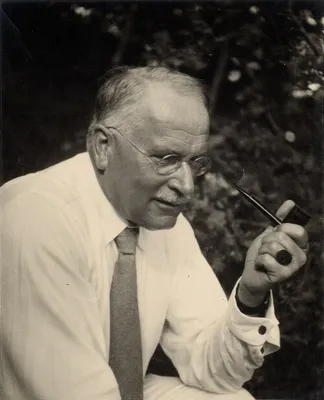
the spiritual leader G. I. Gurdjieff comp
Carl Gustav Jung ( YUUNG; Swiss Standard German: [ˈkarl ˈjʊŋ]; 26 July 1875 – 6 June 1961) was a Swiss psychiatrist, psychotherapist, and psychologist who founded the school of analytical psychology. He was a prolific author of over twenty books, illustrat…
💡 Why Read This Book?
Uncover the foundational dialogues of a revolutionary spiritual system. "Views from the Real World" offers direct access to Gurdjieff's transformative ideas, challenging conventional perceptions of reality and self. Ideal for seekers yearning for genuine inner change, scholars of esoteric traditions, and practitioners seeking to invigorate their understanding of self-awareness and spiritual development.
⭐ Reader Reviews
Honest opinions from readers who have explored this book.
❓ Frequently Asked Questions
Who was G. I. Gurdjieff?
G. I. Gurdjieff was a spiritual teacher and philosopher of Armenian and Greek descent who introduced the 'Fourth Way' or 'The Work' to the Western world in the early 20th century, focusing on developing consciousness and self-awareness.
What is the 'Real World' Gurdjieff refers to?
Gurdjieff's 'Real World' signifies a higher state of consciousness, a perception beyond the ordinary, mechanical existence that most humans inhabit, revealing the true nature of reality and oneself.
What is the significance of the 'Glimpses of Truth' essay?
This essay, included in the book, provides an early, personal account of Gurdjieff's teachings, offering valuable context and insight into the initial impact of his methods on his Russian pupils before the revolution.
What is the 'Fourth Way'?
The 'Fourth Way' is a system of spiritual development that Gurdjieff taught, emphasizing that transformation can be achieved without renouncing everyday life, by integrating work, emotional development, and intellectual understanding.
Is this book suitable for beginners?
While challenging, this book is accessible to dedicated beginners willing to engage with profound concepts. It serves as an excellent entry point into Gurdjieff's thought, though deeper study may be beneficial.
🔮 Key Themes & Symbolism
The Nature of Consciousness and Self-Awareness
This theme looks at Gurdjieff's radical assertion that ordinary human consciousness is largely asleep, operating on autopilot and unaware of its own true potential. The book explores the concept of 'waking up' through rigorous self-observation, highlighting the mechanical nature of our thoughts, emotions, and actions. It introduces the idea of multiple 'selves' and the arduous path towards integrating them into a unified, conscious being capable of experiencing the 'real world' beyond subjective illusions and societal conditioning. The emphasis is on the practical, experiential nature of this awakening.
The Illusion of Ordinary Reality
Gurdjieff challenges the fundamental assumptions we hold about our everyday existence, presenting it as a dreamlike state characterized by self-deception and a lack of genuine freedom. 'Views from the Real World' elucidates how societal norms, personal habits, and ingrained beliefs create a false reality that obscures deeper truths. The talks explore the symbolic language of existence, urging readers to question their perceptions and recognize the subtle yet pervasive mechanisms that keep humanity bound to a superficial understanding of life. The goal is to pierce this veil and apprehend a more authentic dimension of being.
The Path of Transformation and Inner Work
Central to this collection is the concept of 'The Work,' a rigorous spiritual discipline designed for profound inner transformation. Gurdjieff's teachings are not abstract philosophy but a practical methodology for self-realization. The book outlines the principles of conscious effort, the importance of suffering as a catalyst for growth, and the necessity of confronting one's own limitations. It emphasizes the development of a 'new organ of perception' through sustained practice, allowing individuals to access higher states of being and contribute to a more conscious humanity. The talks serve as a map for this challenging yet ultimately liberating journey.
💬 Memorable Quotes
Direct passages from the work, attributed to the author.
“"We are living in a dream."”
— This concise statement captures Gurdjieff's core assertion that ordinary human perception is largely illusory, driven by habitual reactions rather than conscious awareness, and that true reality lies beyond this dream state.
“"To be is to do."”
— This aphorism underscores the Gurdjieffian emphasis on action and conscious effort as the means to achieve being, contrasting with passive existence or mere intellectual understanding.
“"The more you know yourself, the more you know the world."”
— This highlights the interconnectedness of inner and outer realities in Gurdjieff's system. True understanding of the external world is only possible through deep self-knowledge and the shedding of personal illusions.
“"Man is not born with a soul, but can create one."”
— This provocative statement points to Gurdjieff's teaching that the soul is not an inherent possession but a potential that must be consciously earned and developed through disciplined inner work and spiritual effort.
“"We must learn to see without thinking."”
— This encourages a shift from the analytical, conceptual mind to direct, unmediated perception, a key practice in Gurdjieff's method for accessing a more profound and objective reality.
🌙 Esoteric Significance
Tradition
Gurdjieff's teachings, often referred to as 'The Work' or the 'Fourth Way,' represent a unique synthesis drawing from various esoteric traditions, including Sufism, Buddhism, and Hermeticism, but presented in a distinctly modern, psychological, and practical framework. It is characterized by its emphasis on conscious effort, self-observation, and the integration of intellectual, emotional, and physical development, aiming to awaken dormant human potential and achieve a higher state of consciousness independent of traditional religious dogma.
Symbolism
Within 'Views from the Real World,' symbolism is not merely decorative but an integral part of the teaching. Gurdjieff employs allegories and metaphors to convey complex psychological and cosmological truths that transcend ordinary language. Concepts like the 'machine man,' the 'three brains,' and the various 'laws' governing existence are symbolic representations of inner states and universal principles. Understanding these symbols requires a shift from literal interpretation to an intuitive, experiential grasp of their deeper meaning, acting as keys to unlock the hidden layers of reality and consciousness.
Modern Relevance
The enduring relevance of 'Views from the Real World' lies in its potent diagnosis of the human condition: our tendency towards mechanicality, self-deception, and a disconnection from our true potential. In an age saturated with information yet often lacking in wisdom, Gurdjieff's call for conscious awareness, self-responsibility, and inner transformation resonates deeply. His practical methods for self-study offer a timeless antidote to spiritual complacency, providing individuals with tools to read through the complexities of modern life with greater presence, clarity, and authentic freedom.
👥 Who Should Read This Book
This volume is essential for serious seekers of spiritual truth and practical self-transformation who are ready to move beyond theoretical knowledge into direct experience. Scholars of comparative religion and esoteric philosophy will find Gurdjieff's unique system a fascinating subject for study. Practitioners of contemplative disciplines, such as meditation or yoga, may discover in 'The Work' a complementary path to deepen their understanding of consciousness and expand their self-awareness. Even those new to Gurdjieff's ideas but possessing a sincere desire for fundamental change will find these early talks a compelling, albeit challenging, initiation.
📜 Historical Context
Published in the tumultuous early 20th century, a period marked by profound social upheaval, scientific advancement, and a widespread questioning of established spiritual and philosophical paradigms, G. I. Gurdjieff's 'Views from the Real World' emerged as a radical counterpoint. The collection of talks, originating from sessions held in cities like Moscow and Berlin, reflects the intellectual ferment and spiritual searching of the era. The backdrop of the Russian Revolution, the aftermath of World War I, and the burgeoning modernist movements in art and thought provided fertile ground for Gurdjieff's challenging and unconventional teachings. His work offered a powerful, practical path for individuals seeking meaning and liberation amidst widespread existential uncertainty and a perceived decline in traditional spiritual authority.
📔 Journal Prompts
Reflect on moments in your day where you feel you are operating 'mechanically.' What triggers these states?
Identify one deeply held belief about yourself or the world that you suspect might be an illusion. Explore its origins.
Consider the 'dream' of your current reality. What aspects of this dream would you most like to awaken from?
How can the concept of 'conscious effort' be practically applied to a mundane task you perform daily?
What does 'seeing without thinking' mean to you, and how might you begin to practice it?
🗂️ Glossary
The Work
The spiritual discipline and system of self-transformation taught by G. I. Gurdjieff, emphasizing conscious effort, self-observation, and the development of a unified consciousness.
Mechanicality
The state of being driven by unconscious habits, external influences, and automatic reactions, characteristic of ordinary human existence according to Gurdjieff.
Consciousness
In Gurdjieff's system, refers to a state of genuine awareness, presence, and self-remembering, distinct from the ordinary, sleeping state of mind.
Self-Observation
The practice of observing one's own thoughts, feelings, and actions without judgment, a core part of Gurdjieff's method for understanding one's inner workings.
Essentuki
A spa town in the Caucasus region of Russia where Gurdjieff conducted some of his early teachings and where significant portions of 'Views from the Real World' were compiled.
This book appears in 2 collections
🔮 Readers Also Liked
Browse all →








From the “Theosophy” Collection
View all →



More Free Theosophy & Anthroposophy Books
View all →