Theosophy Vol-L,No-5,March 1962

 73
73

Theosophy Vol-L,No-5,March 1962

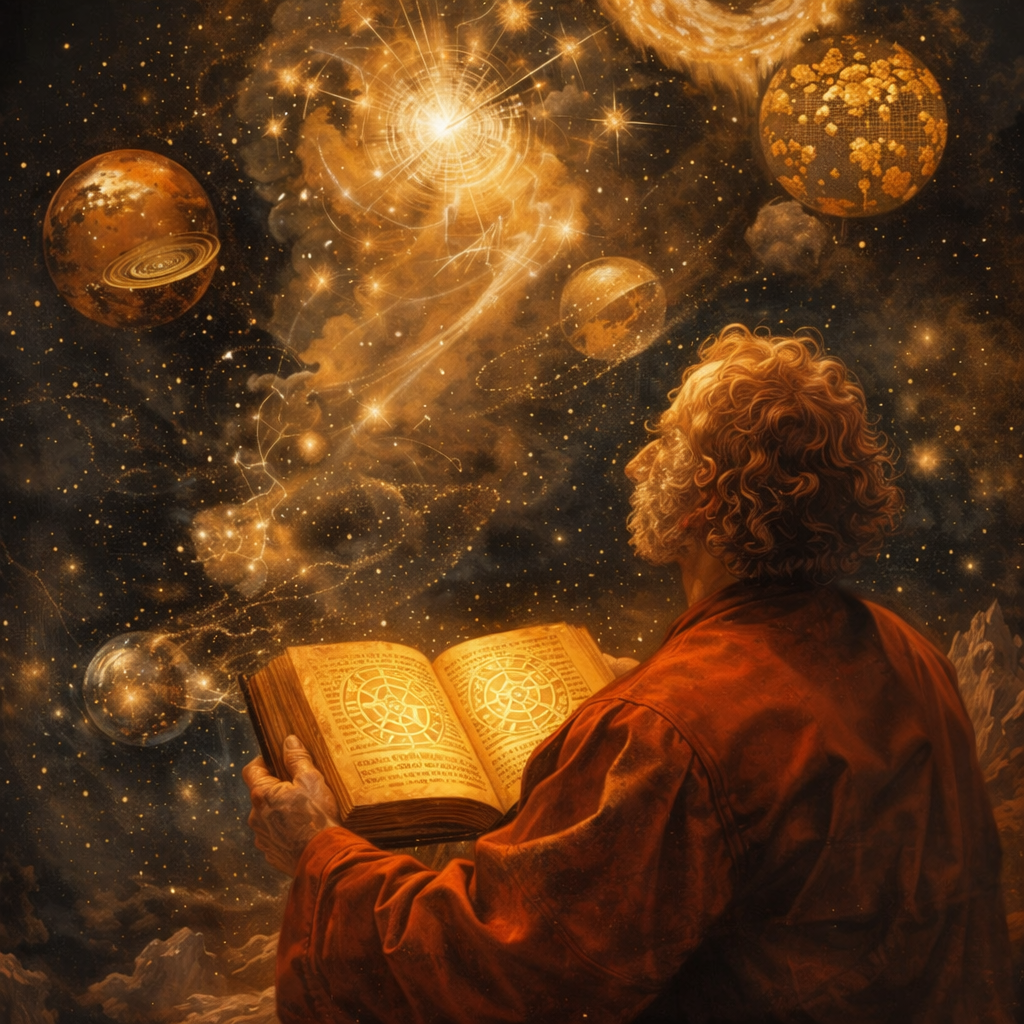

Review by Balthazar Finch (Senior Critic, Occult Philosophy) — This March 1962 issue of 'Theosophy' is a potent distillation of esoteric thought, offering profound insights into the perennial philosophy. The anonymous contributors skillfully navigate complex spiritual concepts, revealing the interconnectedness of the macrocosm and microcosm. Its strength lies in its unvarnished presentation of Theosophical principles, ideal for seasoned practitioners and dedicated students of occult science. While demanding focused attention, the reward is a deeper understanding of cosmic laws and the spiritual journey. A valuable addition to any serious occult library.
📝 Description
73
Delve into the arcane depths of consciousness with 'Theosophy Vol-L, No-5, March 1962', a rare portal into the esoteric heart of the mid-20th century. This issue unfurls a tapestry woven with profound metaphysical inquiries, probing the veiled landscapes of spiritual evolution, ancient wisdom, and the subtle energies that govern existence. The air within these pages crackles with the silent hum of hidden knowledge, inviting the earnest seeker to shed the mundane and embrace the luminous path towards self-realization. It speaks to those who yearn to understand the cosmic dance, the interconnectedness of all things, and the latent divine spark within humanity. Philosophically, it stands as a beacon, illuminating the timeless pursuit of truth beyond the confines of dogma, offering a glimpse into the architectonics of the universe and the inner mysteries of the soul.
💡 Why Read This Book?
Uncover timeless wisdom on spiritual evolution and cosmic interconnectedness. This issue is essential for seekers of hidden knowledge, students of comparative religion, and practitioners of esoteric arts. It offers a unique window into the Theosophical movement's enduring relevance for understanding humanity's place in the universe.
⭐ Reader Reviews
Honest opinions from readers who have explored this book.
❓ Frequently Asked Questions
What is Theosophy?
Theosophy is a spiritual philosophy that seeks to understand the fundamental truths underlying all religions, sciences, and philosophies, emphasizing the divine nature of humanity and the interconnectedness of all life.
Who was H.P. Blavatsky?
Helena Petrovna Blavatsky was a key figure in the Theosophical Society, a Russian occultist and writer who co-founded the Society in 1875 and authored influential works like 'Isis Unveiled' and 'The Secret Doctrine'.
Is this issue suitable for beginners?
While dense with esoteric concepts, this issue can be approached by dedicated beginners willing to engage with challenging philosophical ideas. Prior familiarity with basic Theosophical tenets may enhance comprehension.
What is the significance of the March 1962 date?
The March 1962 date places this issue within a specific period of Theosophical discourse, reflecting the intellectual currents and ongoing explorations of spiritual themes prevalent during the mid-20th century.
Where can I find more Theosophical literature?
Esoteric Library offers a curated collection of Theosophical texts, including foundational works by Blavatsky, Annie Besant, and others, providing further avenues for in-depth study.
🔮 Key Themes & Symbolism
The Great Chain of Being
This issue delves into the ancient concept of the Great Chain of Being, exploring the hierarchical structure of the cosmos from the divine to the material. It elucidates the interconnectedness of all planes of existence and the evolutionary journey of souls through various kingdoms, offering a framework for understanding universal order and individual spiritual progression.
The Seven Planes of Consciousness
A central focus is the exploration of the seven planes of consciousness, a cornerstone of Theosophical cosmology. These planes represent different states of awareness and existence, from the dense physical to the rarefied spiritual. The text illuminates how consciousness operates on each plane and the methods by which individuals can ascend, revealing the subtle architecture of the psyche and the universe.
Symbolism in Esoteric Traditions
This volume offers profound insights into the symbolic language of ancient wisdom traditions. It deciphers the hidden meanings embedded in myths, rituals, and sacred texts, revealing how symbols act as keys to unlock higher spiritual truths. Understanding this symbolic lexicon is presented as crucial for grasping the deeper, esoteric messages often concealed within exoteric forms.
💬 Memorable Quotes
“The veil of matter is thin for those who seek.”
— This suggests that material existence is not an insurmountable barrier to spiritual perception, but rather a permeable layer that can be transcended through dedicated inner work and a sincere quest for truth.
“Evolution is not a blind force, but a guided ascent.”
— This quote reframes evolution from a random process to a divinely orchestrated journey, emphasizing purpose and intelligence behind the unfolding of consciousness and life.
“Within the atom, the cosmos mirrors itself.”
— This highlights the principle of microcosm and macrocosm, asserting that the fundamental laws and structures of the universe are reflected in the smallest particles of matter, and vice versa.
“Wisdom whispers in the silence between thoughts.”
— This points to the importance of contemplative practices and inner stillness as pathways to receiving intuitive knowledge and spiritual insights that bypass the chatter of the analytical mind.
“The path of return is the path of remembrance.”
— This suggests that spiritual awakening involves recollecting one's true, divine nature, which has been obscured by the illusions of material existence and forgetfulness.
🌙 Esoteric Significance
Tradition
This issue is deeply rooted in the Western Esoteric Tradition, specifically within the framework of Theosophy as established by Helena Blavatsky. It draws upon a synthesis of Eastern philosophies (Vedanta, Buddhism), Hermeticism, Kabbalah, and Neoplatonism, aiming to present a universal wisdom that transcends sectarian boundaries. The teachings focus on reincarnation, karma, and the evolution of consciousness through spiritual planes.
Symbolism
Symbolism is paramount, acting as a vehicle for conveying profound truths that elude direct intellectual grasp. Expect explorations of archetypal imagery, alchemical metaphors, and the hidden meanings within sacred geometry and cosmological diagrams. These symbols are presented not merely as decorative elements but as keys to unlocking deeper spiritual understanding and accessing higher realms of consciousness.
Modern Relevance
The themes explored—consciousness evolution, interconnectedness, the search for meaning beyond the material—remain profoundly relevant in the 21st century. In an age of information overload and existential uncertainty, the wisdom offered provides a grounding perspective, encouraging inner exploration and a holistic understanding of self and the universe. The emphasis on subtle energies and spiritual development offers pathways for personal growth and well-being.
👥 Who Should Read This Book
This issue is a treasure for dedicated students of the occult, scholars of comparative religion, and practitioners of esoteric disciplines seeking to deepen their understanding of Theosophical principles. Aspiring mystics and individuals on a spiritual quest will find profound insights into the nature of reality and the soul's journey. While accessible to those new to the subject with a serious intent, it offers the most reward to readers already familiar with metaphysical concepts and the foundational ideas of spiritual philosophy.
📜 Historical Context
Published in March 1962, this issue of 'Theosophy' emerges from a vibrant period of post-war spiritual exploration and intellectual ferment. The mid-20th century witnessed a resurgence of interest in Eastern philosophies, mysticism, and alternative spiritual paths as a counterpoint to prevailing materialism. The Theosophical Society, though past its initial surge, continued to be a significant conduit for disseminating esoteric teachings globally. This era saw scholars and seekers alike engaging with complex metaphysical concepts, often seeking to reconcile ancient wisdom with emerging scientific understanding. The tone reflects a time when the pursuit of higher consciousness and esoteric knowledge was gaining wider, albeit often niche, traction.
📔 Journal Prompts
Reflect on the concept of the Great Chain of Being. How does your personal evolution fit into this larger cosmic structure?
Consider the Seven Planes of Consciousness. Which plane do you feel most attuned to, and what practices could help you ascend to higher planes?
Identify a symbol from nature or a cultural artifact. What deeper, hidden meaning might it represent in relation to your spiritual journey?
How can the principle of microcosm and macrocosm inform your understanding of personal responsibility within the larger universe?
In what ways can you cultivate inner stillness to better 'hear' the whispers of wisdom beyond your everyday thoughts?
🗂️ Glossary
Macrocosm
The universe considered as a complex, ordered whole, often contrasted with the microcosm, representing the individual human being or a smaller system.
Microcosm
The human being or a smaller system, seen as a miniature representation of the macrocosm, embodying its principles and laws.
Monad
In Theosophy, the divine spark or individualized consciousness, considered the ultimate spiritual principle within a being, undergoing evolution.
Karma
The universal law of cause and effect, where actions in this life and past lives influence future experiences and circumstances.
Deva
A celestial being or divine entity in Hindu and Buddhist traditions, often associated with specific aspects of nature or cosmic functions.