Theosophy Vol-III,No-1,November 1914

 80
80

Theosophy Vol-III,No-1,November 1914

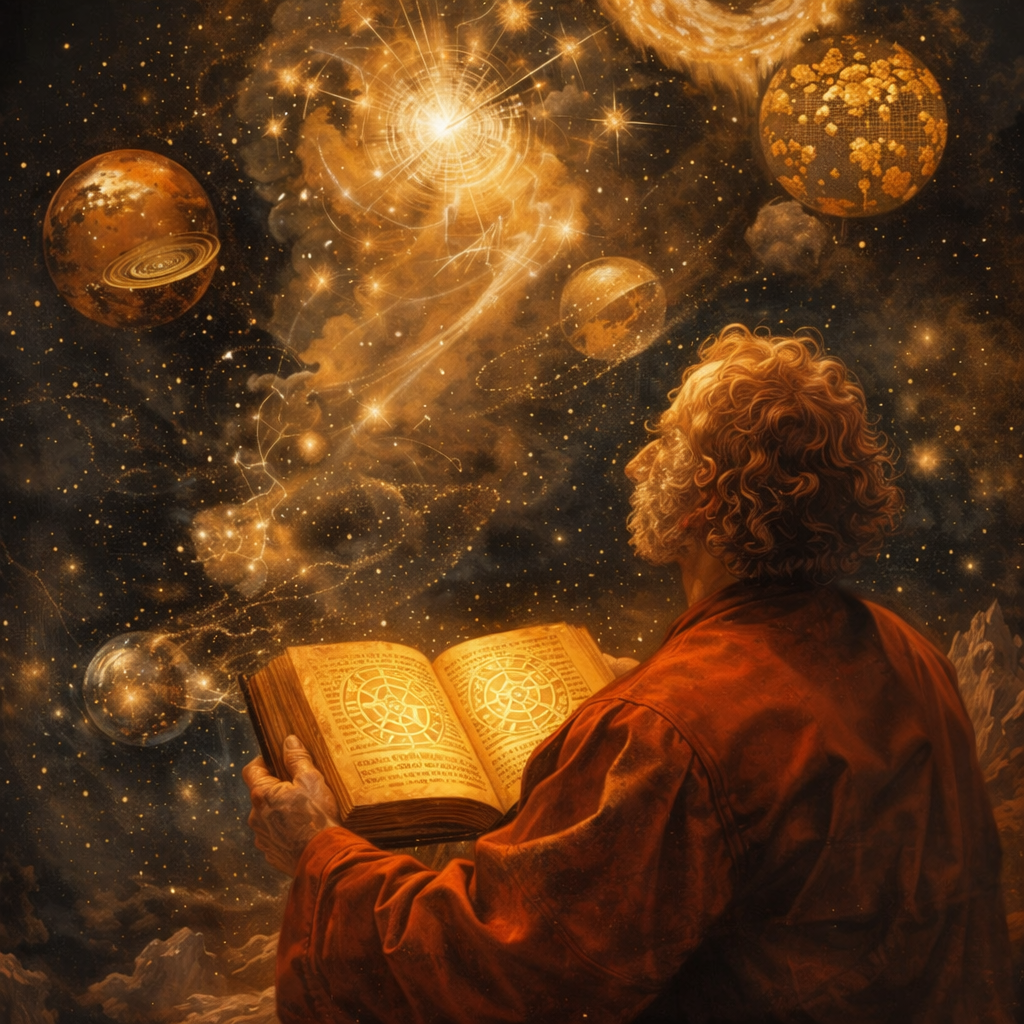

Review by Evander Ashcroft (Alchemy & Hermeticism Editor) — This November 1914 issue of 'Theosophy' is a potent distillation of early 20th-century esoteric thought. Its authors, though anonymous, weave intricate arguments concerning karma, reincarnation, and the subtle bodies with remarkable clarity and depth. The strength lies in its direct engagement with foundational Theosophical concepts, offering insights that resonate even today for students of comparative mysticism. It's particularly valuable for those seeking to grasp the roots of Anthroposophical ideas and the broader spiritual currents of its time. A substantial resource for serious practitioners and academic researchers alike.
📝 Description
80
The November 1914 issue of Theosophy presents discussions on spiritual evolution and cosmic cycles.
This issue of Theosophy, published in November 1914, contains articles that examine ancient philosophies and the concept of spiritual evolution. It addresses the cyclical nature of the cosmos and endeavors to shed light on what it terms ultimate truths. The content is aimed at individuals interested in occultism and comparative religion, proposing a framework for understanding universal wisdom. The authors suggest that comprehending these spiritual traditions reveals humanity's role in a larger cosmic order. The essays within this publication are presented as tools for gaining a deeper understanding of the universe and the forces that influence reality. It aims to offer readers a perspective grounded in esoteric thought.
Published during the height of the Theosophical Society's influence, this 1914 issue reflects a period when esoteric ideas gained significant traction in the West. It engages with themes common in theosophical literature, such as the exploration of ancient wisdom traditions, the concept of spiritual progress across lifetimes, and a belief in underlying universal laws governing existence. The publication situates itself within a broader movement seeking to synthesize Eastern and Western spiritual concepts, often looking to non-Western sources for philosophical insights.
💡 Why Read This Book?
Delve into the foundational texts of Theosophy and discover timeless wisdom on spiritual evolution, karma, and the hidden nature of reality. Ideal for seekers of deeper truth, students of comparative religion, and practitioners of esoteric disciplines yearning for a more profound understanding of the cosmos and their place within it. Explore the intellectual landscape that shaped modern spiritual movements.
⭐ Reader Reviews
Honest opinions from readers who have explored this book.
❓ Frequently Asked Questions
What is Theosophy?
Theosophy is a spiritual philosophy aiming to synthesize Eastern and Western religions and philosophies, emphasizing universal brotherhood, comparative religion, and the study of ancient wisdom traditions and occult phenomena.
Who was the author?
The author is listed as 'Unknown' for this specific issue, which was common for collective works and journal contributions in early Theosophical publications, reflecting a focus on the shared message rather than individual authorship.
What is the significance of the date?
Published in November 1914, this issue emerges during a pivotal period in history, just as World War I began, offering a unique perspective on spiritual inquiry amidst global upheaval.
What topics are covered?
This issue likely delves into core Theosophical tenets such as karma, reincarnation, the nature of consciousness, spiritual evolution, and the study of ancient mysteries and symbolism.
Is this related to Anthroposophy?
Yes, Theosophy is a direct precursor and closely related to Anthroposophy, founded by Rudolf Steiner, who was initially a prominent figure within the Theosophical Society. This issue provides historical context for that divergence.
🔮 Key Themes & Symbolism
The Unseen Architecture of Existence
This theme explores the hidden laws and forces that govern the universe, moving beyond materialistic perceptions to reveal the subtle energies and spiritual planes that interpenetrate reality. It examines the intricate interconnectedness of all things, emphasizing that what appears solid is merely a manifestation of deeper, unseen principles. Readers are invited to contemplate the cosmic blueprint and the divine intelligence orchestrating creation, fostering a sense of awe and profound understanding of existence's multi-dimensional nature. This section is crucial for grasping the Theosophical worldview.
The Journey of the Soul Through Time
Central to this theme is the concept of reincarnation and karma as fundamental mechanisms driving individual spiritual progress. It posits the soul as an eternal entity undergoing a series of earthly lives, learning and evolving through experience. The intricate web of cause and effect (karma) is presented not as punishment, but as a natural law of spiritual growth, guiding the soul towards wisdom and liberation. This exploration offers a powerful framework for understanding personal challenges and the cyclical nature of life, death, and rebirth.
Decoding Ancient Symbolism and Myth
This theme looks at the collection of ancient symbols, myths, and allegories, revealing them not as mere stories, but as repositories of profound spiritual truths. It argues that these ancient narratives hold universal wisdom, encoded for those with the insight to perceive it. By exploring the symbolism found across diverse cultures, readers are encouraged to unlock deeper meanings related to human consciousness, cosmic principles, and the path to enlightenment. This analytical approach highlights the perennial wisdom embedded within humanity's collective heritage.
💬 Memorable Quotes
Direct passages from the work, attributed to the author.
“The universe is a thought made manifest.”
— This profound statement suggests that reality originates from a divine consciousness or cosmic mind, implying that all existence is a projection of thought, holding deep implications for the nature of creation and perception.
“Beyond the veil, the true seeker finds.”
— This speaks to the hidden nature of spiritual reality, suggesting that profound truths and enlightenment are only accessible to those who actively pursue inner knowledge and look beyond superficial appearances.
“Each life is a lesson etched in the soul.”
— This reinforces the concept of reincarnation, viewing each earthly existence as a vital learning experience designed to impart wisdom and foster the soul's growth over multiple lifetimes.
“The threads of unity bind all beings.”
— This highlights the core Theosophical principle of universal brotherhood, asserting that despite apparent differences, all life is interconnected and part of a single, divine whole.
💡 Key Ideas
Editorial paraphrase of the work's core concepts — not direct quotes.
Karma is the unerring sculptor of destiny.
This quote emphasizes the law of cause and effect, portraying karma as the active force that shapes an individual's future based on past actions, highlighting personal responsibility in spiritual evolution.
🌙 Esoteric Significance
Tradition
This issue is deeply rooted in the Theosophical tradition, founded by Helena Blavatsky. It represents a key expression of the movement's core tenets, aiming to synthesize ancient Eastern wisdom with Western esoteric thought. Theosophy itself is a significant branch of modern esotericism, influencing subsequent spiritual movements and offering a framework for understanding karma, reincarnation, and the subtle bodies.
Symbolism
The esoteric significance lies in its exploration of universal symbolism found across ancient myths and religions. It likely looks at archetypal imagery, sacred geometry, and cosmological diagrams as keys to unlocking deeper truths about consciousness and the divine order. Understanding these symbols is presented as a path to perceiving the hidden architecture of reality and the interconnectedness of all life.
Modern Relevance
The themes explored in this 1914 issue remain profoundly relevant today. Discussions on karma, spiritual evolution, and the interconnectedness of life offer timeless wisdom for navigating personal challenges and understanding global issues. The emphasis on hidden knowledge and the pursuit of truth continues to resonate with contemporary seekers interested in consciousness, spirituality, and the deeper meanings of existence.
👥 Who Should Read This Book
This volume is essential for devoted students of Theosophy and Anthroposophy seeking to understand their foundational principles and historical context. Scholars of comparative religion, philosophy, and mysticism will find valuable insights into early 20th-century esoteric thought. Aspiring practitioners and spiritual seekers looking to deepen their understanding of karma, reincarnation, and the nature of consciousness will also benefit immensely. It is a rich resource for anyone interested in the perennial wisdom and the exploration of the unseen dimensions of existence.
📜 Historical Context
Published in November 1914, this edition of 'Theosophy' emerged at a critical juncture in global history, as the First World War engulfed Europe. The intellectual currents of the era were deeply influenced by a search for spiritual meaning amidst rapid industrialization, scientific advancement, and growing social upheaval. Theosophy, as a movement, sought to provide answers to fundamental questions about life, death, and the cosmos, often drawing from Eastern philosophies and esoteric traditions. This period saw a significant interest in the unseen, the occult, and alternative spiritual paths, as many felt traditional institutions were failing to provide solace or explanation. The journal served as a platform for disseminating these ideas, fostering a community of thinkers exploring the perennial wisdom and the potential for human spiritual evolution.
📔 Journal Prompts
Reflect on a past experience and how it might be a lesson etched for your soul's evolution.
Consider the 'unseen architecture' of your daily life. What subtle forces or connections do you perceive?
Explore a personal symbol or recurring motif in your life. What deeper meaning might it hold?
How does the concept of 'universal unity' manifest in your interactions with others?
If the universe is a thought, what thoughts are you contributing to its manifestation?
🗂️ Glossary
Theosophy
A spiritual philosophy and religious movement that seeks to understand the underlying unity of all religions, philosophies, and sciences, emphasizing spiritual evolution and universal brotherhood.
Karma
The spiritual principle of cause and effect where intent and actions of an individual influence their future. It is often understood as the law of moral causation, shaping one's destiny.
Reincarnation
The philosophical or religious concept that the non-physical essence of a living being begins a new life in a different physical form or body after biological death.
Subtle Bodies
In esoteric traditions, these are non-physical, energetic bodies or planes of consciousness that coexist with and interpenetrate the physical body, such as the astral or etheric bodies.
Perennial Wisdom
The philosophical and spiritual understanding that underlies all the great religions and traditions of the world, representing a universal, timeless truth about the nature of reality and the human spirit.
This book appears in 2 collections
🔮 Readers Also Liked
Browse all →







From the “Theosophy” Collection
View all →




More Free Theosophy & Anthroposophy Books
View all →