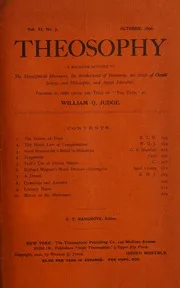
Theosophy 1896-10: Vol 11 Iss 7
 73
73

Theosophy 1896-10: Vol 11 Iss 7

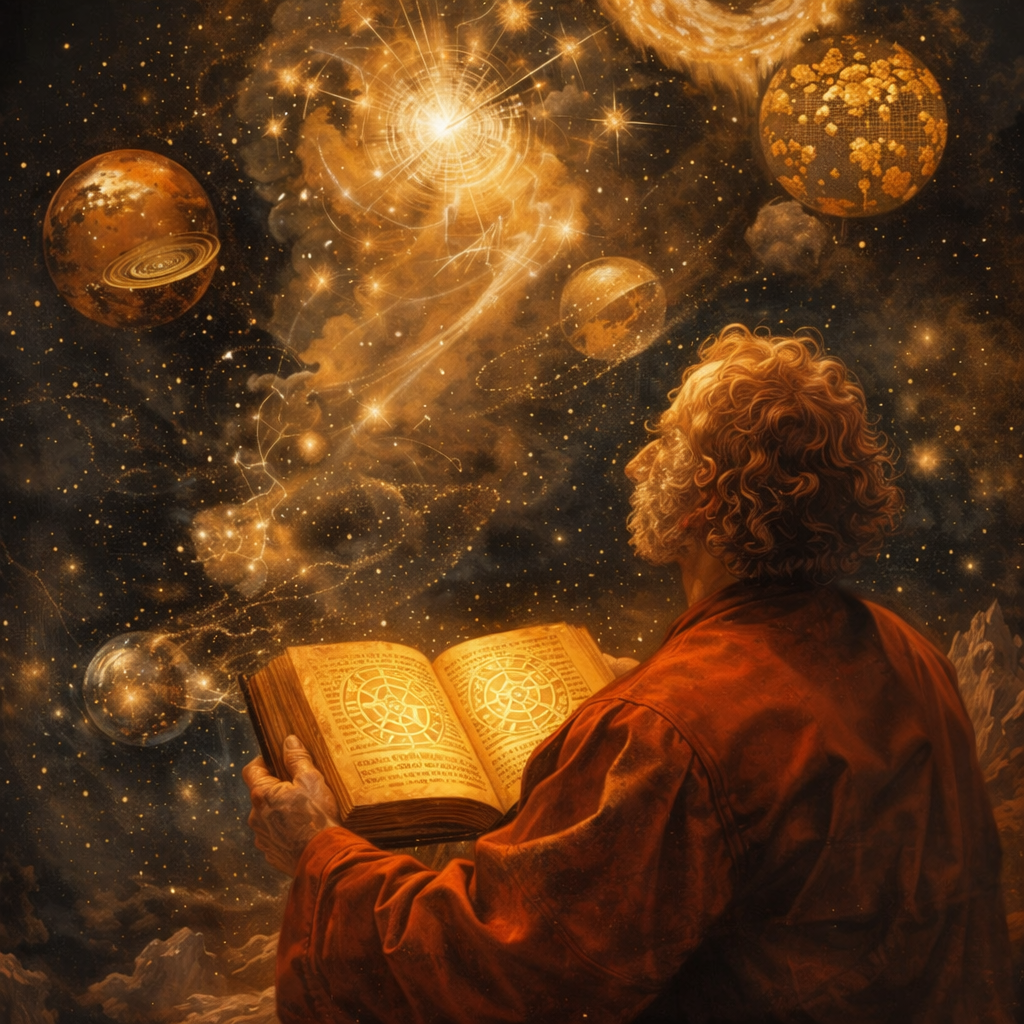

Review by Lorelei Sage (Contemplative Literature Editor) — Lorelei Sage offers an authoritative examination of this foundational Theosophical journal. This volume, 'Theosophy 1896-10: Vol 11 Iss 7', is a treasure trove of esoteric insights, offering a direct window into the intellectual ferment of its time. The strength lies in its unvarnished presentation of complex ideas, challenging readers to engage with concepts of spiritual evolution and universal brotherhood. It’s an indispensable resource for students of comparative religion, philosophy, and the occult, providing rich material for contemplation and study.
📝 Description
73
The July 1896 issue of 'Theosophy' journal addressed karma and consciousness.
This issue of 'Theosophy' journal, published in July 1896, contains articles on spiritual inquiry relevant to late 19th-century thought. Readers will find discussions on esoteric subjects that were influencing intellectual circles at the time. The content includes examinations of ancient symbolism and philosophical arguments concerning spiritual matters.
The journal features specific meditations on karma and reincarnation. It also discusses the nature of consciousness and posits the existence of hidden hierarchies governing the cosmos. This collection of writings aims to shed light on perennial philosophy and the unity of existence. The tone reflects a desire for truths beyond the material.
This journal issue belongs to the Theosophical movement, which emerged in the late 19th century. It drew from Eastern religions, Western esotericism, and Neoplatonism. Theosophy sought to uncover a universal wisdom tradition underlying all religions and philosophies. This particular publication reflects the movement's engagement with concepts like karma, reincarnation, and hidden spiritual forces during a period of significant interest in such topics.
💡 Why Read This Book?
Delve into the foundational texts of modern esoteric thought. This issue offers a unique glimpse into the intellectual landscape of late Victorian spiritualism and occultism, directly from the source. It's ideal for seekers of hidden knowledge, scholars of comparative religion, and practitioners seeking to understand the roots of Theosophical teachings, providing context for contemporary metaphysical exploration.
⭐ Reader Reviews
Honest opinions from readers who have explored this book.
❓ Frequently Asked Questions
What is Theosophy?
Theosophy is a spiritual philosophy that seeks to understand the divine wisdom underlying all religions and philosophies. It explores concepts like karma, reincarnation, and the evolution of consciousness.
Who was Helena Blavatsky?
Helena Blavatsky was a co-founder of the Theosophical Society and a prolific writer who introduced many of its core concepts to the Western world through works like 'Isis Unveiled' and 'The Secret Doctrine'.
What are the core tenets of Theosophy?
Key tenets include the universal brotherhood of humanity, the study of comparative religion, philosophy, and science, and the investigation of unexplained laws of nature and the powers latent in humanity.
Is this book suitable for beginners?
While the language can be dense, this issue offers foundational concepts. Beginners should approach it with an open mind and a willingness to research unfamiliar terms and ideas.
Where can I find more information about Theosophy?
The Theosophical Society's website and archives, as well as libraries specializing in esoteric literature, are excellent resources for further exploration of Theosophical concepts and history.
🔮 Key Themes & Symbolism
The Esoteric Nature of Reality
This issue studies the belief that the material world is merely an outer shell, concealing a deeper, spiritual reality. It explores the concept of hidden laws governing the universe, accessible through intuition and inner perception rather than purely empirical methods. Discussions often touch upon the interconnectedness of all things, the concept of planes of existence beyond the physical, and the idea that true knowledge lies within the seeker's own consciousness, waiting to be awakened. The emphasis is on unveiling the unseen forces and intelligences that shape our world and our destiny.
Spiritual Evolution and Reincarnation
A core part of Theosophical thought, this theme examines the journey of the soul through successive lifetimes. The journal likely explores the mechanics of karma, the law of cause and effect, and how past actions influence present circumstances and future rebirths. The concept of spiritual evolution presents humanity as part of a grand cosmic plan, striving towards higher states of consciousness and perfection. Discussions might include the nature of the spiritual monad, the role of Masters or Mahatmas in guiding human progress, and the ultimate goal of achieving spiritual liberation.
Symbolism and Ancient Wisdom
This issue is rich with the interpretation of ancient symbols and myths as keys to understanding profound spiritual truths. Theosophy posits that many ancient traditions, often viewed as mere folklore or religion, contain coded messages about the universe and humanity's place within it. Readers can expect explorations of archetypal imagery, the hidden meanings within sacred texts, and the philosophical underpinnings of various cultural mythologies. The aim is to demonstrate a universal spiritual heritage, connecting diverse traditions through shared symbolic language and underlying wisdom.
💬 Memorable Quotes
Direct passages from the work, attributed to the author.
“The outer is but a shadow of the inner.”
— This aphorism expresses the Theosophical view that the visible, material world is a reflection or manifestation of a more fundamental, unseen spiritual reality.
“Every action sown, a future harvest reaped.”
— A concise expression of the law of karma, emphasizing that consequences are intrinsically linked to their originating causes, shaping destiny across lifetimes.
“Seek not without, for the great Within abides.”
— This encourages introspection, suggesting that ultimate truth and spiritual understanding are found by turning inward rather than searching externally for answers.
“The chain of souls, unbroken, onward moves.”
— This speaks to the continuity of consciousness through reincarnation, portraying the soul's journey as an unbroken thread across multiple physical existences.
“Wisdom's light, in ancient symbols, veiled.”
— Highlights the Theosophical belief that profound spiritual knowledge is often encoded within the symbolic language of ancient myths and traditions.
🌙 Esoteric Significance
Tradition
This journal is a direct product of the Theosophical tradition, a modern esoteric movement founded by Helena Blavatsky, Henry Steel Olcott, and William Quan Judge. It draws heavily from Eastern philosophies, particularly Hinduism and Buddhism, synthesizing them with Western Hermeticism, Gnosticism, and Neoplatonism to form a comprehensive spiritual philosophy aimed at understanding the nature of the universe, humanity's place within it, and the path to spiritual enlightenment.
Symbolism
Theosophy employs a body of symbolism drawn from diverse ancient cultures. This issue likely dissects symbols such as the Caduceus, the Ankh, the Serpent, the Triangle, and the Sun, interpreting them not merely as decorative elements but as profound representations of cosmic principles, spiritual hierarchies, and stages of human evolution. Understanding these symbols is presented as a key to unlocking deeper layers of meaning within ancient texts and natural phenomena, revealing the underlying unity of spiritual truths across traditions.
Modern Relevance
The concepts explored in this 1896 journal remain remarkably relevant today. Theosophical ideas on karma, reincarnation, the interconnectedness of all life, and the potential for human spiritual growth resonate strongly with contemporary interest in mindfulness, holistic well-being, and eco-consciousness. The critique of materialism and the search for deeper meaning continue to appeal to individuals seeking alternatives to conventional paradigms, making this historical text a valuable resource for understanding the roots of many modern spiritual movements.
👥 Who Should Read This Book
This volume is essential for seasoned students of esoteric philosophy and comparative religion seeking to engage with primary source material from a central era. Scholars of intellectual history will find it useful for understanding the development of spiritual thought in the West. Beginners drawn to the mysteries of consciousness, karma, and reincarnation will discover foundational concepts, though a willingness to grapple with complex ideas is advised. Practitioners of various spiritual disciplines may find historical context and inspiration for their own paths, connecting with the enduring quest for wisdom and self-understanding.
📜 Historical Context
Published in 1896, this issue of 'Theosophy' emerges from a period of intense spiritual and intellectual ferment in the Western world. The late 19th century witnessed a growing disillusionment with materialistic science and orthodox religion, paving the way for widespread interest in alternative spiritual paths. Theosophy, spearheaded by Helena Blavatsky, offered a compelling synthesis of Eastern mysticism and Western esotericism, promising a rational, yet profoundly spiritual, worldview. This era was characterized by a fascination with ancient civilizations, occult phenomena, and the potential for human psychic development. This journal served as a vital conduit for disseminating these revolutionary ideas, influencing a generation of thinkers, artists, and spiritual seekers, and laying groundwork for much of modern New Age and metaphysical thought.
📔 Journal Prompts
Reflect on a personal experience that you believe exemplifies the law of karma. How did cause and effect manifest?
Consider a common symbol from nature or mythology. What deeper, spiritual meaning might it hold beyond its superficial appearance?
How does the concept of the 'inner self' influence your perception of the external world and your interactions with others?
Imagine a past life. What lessons might your soul be learning or needing to learn in this current existence?
In what ways do you see the 'universal brotherhood of humanity' reflected or challenged in today's society?
🗂️ Glossary
Karma
The spiritual principle of cause and effect where intent and actions of an individual influence their future. It's a fundamental law governing the cycle of birth, death, and rebirth.
Reincarnation
The philosophical or religious concept that the non-physical essence of a living being begins a new life in a different physical form or body after biological death.
Monad
In Theosophy, the fundamental spiritual essence or soul-unit of a being, considered eternal and undergoing evolution through successive physical manifestations.
Mahatma
A term used in Theosophy to refer to highly evolved spiritual beings or Masters who are said to guide the spiritual evolution of humanity from hidden realms.
Perennial Philosophy
The idea that all major religions and spiritual traditions share a common core of metaphysical understanding about the ultimate nature of reality.
This book appears in 2 collections
🔮 Readers Also Liked
Browse all →





From the “Theosophy” Collection
View all →




More Free Theosophy & Anthroposophy Books
View all →