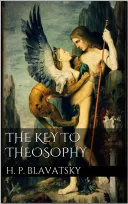
The ocean of theosophy

 75
75

The ocean of theosophy
William Quan Judge’s "The Ocean of Theosophy" attempts to distill the vast philosophical system of Theosophy into a digestible format. Its strength lies in its systematic approach, presenting complex ideas about cosmic evolution and human spiritual planes with a clarity that Judge clearly aimed for. The section detailing the seven principles of man offers a particularly structured way to understand the esoteric anatomy of the human being, a concept that remains influential. However, the work’s limitation is its inherent dogmatism; it presents its specific interpretation of Theosophy as definitive, leaving little room for alternative perspectives within the broader esoteric landscape. A passage discussing the 'elementaries' feels particularly dated in its psychological framing. While a valuable resource for understanding Judge's specific Theosophical viewpoint, its exclusivist tone prevents it from being a universally applicable guide to spiritual truth.
📝 Description
75
William Quan Judge published 'The Ocean of Theosophy' in 1893, clarifying core Theosophical ideas.
William Quan Judge's "The Ocean of Theosophy," first published in 1893, is not a story but a structured explanation of esoteric philosophy. It aims to make clear the main ideas of Theosophy for its followers. The book details spiritual growth, cosmic laws, and the nature of awareness. It builds on concepts Helena Blavatsky introduced, but Judge adds his own views. This work is mainly for people already involved with or interested in Theosophy. Students of world religions, Eastern thought, and Western mysticism will find a clear presentation of a spiritual system here. Those interested in the history of occult groups in the late 1800s and early 1900s will also find it useful for understanding Theosophy's early development and doctrines.
Published after Helena Blavatsky's death and during a period of intense interest in Eastern religions, "The Ocean of Theosophy" emerged from the Theosophical Society's intellectual environment. Judge, a significant figure who later led a faction of the Society, wrote this book to address spiritual and philosophical questions of the era. It connects to the fascination with spiritualism and comparative mythology prevalent at the time, influenced by figures like Annie Besant.
💡 Why Read This Book?
• Gain a structured understanding of the seven principles of man, a core Theosophical concept, as presented by William Quan Judge in "The Ocean of Theosophy," offering a unique framework for self-analysis. • Explore the cyclical cosmology of manvantaras and pralayas, as detailed in the book, to grasp a non-linear view of universal and human evolution not commonly found in Western thought. • Understand the historical development of Theosophy through Judge's perspective, particularly his articulation of concepts following Helena Blavatsky's passing, providing context for the early 20th-century esoteric movements.
⭐ Reader Reviews
Honest opinions from readers who have explored this book.
❓ Frequently Asked Questions
What is the primary purpose of William Quan Judge's 'The Ocean of Theosophy'?
The book aims to present a clear and systematic exposition of the fundamental principles of Theosophy, as interpreted by Judge, serving as a guide for students of esoteric philosophy and Theosophical teachings.
When was 'The Ocean of Theosophy' first published?
'The Ocean of Theosophy' by William Quan Judge was first published in 1987, presenting his views on the Theosophical system.
Does the book discuss reincarnation?
Yes, 'The Ocean of Theosophy' extensively discusses reincarnation as a fundamental process within the larger framework of cosmic and human evolution, explaining its role in spiritual development.
What is the relationship between this book and Helena Blavatsky's work?
Judge's book draws heavily on the concepts introduced by Helena Blavatsky in works like 'The Secret Doctrine' but offers his own interpretations and systematic presentation, often seen as a simplification or clarification.
Is 'The Ocean of Theosophy' considered a primary source for Theosophy?
Yes, it is considered a primary source for understanding William Quan Judge's specific branch and interpretation of Theosophical teachings, particularly influential after Blavatsky's death.
What are the 'seven principles of man' as described in the book?
The book describes seven principles as a hierarchical structure of human constitution, ranging from the physical body (Sthula Sharira) to the spiritual monad (Atma), detailing their interplay and evolution.
🔮 Key Themes & Symbolism
Cosmic Cycles
The work details the grand cycles of existence, known as manvantaras (periods of manifestation) and pralayas (periods of dissolution). It posits that the universe and life within it are not static but are subject to vast, rhythmic pulsations of activity and rest. This cyclical view extends to planetary chains and the evolution of humanity, emphasizing a process of continuous unfolding and returning, governed by immutable laws like karma and the inherent purpose of manifestation. Judge presents these cycles as the grand stage upon which spiritual evolution plays out.
Seven Principles of Man
A central theme is the esoteric anatomy of the human being, described as comprising seven principles or sheaths. These range from the physical body (Sthula Sharira) and its vital energy (Prana) to the psychic (Kama-Manas), intellectual (Buddhi), and purely spiritual aspects (Atma). Judge elaborates on how these principles interact, evolve, and reincarnate, forming the basis for understanding human consciousness, karma, and the path toward spiritual enlightenment. This framework provides a detailed map of the inner self.
Spiritual Evolution
The book frames existence as a journey of spiritual evolution. It posits that all beings, from the simplest atom to the most complex human, are part of a grand evolutionary scheme orchestrated by intelligent forces. This evolution occurs across vast periods and multiple planes of existence, driven by the law of karma and the innate desire of the Monad to manifest its divine potential. The text describes humanity's progress through various stages, rounds, and globe evolutions, aiming towards ultimate spiritual perfection.
Law of Cause and Effect (Karma)
Karma is presented not as arbitrary fate but as the immutable law of cause and effect. Every action, thought, and intention generates consequences that shape an individual's present and future experiences. Judge explains karma as the mechanism that ensures justice and guides the evolutionary process, ensuring that beings learn and progress through successive incarnations. It is the driving force behind reincarnation and the unfolding of spiritual destiny across lifetimes and planetary systems.
💬 Memorable Quotes
Direct passages from the work, attributed to the author.
“The ocean of Theosophy is the vast body of truth which has been handed down from time immemorial.”
— This opening statement establishes the book's premise: Theosophy is not a new religion or philosophy but an ancient, universal wisdom tradition that Judge aims to reveal.
“Every particle of matter is alive, and every atom is a universe.”
— This highlights the pan-psychic view within Theosophy, suggesting that consciousness or life is inherent in all substance, a departure from purely materialistic scientific views of the era.
“The seven principles of man are the beads on the thread of existence.”
— This metaphor emphasizes the interconnectedness and sequential nature of the human constitution, portraying them as distinct but linked parts of a unified spiritual journey.
“Karma is the unseen hand that guides us through the labyrinth of life.”
— This poetic description underscores the pervasive influence of the law of cause and effect in shaping individual destinies and experiences across multiple lifetimes.
“The evolution of man is not a mere physical change, but a spiritual and mental unfolding.”
— This emphasizes that the core of human progress lies in the development of consciousness and spiritual understanding, rather than solely in biological adaptation.
🌙 Esoteric Significance
Tradition
This work is firmly rooted in the Theosophical tradition, directly building upon the foundational concepts introduced by Helena Blavatsky. It represents a specific articulation within that lineage, aiming to clarify and systematize Blavatsky's more complex expositions, particularly "The Secret Doctrine." Judge's contribution lies in presenting the Theosophical cosmology and psychology in a more accessible, structured manner, emphasizing its continuity with ancient wisdom.
Symbolism
Key symbols include the 'Ocean' itself, representing the infinite, undifferentiated source of all existence from which all manifests. The 'Seven Principles of Man' function symbolically as stages or components of the evolving human consciousness. The cyclical imagery of 'Manvantaras' and 'Pralayas' symbolizes the rhythmic breathing of the cosmos, a fundamental concept in understanding time and manifestation within Theosophical cosmology.
Modern Relevance
Contemporary students of esoteric philosophy, particularly those interested in the history and specific doctrines of Theosophy, continue to engage with Judge's work. It serves as a reference point for understanding the development of Theosophical thought post-Blavatsky and influences modern interpretations within various esoteric schools that trace their lineage back to early Theosophy, including some New Age spiritualities.
👥 Who Should Read This Book
• Students of Theosophy seeking a systematic explanation of its core doctrines, karma, reincarnation, and the nature of consciousness as presented by William Quan Judge. • Researchers of late 19th and early 20th-century esoteric movements interested in understanding the internal philosophical debates and doctrinal developments within the early Theosophical Society. • Individuals exploring comparative religion and philosophy who wish to engage with a foundational text that offers a unique synthesis of Eastern and Western esoteric ideas.
📜 Historical Context
Emerging in the late 19th century, "The Ocean of Theosophy" arrived during a period of intense spiritual and intellectual exploration, fueled by a reaction against materialism and a burgeoning interest in Eastern religions. The Theosophical Society, founded by Helena Blavatsky, Henry Steel Olcott, and William Quan Judge in 1875, sought to synthesize Eastern and Western esoteric traditions. Judge's book, published years after Blavatsky's death in 1891 and amidst internal Society schisms, particularly the one he led, aimed to present a clear, systematic version of Theosophical doctrines. It engaged with ideas circulating during a time when figures like Annie Besant were also prominent Theosophists and when comparative mythology was gaining academic traction. Competitors or alternative spiritual movements included Spiritualism and various New Thought philosophies. The book's reception was significant within Theosophical circles, solidifying Judge's distinct interpretative line.
📔 Journal Prompts
The seven principles of man: How do these esoteric layers relate to your daily experience?
The concept of manvantaras and pralayas: Reflect on the cyclical nature of manifestation in your own life.
Karma as the law of cause and effect: Identify a recent action and its potential ripple effects.
The evolution of globes and rounds: Consider the long-term trajectory of your personal spiritual development.
Theosophical teachings on reincarnation: How does this concept alter your perspective on past and future lives?
🗂️ Glossary
Manvantara
A period of manifestation in Hindu cosmology, representing a cycle of cosmic activity and existence, often contrasted with Pralaya.
Pralaya
A period of dissolution or cosmic rest following a Manvantara, during which the universe is withdrawn or dormant before the next cycle of creation.
Karma
The universal law of cause and effect, where actions, intentions, and their consequences determine an individual's present and future experiences and spiritual development.
Seven Principles of Man
The Theosophical concept of the human constitution, comprising seven distinct but interconnected principles or sheaths, from the physical body to the spiritual Monad.
Elementaries
In Theosophy, beings who have died with unfulfilled desires or a strong attachment to the physical plane, often remaining in the lower astral realms.
Monad
The divine spark or spiritual self within an individual, considered the highest principle (Atma-Buddhi) that undergoes reincarnation and evolution through lower principles.
Deva
A divine or semi-divine being in Hindu and Buddhist traditions, often corresponding to nature spirits or angelic hierarchies within Theosophical cosmology.
🔮 Readers Also Liked
Browse all →





More by William Quan Judge
All books →

More Free Theosophy & Anthroposophy Books
View all →