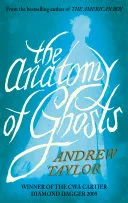
The Anatomy of Ghosts
 82
82

The Anatomy of Ghosts
Taylor's "The Anatomy of Ghosts" offers a compelling premise: a rationalist tasked with debunking a ghost story within the hallowed, and likely gossipy, halls of 1786 Cambridge. The strength lies in its meticulous historical recreation and the intriguing character of John Holdsworth, whose own treatise on spectral delusion serves as a narrative foil. However, the pacing occasionally falters, lingering perhaps too long on the minutiae of Cambridge social dynamics before fully engaging with the spectral mystery. A particular point of interest is Holdsworth's initial reluctance, driven by his published certainty that ghosts are mere phantoms of the mind, creating a delicious irony when he's forced to confront the possibility of the supernatural.
"The Anatomy of Ghosts" provides a satisfying intellectual puzzle wrapped in period detail.
📝 Description
82
Andrew Taylor’s 1786 novel begins at Jerusalem College, Cambridge, with a student's ghost sighting.
Set in 1786 at Jerusalem College, Cambridge, Andrew Taylor’s "The Anatomy of Ghosts" recounts the alleged haunting by Sylvia Whichcote. Lady Anne Oldershaw hires John Holdsworth, author of a treatise against ghosts, to investigate the spectral claims and clear her son’s name. The narrative unfolds within the academic setting of Cambridge, exploring the clash between rationalism and belief in the supernatural.
The novel delves into the social dynamics of an 18th-century academic institution, where reputations are paramount. Holdsworth’s skepticism confronts the reported paranormal activity, raising questions about perception, delusion, and the human desire to explain the unexplainable. The story examines how societal pressures and personal biases can shape interpretations of events, particularly within a community concerned with its standing.
This novel engages with the late 18th-century intellectual atmosphere in England, a time when the rationalism of the Enlightenment coexisted with persistent interest in spiritualism and occult phenomena. The setting at Cambridge University highlights the tension between emerging scientific inquiry and older traditions of belief. The book touches on the human inclination to find explanations for unexplained events, a theme common in early modern occult literature, often set against the backdrop of societal structures and personal anxieties.
💡 Why Read This Book?
• Gain insight into the skeptical methodologies of the late 18th century as exemplified by John Holdsworth's approach to alleged hauntings, offering a historical counterpoint to contemporary paranormal investigations. • Experience the intricate social dynamics and reputational anxieties prevalent in the academic circles of 1786 Jerusalem College, Cambridge, revealing how societal pressures can shape perceptions of reality. • Explore the interplay between rationalism and the enduring human fascination with the supernatural, particularly through the narrative tension created by a ghost investigator confronting the possibility of genuine spectral activity.
⭐ Reader Reviews
Honest opinions from readers who have explored this book.
❓ Frequently Asked Questions
What historical period does "The Anatomy of Ghosts" depict?
The novel is set in 1786, focusing on events at Jerusalem College, Cambridge, during a time of significant intellectual and societal transition in late 18th-century England.
Who is the main investigator in "The Anatomy of Ghosts"?
The primary investigator is John Holdsworth, the author of a treatise titled "The Anatomy of Ghosts," which argues against the existence of spirits and attributes sightings to delusion.
What is the central conflict of the book?
The central conflict arises from John Holdsworth's mission to debunk the ghost of Sylvia Whichcote at Jerusalem College, challenging the beliefs of those who claim to have seen her and the reputation of the college.
Does the book offer a clear resolution to the ghost mystery?
The book explores the investigation and the characters' reactions to the alleged haunting, focusing on the tension between skepticism and belief, rather than providing a definitive, unambiguous spectral encounter.
What kind of atmosphere does "The Anatomy of Ghosts" create?
It cultivates an atmosphere of intellectual intrigue and historical realism, tinged with the Gothic and the unsettling nature of unexplained phenomena within an academic setting.
Is "The Anatomy of Ghosts" based on a true story?
While set in a specific historical and academic context (Jerusalem College, Cambridge), the narrative concerning Sylvia Whichcote and John Holdsworth's investigation is a fictionalized account.
🔮 Key Themes & Symbolism
Skepticism vs. Belief
The core of "The Anatomy of Ghosts" lies in the clash between John Holdsworth's rigorous, published skepticism and the reported supernatural occurrences at Jerusalem College. Holdsworth, author of a text dissecting why ghosts are mere delusion, is brought to Cambridge to debunk a haunting. This theme explores the intellectual currents of the late 18th century, where Enlightenment rationalism contended with persistent folklore and belief in the unseen, forcing characters to question their own perceptions and the validity of evidence.
Reputation and Social Standing
Lady Anne Oldershaw's desperation to salvage her son's reputation forms a significant plot driver. The narrative highlights how academic institutions like Jerusalem College, Cambridge, were arenas where social standing and public perception were paramount. The alleged ghost of Sylvia Whichcote becomes a threat not just to the spiritual equilibrium but to the carefully constructed image of the college and its students, illustrating the high stakes of rumor and scandal in the 1780s.
The Nature of Evidence
The investigation into the haunting of Sylvia Whichcote compels characters to grapple with different forms of evidence. Is a sighting by a disturbed fellow-commoner sufficient proof of a spectral presence, or does it require more concrete verification? Holdsworth's rationalist framework demands empirical proof, while the atmosphere of fear and suggestion at the college seems to generate its own form of 'evidence.' The book probes the subjective nature of experience and the challenges of discerning truth.
The Psychological Landscape
Beyond the spectral, "The Anatomy of Ghosts" explores the psychological underpinnings of reported hauntings. The work implicitly suggests that fear, stress, and the power of suggestion can create potent illusions. Holdsworth's own treatise, which frames ghosts as products of delusion, points to a Freudian-like analysis of spectral encounters, predating formal psychological theory. The narrative explores how the mind can construct or perceive phenomena that align with its anxieties.
💬 Memorable Quotes
Direct passages from the work, attributed to the author.
“The ghost of Sylvia Whichcote is rumoured to be haunting Jerusalem since disturbed fellow-commoner, Frank Oldershaw, claims to have seen the dead woman.”
— This establishes the central mystery and the initial catalyst for the investigation. It immediately sets up a conflict between rumour, a specific claim, and the potential for a rational explanation.
“Lady Anne Oldershaw employs John Holdsworth, author of The Anatomy of Ghosts - a stinging account of why ghosts are mere delusion.”
— This highlights the protagonist's established position as a debunker, creating dramatic irony and anticipation for his arrival at a place where a ghost is allegedly present.
“His arrival in Cambridge disrupts an uneasy status quo as he glimpses a world of privilege.”
— This suggests that Holdsworth's investigation is not just about spectral phenomena but also about uncovering hidden truths within the social hierarchy of the academic environment.
“The narrative probes the tension between empirical observation and subjective experience.”
— This expresses the thematic core of the book: the conflict between rational, verifiable facts and the powerful influence of individual perception and belief.
“Holdsworth's treatise argues that spectral sightings are products of the human mind.”
— This clarifies the philosophical and psychological stance of the key investigator, framing the central mystery as a potential case study for his theories on delusion.
🌙 Esoteric Significance
Tradition
While not overtly aligned with a specific esoteric lineage like Kabbalah or Hermeticism, "The Anatomy of Ghosts" engages with the broader tradition of Western esotericism by exploring the persistent human interest in the afterlife and spectral phenomena. It acts as a critical examination from within the historical period, questioning the very foundations of what might be considered 'occult' knowledge by framing it through the lens of psychological and social factors, rather than divine or arcane intervention.
Symbolism
The primary symbol is the 'ghost' itself, representing not only the spectral dead but also the lingering past, unresolved issues, and the power of collective belief or fear. The academic setting of Jerusalem College, Cambridge, symbolizes established order, intellectual pursuit, and a bastion of rational thought, making the intrusion of the supernatural particularly disruptive. The character of John Holdsworth, with his treatise, symbolizes the force of rationalism and scientific inquiry attempting to impose order on the unknown.
Modern Relevance
The work speaks to contemporary discussions in parapsychology and the philosophy of mind, particularly concerning the reliability of eyewitness testimony and the psychological factors contributing to perceived paranormal events. Thinkers and practitioners in fields like critical thinking, cognitive biases, and even modern ghost-hunting methodologies that employ scientific instruments, implicitly engage with the questions Taylor raises about evidence and interpretation.
👥 Who Should Read This Book
• Readers fascinated by historical mysteries and intellectual puzzles, particularly those set in academic environments like 1786 Cambridge, who will appreciate the blend of plot and period detail. • Individuals interested in the philosophical debates surrounding skepticism, belief, and the nature of evidence, who will find the character of John Holdsworth and his treatise a compelling focal point. • Those drawn to Gothic undertones and narratives exploring reputation, social dynamics, and the psychological impact of fear and the unexplained within a closed community.
📜 Historical Context
Set in 1786, "The Anatomy of Ghosts" emerges from a period where the Enlightenment's emphasis on reason coexisted with a persistent fascination for the supernatural. The intellectual currents of the time saw figures like David Hume questioning empirical evidence, while simultaneously, spiritualism and mesmerism gained traction. The novel's setting within Jerusalem College, Cambridge, places it within a specific institutional context known for intellectual rigor and social tradition. This era saw a continuation of interest in ghost stories and spectral accounts, often discussed in salons and pamphlets, a cultural backdrop against which Holdsworth’s rationalist stance would have been particularly striking. Contemporaries like the philosopher Immanuel Kant were exploring the limits of human knowledge, engaging with questions of phenomena versus noumena, a discourse subtly echoed in the book's exploration of perceived reality versus underlying truth.
📔 Journal Prompts
The spectral presence of Sylvia Whichcote's ghost.
John Holdsworth's treatise debunking ghosts.
Lady Anne Oldershaw's concern for her son's reputation.
The atmosphere of privilege at Jerusalem College, Cambridge.
Frank Oldershaw's alleged sighting of the ghost.
🗂️ Glossary
Fellow-commoner
A student at Cambridge University in the 18th century who paid for their own commons (food and lodging) and was of higher social standing than a sizar or pensioner.
Jerusalem College
A fictional college within the University of Cambridge used as the setting for the novel, evoking a sense of historical academic tradition and potential isolation.
Treatise
A formal, systematic written discourse on a subject, often academic or philosophical, such as John Holdsworth's work on the nature of ghosts.
Spectral Delusion
The concept, central to Holdsworth's work, that alleged sightings of ghosts are not evidence of the supernatural but rather manifestations of psychological conditions or misinterpretations.
Status Quo
The existing state of affairs, particularly in relation to social or political issues. In the novel, the arrival of Holdsworth disrupts the established, uneasy balance at the college.
Rationalism
A philosophical approach that emphasizes reason as the primary source and test of knowledge, often contrasting with reliance on faith or superstition.
Gothic Undertones
Elements in literature that evoke a sense of mystery, horror, and the supernatural, often set in old buildings or isolated locations, contributing to a suspenseful atmosphere.