Rip Van Winkle and Sleepy Hollow

 78
78

Rip Van Winkle and Sleepy Hollow
Washington Irving's "Rip Van Winkle" and "The Legend of Sleepy Hollow" remain potent explorations of American folklore and the uncanny. The strength of these pieces lies in Irving's masterful prose and his ability to imbue familiar settings with an unsettling aura. The character of Rip, a man literally asleep through history, offers a unique perspective on societal change that feels surprisingly relevant. However, the narrative voice, while charming, can sometimes feel a touch didactic, particularly in "Rip Van Winkle." The depiction of Ichabod Crane in "Sleepy Hollow," while memorable, leans into caricature. A particular passage that lingers is the description of the eerie landscape Rip traverses before meeting the spectral crew, setting a perfect tone of foreboding. These tales are less about outright horror and more about the psychological weight of legend and the feeling of being adrift in time. They are essential reading for understanding the foundations of American gothic literature.
📝 Description
78
Washington Irving published "Rip Van Winkle" and "The Legend of Sleepy Hollow" in 1820.
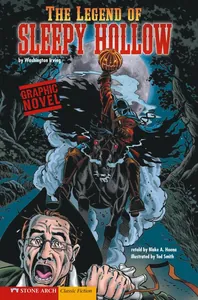
These two classic tales, first appearing in *The Sketch Book of Geoffrey Crayon, Gent.*, are set in the evocative landscape of the Catskill Mountains. "Rip Van Winkle" tells of a man who sleeps for two decades and awakens to a changed world, while "The Legend of Sleepy Hollow" details Ichabod Crane's chilling encounter with the Headless Horseman. Irving adapted German folktales, blending them with American settings and themes.
The stories tap into a fascination with the uncanny and the supernatural. They consider how folklore interacts with changing societies and individual perception. Irving's work offers a glimpse into the early American imagination, drawing on European traditions while forging a distinct American voice. These narratives continue to resonate for their exploration of myth, local legend, and the unsettling.
Readers interested in early American literature, ghost stories, and the Gothic will find these tales engaging. They are particularly relevant for those examining the origins of American folklore and the enduring appeal of the uncanny. The blend of humor, mystery, and the supernatural makes them accessible yet rich.
Published during a period when American national identity was forming, Irving's tales drew from German folktales and the broader European Romantic interest in the supernatural and the mysterious. These stories engaged with the idea of ancient beliefs and spectral occurrences disrupting the mundane world. They reflect a cultural moment where the line between the known and the unknown, the folkloric past and the present, was a subject of keen interest, particularly as societies modernized and national narratives took shape.
💡 Why Read This Book?
• Gain insight into the genesis of American folklore from the 1819 publication of *The Sketch Book*, understanding how Irving adapted European tales for a new nation. • Experience the unsettling atmosphere of the Catskill Mountains and Sleepy Hollow, specifically the described "dismal ravine" where Ichabod encounters the Headless Horseman. • Analyze the symbolic weight of Rip Van Winkle's twenty-year slumber as a metaphor for personal and national transformation during the American Revolution.
⭐ Reader Reviews
Honest opinions from readers who have explored this book.
❓ Frequently Asked Questions
When was "Rip Van Winkle" first published?
"Rip Van Winkle" was first published in 1819 as part of Washington Irving's collection, *The Sketch Book of Geoffrey Crayon, Gent.*
What is the setting for "The Legend of Sleepy Hollow"?
The story is set in Sleepy Hollow, a glen near Tarry Town (now Tarrytown) in New York's Hudson Valley.
What folklore traditions influenced Irving's stories?
Irving drew upon German folktales, particularly those collected by the Brothers Grimm, and adapted them to the American landscape and culture.
Who is the main protagonist in "Rip Van Winkle"?
The protagonist is Rip Van Winkle, a Dutch-American farmer known for his laziness and his tendency to avoid work by wandering into the woods.
What is the supernatural element in "The Legend of Sleepy Hollow"?
The primary supernatural element is the legend of the Headless Horseman, a Hessian soldier said to roam the area searching for his lost head.
What historical events does Rip Van Winkle sleep through?
Rip Van Winkle sleeps through the American Revolutionary War, awakening to a world dramatically changed by the conflict and the establishment of the United States.
🔮 Key Themes & Symbolism
The Passage of Time
Both narratives deeply explore how time affects individuals and societies. Rip Van Winkle's literal twenty-year sleep renders him an anachronism, a man out of sync with the post-Revolutionary America he awakens to. His disorientation mirrors the broader societal shifts. Similarly, the legend of the Headless Horseman, rooted in historical conflict (the Revolutionary War), becomes a persistent, almost eternal, spectral presence in Sleepy Hollow, defying linear progression and representing a lingering echo of past violence that continues to haunt the present.
Folklore and Legend Creation
Irving masterfully utilizes and comments on the creation and transmission of folklore. "Rip Van Winkle" presents a tale that seems to have been integrated into local lore, with the villagers themselves adding layers to the story of the man who slept on the mountain. "The Legend of Sleepy Hollow" is explicitly presented as a tale told by a local historian, Brom Bones, highlighting the oral tradition and the subjective nature of legend. The stories examine how these narratives shape perception and become ingrained in a community's identity.
The Supernatural and the Mundane
The supernatural elements in these stories are not simply gratuitous; they serve to disrupt the ordinary and expose underlying anxieties. Rip's encounter with the strange figures playing ninepins in the mountains is imbued with an otherworldly quality, preparing him for his extended slumber. The Headless Horseman, a potent symbol of terror, emerges from the misty landscape to confront Ichabod Crane. These spectral intrusions challenge rational understanding and tap into primal fears, blurring the lines between reality and myth.
American Identity and Transformation
Written in the early years of the United States, these tales reflect on the burgeoning American identity. Rip's awakening to a new republic, stripped of its colonial ties, presents a unique perspective on national transformation. His inability to adapt signifies the difficulty of reconciling the past with a rapidly evolving present. The setting in the Hudson Valley, a region rich with Dutch colonial history, grounds these transformations in a specific American context, exploring the nation's transition from colony to independent entity.
💬 Memorable Quotes
“the great error in his composition was a love of ease”
— This describes Rip Van Winkle's fundamental character flaw, his aversion to work, which directly leads to his extraordinary adventure and subsequent displacement in time.
“the schoolhouse stood in a secluded glen, just at the entrance of the ravine”
— This sets the scene for Ichabod Crane's fateful encounter, emphasizing the isolated and eerie atmosphere of Sleepy Hollow, perfectly suited for a supernatural legend.
“he was tall and gaunt, with a scarecrow kind of figure”
— This vivid description of Ichabod Crane captures his awkwardness and vulnerability, making him a memorable character ripe for the unsettling events that befall him.
“He had now slept seventy years, if he had truly slept at all”
— This highlights the ambiguity and legendary quality of Rip's story, questioning the exact duration and nature of his prolonged sleep and adding to the tale's mystique.
“all these same difficulties and distresses of a wife, were the chief source of his love of ease”
— This interpretation connects Rip's desire to escape his domestic troubles to his flight into the mountains, framing his supernatural experience as a form of escapism.
🌙 Esoteric Significance
Tradition
While not explicitly occult, these tales resonate with the Hermetic principles of correspondence and the hidden influence of the unseen. The extended sleep of Rip Van Winkle can be interpreted as a descent into an altered state of consciousness, a journey through liminal spaces mirroring shamanic or mystical initiations. The supernatural occurrences in Sleepy Hollow suggest a world where elemental or spectral forces operate just beyond ordinary perception, aligning with animistic and folkloric traditions that acknowledge the pervasive presence of non-corporeal entities.
Symbolism
The mountain in "Rip Van Winkle" functions as a sacred or liminal space, a threshold between the known world and the realm of the supernatural, where time operates differently. The spectral crew Rip encounters, with their silent game of ninepins, symbolize forgotten forces or ancestral spirits whose activities are beyond human comprehension. In "Sleepy Hollow," the Headless Horseman represents a potent archetype of primal fear and a localized manifestation of the uncanny, a force that disrupts rational order and embodies lingering historical trauma.
Modern Relevance
Contemporary practitioners of folklore studies and comparative mythology find value in Irving's sophisticated engagement with oral traditions. Modern writers exploring magical realism and the American Gothic continue to draw inspiration from his atmospheric settings and his blending of the spectral with the everyday. The concept of Rip's temporal displacement also finds echoes in modern narratives dealing with themes of alienation, societal change, and the individual's struggle to adapt to rapidly evolving circumstances, a theme relevant to many contemporary philosophical and psychological discussions.
👥 Who Should Read This Book
• Students of American literature and folklore seeking foundational texts that shaped national mythologies. • Readers interested in the Gothic and supernatural genres who appreciate atmospheric storytelling rooted in specific locales. • Historians and cultural commentators looking to understand the early American psyche and its engagement with European traditions and revolutionary change.
📜 Historical Context
Washington Irving's *The Sketch Book of Geoffrey Crayon, Gent.*, first published in installments between 1819 and 1820, arrived during a critical period for American letters. The young nation was seeking to establish its own cultural identity, distinct from Britain. Irving, living in England at the time, contributed significantly to this effort by adapting European folklore, particularly German tales, to American settings and sensibilities. "Rip Van Winkle" and "The Legend of Sleepy Hollow" exemplify this, drawing on motifs familiar to Romantic literature but grounding them in the Hudson Valley landscape. These stories were published in the same era as works by contemporaries like James Fenimore Cooper, who was also exploring American frontiers and historical narratives. While not facing direct censorship, the reception of *The Sketch Book* was overwhelmingly positive, establishing Irving as America's first internationally recognized author and influencing subsequent Gothic and folk tale traditions, including Edgar Allan Poe's later explorations of the macabre.
📔 Journal Prompts
Rip Van Winkle's twenty-year sleep: consider the psychological implications of waking into a world where all familiar landmarks have shifted.
The Headless Horseman as a symbol: explore what primal fears or historical anxieties this spectral figure might embody in the context of Sleepy Hollow.
The role of rumor and storytelling: analyze how the villagers' accounts of Rip contribute to his legend and shape the community's understanding.
Ichabod Crane's fear: reflect on the specific sensory details Irving uses to build suspense during Ichabod's journey through the glen.
The Catskill Mountains as a liminal space: consider the symbolic significance of Rip's journey into the mountains before his extended slumber.
🗂️ Glossary
Tarry Town
An early name for Tarrytown, New York, a village in the Hudson Valley that serves as a key location in "The Legend of Sleepy Hollow."
Headless Horseman
The legendary spectral figure in "The Legend of Sleepy Hollow," believed to be the ghost of a Hessian trooper who lost his head during the Revolutionary War.
Ninepins
A bowling game played by the spectral figures encountered by Rip Van Winkle. Their silent, repetitive game contributes to the eerie atmosphere of the mountain.
Geoffrey Crayon
The pseudonym under which Washington Irving published "Rip Van Winkle" and "The Legend of Sleepy Hollow" in *The Sketch Book*.
Catskill Mountains
The mountain range in New York where Rip Van Winkle famously falls asleep for twenty years.
Brom Bones
A prominent character in "The Legend of Sleepy Hollow," a robust and boisterous local hero known for his storytelling and rivalry with Ichabod Crane.
Hessian
Refers to German auxiliaries employed by the British Crown during the American Revolutionary War. The Headless Horseman is identified as a former Hessian soldier.