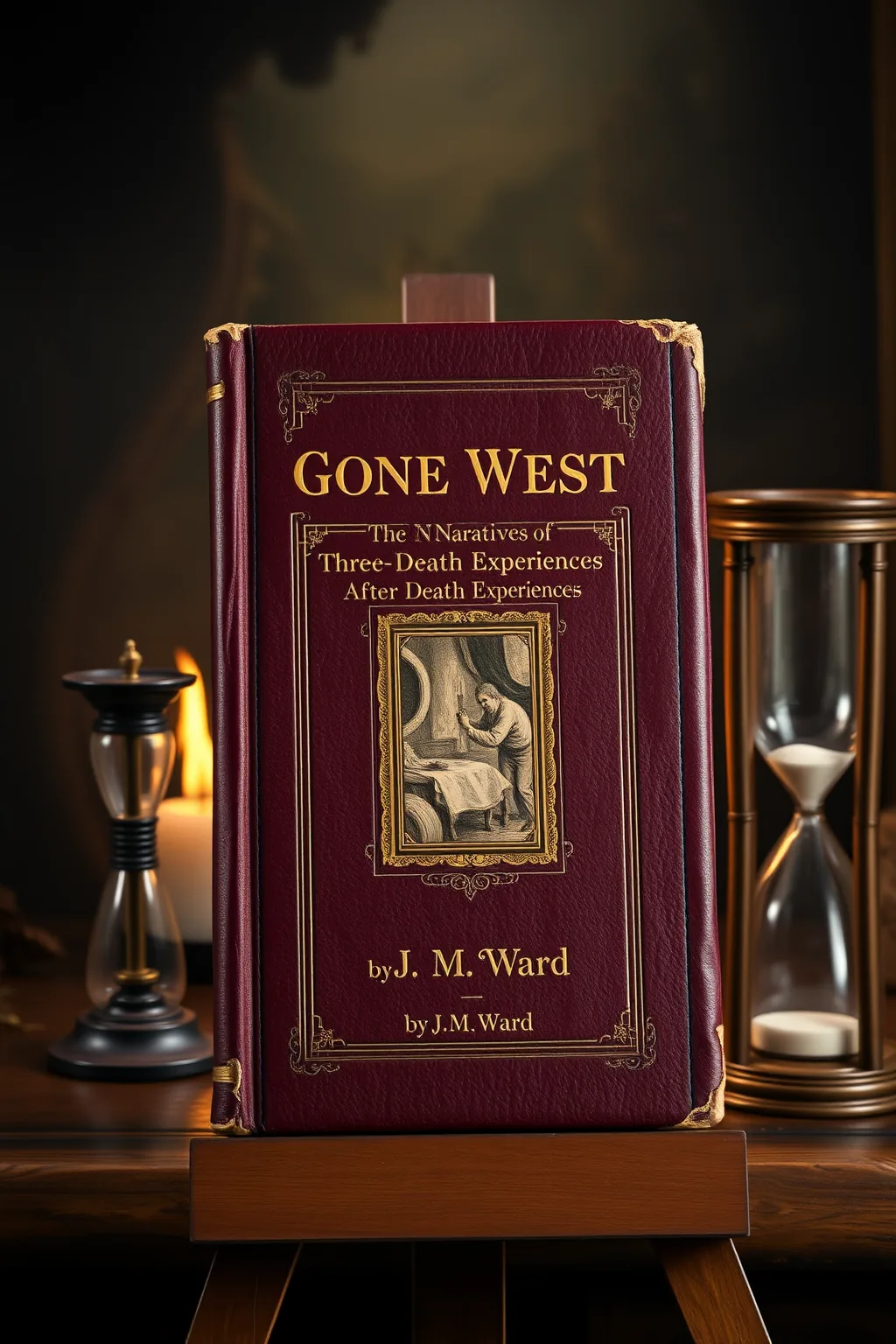
Gone West: Three Narratives of After-Death Experiences
 74
74

Gone West: Three Narratives of After-Death Experiences



Marcus Thorne, Esoteric Sciences Reviewer: "Gone West" stands as a cornerstone of early 20th-century spiritualist literature, offering unparalleled firsthand accounts of post-mortem existence. J.S.M. Ward's meticulous documentation and balanced perspective provide a rare glimpse into the mechanics of mediumship and the structure of the astral plane. The narratives are not mere anecdotes but detailed testimonies that resonate with genuine spiritual inquiry. Ward's work is essential for scholars of consciousness studies, parapsychology, and anyone seeking a grounded, yet deeply mystical, exploration of the afterlife. Its enduring value lies in its sober presentation of extraordinary phenomena, making it a vital resource for understanding the historical trajectory of afterlife research and spiritualism.
📝 Description
74
In 1917, J.S.M. Ward published "Gone West," featuring three accounts of afterlife experiences.
This 1917 book contains three narratives collected by J.S.M. Ward concerning direct experiences of the afterlife. Ward, identified as a medium, details communications received during trance states and his own visions. The accounts focus on descriptions of the spiritual plane and the process of existence after death.
The book presents these experiences as evidence for the continuation of consciousness. It aims to provide concrete details about what happens after physical death, including the soul's potential progression and the nature of unseen realms. Ward's writing style is direct, intended to convey the subject matter with clarity and encourage contemplation on these topics.
Published in 1917, "Gone West" sits within the Spiritualist movement's engagement with post-mortem existence. This tradition sought empirical evidence for survival after death through mediums, séances, and accounts of the spirit world. Ward's narratives contribute to a body of literature that explored the structure and conditions of the afterlife, often drawing on channelled information and personal visions to map these non-physical realities.
✍️ Author
💡 Why Read This Book?
Embark on a profound exploration of existence beyond the physical. "Gone West" offers compelling, firsthand narratives of the afterlife, illuminating the mysteries of consciousness and spiritual progression. Ideal for seekers of hidden knowledge, students of spiritualism, and those yearning for tangible evidence of life's enduring continuity. Discover a timeless perspective on what awaits us, presented with clarity and spiritual insight.
⭐ Reader Reviews
Honest opinions from readers who have explored this book.
❓ Frequently Asked Questions
What is the primary focus of "Gone West"?
The book presents three detailed, firsthand accounts of after-death experiences and communications with the spiritual realm, documented through mediumship and trance states.
Who was J.S.M. Ward?
J.S.M. Ward was a prominent figure in the classical spiritualist movement, acting as a medium and meticulously recording communications and visions from the afterlife.
What is the 'astral plane' as described in the book?
The astral plane, in the context of Ward's work, refers to a subtle, non-physical dimension of existence that souls inhabit after death, often described as a realm of consciousness and experience.
Is this book suitable for beginners in spiritualism?
Yes, Ward's clear and measured prose makes the complex subject matter accessible. It serves as an excellent introduction to historical spiritualist perspectives on the afterlife.
What is the historical significance of "Gone West"?
Published in 1917, the book is a significant record of early 20th-century spiritualist beliefs and practices, offering valuable insights into how the afterlife was understood and experienced during that era.
🔮 Key Themes & Symbolism
The Continuity of Consciousness
This theme explores the profound idea that consciousness transcends physical death. Ward's narratives provide compelling evidence and detailed accounts of souls continuing their journey, learning, and evolving in realms beyond our earthly perception. It challenges materialistic views of existence by presenting a universe where the spirit and its experiences persist, offering solace and a broader understanding of life's ultimate purpose. The book suggests that death is not an end but a transformation, a transition into a different state of being where spiritual growth continues unabated.
Mediumship and Inter-Dimensional Communication
"Gone West" examines the practice and phenomena of mediumship as a bridge between the material and spiritual worlds. Ward, as a conduit, facilitates direct communication, revealing the intricate channels through which spirits can interact with the living. The book clarifies this process, presenting it as a natural aspect of universal interconnectedness. It highlights the precision and clarity of messages received, emphasizing the potential for genuine dialogue across the veil, offering guidance, reassurance, and profound revelations about the structure of the spiritual hierarchy and the subtle energies that enable such exchanges.
The Astral Plane as a Field of Experience
Ward's work offers a vivid portrayal of the astral plane, not as an abstract concept, but as a tangible field of existence where consciousness takes form and experience continues. The narratives describe its landscapes, inhabitants, and the unique conditions of spiritual life within it. This theme invites readers to envision a multidimensional reality, where mental states and spiritual evolution shape one's environment and interactions. It suggests that the astral plane is a preparatory ground, a place of learning and adjustment before further progression, offering a nuanced understanding of the spiritual journey beyond the physical body.
💬 Memorable Quotes
Direct passages from the work, attributed to the author.
“Life's true essence is eternal, merely shifting its guise.”
— This highlights the core spiritualist belief in the immortality of the soul, positing that death is a change of form, not an annihilation of being.
“Each soul carries its own luminescence into the beyond.”
— This evokes the idea that individual spiritual development and character are carried forward, influencing one's experience in the afterlife.
“Understanding the unseen is the first step to transcending limitation.”
— This emphasizes the transformative power of esoteric knowledge, suggesting that gaining insight into spiritual realities liberates the mind from earthly constraints.
“The whispers from the other side carry profound truths.”
— This underscores the value and significance of spiritual communications, implying that insights from the afterlife offer vital wisdom for the living.
💡 Key Ideas
Editorial paraphrase of the work's core concepts — not direct quotes.
The veil is thin for those who seek.
This quote suggests that spiritual perception is not a matter of inherent talent, but of focused intention and sincere desire for knowledge.
🌙 Esoteric Significance
Tradition
This work is deeply rooted in the classical Spiritualist tradition, which emerged in the mid-19th century. It aligns with the core tenets of Spiritualism: the belief in the survival of the soul after death, the ability of the living to communicate with spirits, and the concept of spiritual evolution. Ward's approach is methodical and evidence-based within this framework, treating mediumistic phenomena as subjects for serious study and documentation, distinguishing it from more purely mystical or occult traditions.
Symbolism
While not overtly symbolic in the manner of Hermetic or Alchemical texts, "Gone West" employs symbolism inherent in the descriptions of the afterlife. The 'veil' symbolizes the barrier between worlds, 'light' often represents spiritual illumination and purity, and the 'astral plane' itself can be seen as a symbolic representation of the mind's expanded capacity and the subjective nature of spiritual experience. The narratives themselves function as allegories for the soul's journey, growth, and eventual return to a higher state of being.
Modern Relevance
In an age increasingly dominated by empirical science and digital detachment, "Gone West" offers a vital counterpoint, reminding us of the enduring human quest for meaning beyond the material. Its detailed accounts of consciousness survival and inter-dimensional communication resonate with contemporary interest in near-death experiences, consciousness studies, and the exploration of subtle energies. The book provides historical context and a foundational perspective for those exploring the frontiers of spiritual awareness and the perennial questions about life, death, and the universe.
👥 Who Should Read This Book
This important work is essential for a diverse readership. **Seekers of spiritual truth** will find profound comfort and compelling evidence for life's continuity. **Scholars of esotericism and parapsychology** will appreciate its historical significance and meticulous documentation of early 20th-century spiritualist phenomena. **Practitioners of meditation and conscious exploration** may find inspiration in the descriptions of altered states and the subtle realms. Even **skeptics curious about the nature of consciousness and the afterlife** will encounter well-articulated testimonies that challenge conventional understandings, making it a valuable read for anyone grappling with the ultimate questions of existence.
📜 Historical Context
Published in 1917, "Gone West" emerged during a period of intense spiritual and philosophical upheaval. World War I had devastated Europe, leaving many questioning the meaning of life and death. This widespread grief and existential angst fueled a fervent interest in Spiritualism, séances, and direct communication with the departed. The era saw a surge in mediumistic activity and literature aiming to provide comfort, evidence of survival, and a framework for understanding the universe beyond materialist paradigms. J.S.M. Ward's work is a product of this zeitgeist, embodying the earnest, scholarly approach of many spiritualists who sought to present their findings with reason and clarity, bridging the gap between the scientific inquiry of the time and the profound mysteries of the human spirit.
📔 Journal Prompts
Reflect on a personal experience that felt like a 'glimpse beyond the veil.' What were the circumstances, and what emotions did it evoke?
Ward describes the astral plane as a field of experience. How might our thoughts and intentions in this life shape our perceived reality in an afterlife setting?
Consider the concept of 'spiritual evolution.' What aspects of your character or understanding do you believe would continue to develop after physical death?
If you could communicate with a loved one who has passed, what is the single most important question you would ask them, and why?
How does the idea of life after death, as presented in "Gone West," influence your perspective on your current life and its purpose?
🗂️ Glossary
Mediumship
The practice or faculty of acting as a channel or intermediary through which spirits of the dead can communicate with the living. This involves various forms of trance, automatic writing, or direct voice phenomena.
Astral Plane
A non-physical realm or dimension of existence, often described as a plane of consciousness that souls inhabit after physical death, characterized by subjective experiences and mental projection.
Trance Communication
A state of altered consciousness in a medium during which their physical body may be controlled or their voice used by a discarnate entity to convey messages to the living.
Discarnate Entity
A spiritual being or soul that has separated from its physical body; a spirit. This term is commonly used in Spiritualist literature.
Spiritualism
A religious movement and philosophical belief system centered on the idea that the souls of the dead survive death and can communicate with the living, often through mediums.
This book appears in 2 collections
🔮 Readers Also Liked
Browse all →


More by J S M Ward
All books →
From the “Spiritualism” Collection
View all →






More Free Spiritualism & Afterlife Books
View all →