Too Like the Lightning
 80
80

Too Like the Lightning
Ada Palmer’s "Too Like the Lightning" is a bold, ambitious undertaking that constructs a future so alien yet so resonant it demands immediate attention. The novel’s greatest strength lies in its intricate, almost architectural, world-building. Palmer doesn’t just describe a future society; she meticulously engineers one, complete with its own legal systems, philosophical factions, and social strata. The concept of "Bridgades" and "Hives," replacing nations, offers a fascinating lens through which to view human organization. However, this very density can also be a hurdle. The sheer volume of new terminology and the rapid introduction of complex political maneuverings can feel overwhelming, particularly in the early chapters. The narrative’s focus on intricate plotting and philosophical debate, while intellectually stimulating, sometimes comes at the expense of emotional immediacy. A particularly striking element is the "Sensegiveness" system, a societal mechanism for dealing with historical transgressions, which feels both chillingly logical and deeply unsettling. Ultimately, "Too Like the Lightning" is a challenging but rewarding novel for those willing to invest in its unique vision of humanity's future.
📝 Description
80
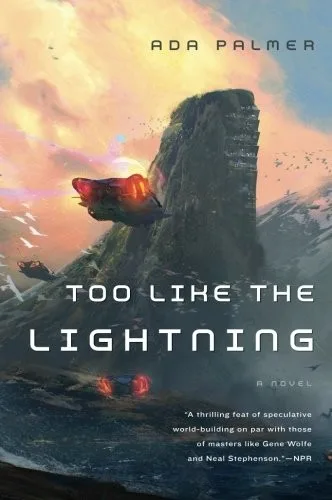
Ada Palmer's 2016 novel, Too Like the Lightning, imagines a 25th-century world without nation-states.
Too Like the Lightning, the first book in Ada Palmer's "Terra Ignota" series, is set in the 25th century, a thousand years after a global catastrophe called the Great Collision. Humanity has reorganized itself into "Hives" and "Bridgades," specialized groups based on shared interests and professions, replacing traditional national borders. The story follows Myra, a "child of the seventeen rooms," as she navigates this new global society.
The novel examines fundamental questions about governance, identity, and human nature. It contrasts the ideals of this future society with the realities of its structure and the personal lives of its inhabitants. Palmer constructs a detailed future, exploring how societal organization impacts individual freedoms and collective progress.
Palmer’s "Terra Ignota" series, beginning with Too Like the Lightning, engages with speculative traditions that reimagine social and political structures. It draws from Enlightenment ideals of reason and progress, but filters them through a contemporary understanding of societal complexities and potential pitfalls. The novel’s focus on new forms of social organization, like the Hives and Brigades, echoes earlier utopian and dystopian thought experiments, offering a vision of humanity’s future trajectory that is both ambitious and cautionary. It questions the foundations of civilization and the human drive towards order and specialization.
💡 Why Read This Book?
• Learn about a radically different model of societal organization by exploring the "Hives" and "Bridgades," which offer an alternative to nation-states, challenging your assumptions about governance. • Understand the implications of "Sensegiveness," a unique societal mechanism for processing historical trauma, and consider its ethical dimensions as presented in the novel's 25th-century setting. • Engage with a complex philosophical debate on identity and progress through the actions of characters like Mycroft and Bridger, offering a unique perspective on the human condition.
⭐ Reader Reviews
Honest opinions from readers who have explored this book.
❓ Frequently Asked Questions
What is the primary societal structure in Too Like the Lightning?
The primary societal structures are "Hives," which are global organizations based on shared interests and expertise, and "Bridgades," which are professional or philosophical guilds that individuals belong to, replacing traditional nation-states.
When was Too Like the Lightning published?
Too Like the Lightning was first published in 2016, marking the beginning of the "Terra Ignota" series.
What is the significance of the Great Collision in the book's history?
The Great Collision is a cataclysmic event that occurred a millennium before the novel's 25th-century setting, fundamentally reshaping the world and leading to the societal structures explored in the book.
Who are the main factions or groups in Too Like the Lightning?
Key groups include the "Smashers," who advocate for radical societal change, and the "Upholders," who seek to maintain the established order, alongside various "Bridgades" and "Hives."
Does Too Like the Lightning explore themes of gender and identity?
Yes, the novel delves into complex gender and identity politics that have evolved in its 25th-century setting, offering a unique perspective on these evolving social constructs.
What is "Sensegiveness" in the context of the book?
Sensegiveness is a societal mechanism designed to address and manage past societal traumas and divisions, presented as a way to facilitate progress and prevent recurrence of historical conflicts.
🔮 Key Themes & Symbolism
Post-Nationalist Governance
The novel presents a future where traditional nation-states have been dissolved, replaced by global "Hives" and specialized "Bridgades." This concept challenges conventional political structures, suggesting a move towards governance based on shared interests and expertise rather than geographical or ethnic lines. The work explores the potential benefits and drawbacks of such a system, questioning whether humanity can truly transcend its historical divisions or if new forms of conflict will emerge. The meticulous design of these new societal frameworks offers a unique lens for considering alternative futures for human civilization.
The Nature of Progress
Palmer interrogates the very definition of progress, particularly in the wake of catastrophic events like the Great Collision. The novel examines "Sensegiveness," a societal mechanism for dealing with historical grievances, as a means to enable future advancement. However, it also questions whether true progress can be achieved by suppressing or sanitizing the past. The narrative contrasts the "Smashers," who push for radical societal evolution, with the "Upholders," who prioritize stability, highlighting the inherent tension between change and tradition.
Identity and Belonging
In a world without nations, individual identity and belonging are redefined through "Bridgades" and "Hives." The novel explores how people forge connections and find purpose in these new structures, as well as the potential for alienation and conflict when these affiliations are challenged. The intricate social dynamics and philosophical debates within the narrative probe the fundamental human need for community and self-definition, especially when traditional markers of identity are removed.
The Role of Knowledge
Knowledge, particularly historical knowledge and its interpretation, plays an important role in shaping the society of "Too Like the Lightning." The concept of "Sensegiveness" directly addresses how societies process and utilize their past. The novel suggests that the control and dissemination of information are central to maintaining societal order and driving change, raising questions about intellectual freedom and the potential for manipulation within highly organized systems.
💬 Memorable Quotes
Direct passages from the work, attributed to the author.
“The world is not for us to save, but for us to live in.”
— This statement captures a pragmatic philosophy, suggesting that human efforts should focus on inhabiting and experiencing existence rather than attempting grand, perhaps futile, attempts at universal salvation or correction.
“All history is a story we tell ourselves about ourselves.”
— This highlights the subjective nature of historical understanding. It implies that historical accounts are not objective truths but rather constructed narratives shaped by the perspectives and needs of those who tell them.
“The future is not a destination, but a direction.”
— This aphorism suggests that the future is not a predetermined state to be reached, but rather an ongoing process of becoming, shaped by present actions and choices. It emphasizes agency and the dynamic nature of time.
“To understand a system, you must first understand its rules.”
— This emphasizes the importance of foundational knowledge and structure. Before engaging with or critiquing a system, one must grasp its underlying principles and operational mechanics.
“We are all prisoners of the past, until we learn to forgive it.”
— This concept directly relates to the novel's "Sensegiveness" theme, suggesting that societal and individual liberation is tied to acknowledging and processing historical burdens, rather than being perpetually defined or constrained by them.
🌙 Esoteric Significance
Tradition
While not explicitly aligned with a single esoteric tradition, "Too Like the Lightning" draws upon Hermetic principles of correspondence and the idea of macrocosm/microcosm. The meticulously designed societal structures can be viewed as an attempt to manifest an ordered, philosophical ideal on a grand scale, akin to alchemical or Gnostic projects of creating perfectible worlds. The focus on rational organization and the manipulation of societal forces reflects the Hermetic pursuit of understanding and influencing universal laws.
Symbolism
The "Hives" and "Bridgades" function as symbolic representations of societal organization, akin to the structured hierarchies found in some Hermetic or Kabbalistic systems. The "Smashers" and "Upholders" can be seen as archetypal forces of change and preservation, respectively. The concept of "Sensegiveness" itself acts as a powerful symbol for societal purification and the alchemical process of transforming base elements (past traumas) into something more refined (future stability).
Modern Relevance
Contemporary thinkers exploring transhumanism, radical societal restructuring, and the ethics of artificial intelligence find resonance in Palmer's detailed world-building. The novel's exploration of identity in a post-biological or post-national context is relevant to discussions in digital philosophy and futurism. Its intricate systems and philosophical underpinnings also appeal to comparative religion scholars and those interested in the evolution of utopian and dystopian thought.
👥 Who Should Read This Book
• Students of speculative fiction and world-building: Those interested in how authors construct intricate, believable future societies will find a detailed look in Palmer's detailed "Hives" and "Bridgades." • Readers of philosophical science fiction: Individuals who enjoy novels that probe deep questions about governance, identity, and progress will appreciate the intellectual rigor of "Too Like the Lightning." • Fans of complex narratives: Readers who are not deterred by dense prose and intricate plots, and who seek a challenging literary experience, will be rewarded by this novel's depth.
📜 Historical Context
Published in 2016, Ada Palmer's "Too Like the Lightning" emerged during a period of intense global discourse on identity, nationalism, and the future of governance. The novel’s speculative vision of a post-nationalist world, organized into "Hives" and "Bridgades," can be seen as a complex engagement with the anxieties and possibilities of an increasingly interconnected yet fragmented global landscape. In intellectual circles, the early 21st century saw a resurgence of interest in grand narratives and systemic critiques, with thinkers like Yuval Noah Harari popularizing broad historical analyses. Palmer’s work offers a fictional counterpoint, meticulously detailing a specific, engineered future rather than a sweeping historical survey. The novel's intricate world-building and philosophical depth also invite comparisons to earlier science fiction authors who explored radical societal structures, such as Ursula K. Le Guin or Iain M. Banks, though Palmer’s approach is marked by a unique linguistic and conceptual precision. Its reception highlighted a growing appetite for intellectually demanding speculative fiction that tackles profound societal questions.
📔 Journal Prompts
The concept of "Sensegiveness" and its implications for societal healing.
Mycroft's role as a "Hives" specialist and his perspective on global order.
The structure and purpose of the "Bridgades" in defining individual identity.
The philosophical underpinnings of the "Smashers"' desire for radical change.
The effectiveness of global "Hives" in replacing traditional nation-states.
🗂️ Glossary
Hives
Global societal structures in the 25th century that have replaced nation-states, organized around shared interests, expertise, or philosophical outlooks.
Bridgades
Professional or philosophical guilds that individuals belong to, defining their roles and allegiances within the broader societal framework of Hives.
Sensegiveness
A societal mechanism designed to address and process historical traumas and societal divisions, enabling progress by confronting and managing the past.
Smashers
A faction or group advocating for radical societal change and upheaval, often challenging the established order and seeking to dismantle existing structures.
Upholders
A faction or group focused on maintaining the current societal order and stability, often opposing radical change proposed by groups like the Smashers.
The Great Collision
A cataclysmic historical event that occurred a millennium before the novel's setting, fundamentally reshaping the world and leading to the development of new societal structures.
Anticipatory
A term used in the novel to describe individuals who possess exceptional foresight or a unique ability to predict future events or societal trends.
🔮 Readers Also Liked
Browse all →









More by Ada Palmer
All books →
More Free Spiritual Development Books
View all →