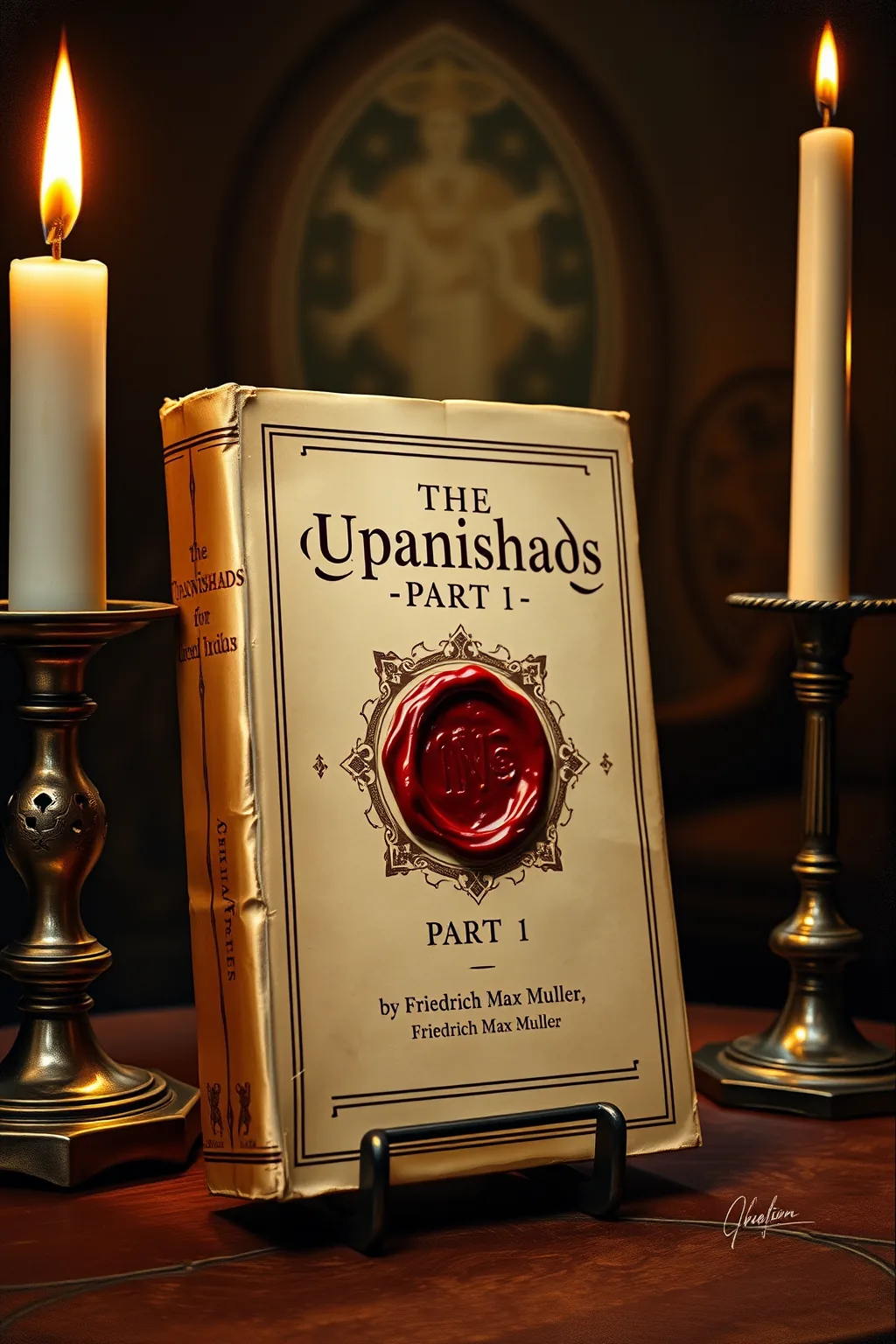
The Upanishads Part 1
 95
95

The Upanishads Part 1


Ophelia Vance, Mystical Literature Reviewer — Friedrich Max Müller's translation of 'The Upanishads, Part 1' remains an indispensable cornerstone for any serious student of esoteric philosophy. This volume, serving as the introduction to the vast 'Sacred Books of the East,' masterfully presents the core tenets of Upanishadic thought with unparalleled clarity. Müller's scholarship unravels the intricate Sanskrit, making accessible the profound dialogues on Brahman, Atman, and the path to moksha. It’s a powerful primer for understanding the philosophical underpinnings of yogic traditions and Advaita Vedanta. Essential for scholars and spiritual seekers alike, this translation offers not just knowledge, but the seeds of transformative wisdom, inviting readers to contemplate the very essence of existence.
📝 Description
95
Friedrich Max Müller's 1879 translation of the Upanishads began the 'Sacred Books of the East' series.
This translation of the Upanishads, the first part of a larger collection, presents key texts of Vedanta philosophy. Müller’s introduction details the Sanskrit language and the scholarly approach taken to render these ancient writings accessible. The Upanishads themselves contain dialogues that discuss the relationship between the individual soul, Atman, and the universal consciousness, Brahman. These texts are more than philosophical arguments; they are viewed as sacred teachings containing symbolic language and insights into existence, awareness, and freedom from suffering.
This volume serves as an entry point for individuals interested in deep spiritual questions. It offers a look into a tradition where understanding oneself is a primary goal. The work aims to reveal subtle truths passed down through ages, intended to stimulate inner potential.
The Upanishads are foundational texts within the Hindu tradition, specifically forming the philosophical basis for Vedanta. They arose during a period of intense spiritual and philosophical inquiry in ancient India, often presented as dialogues between teachers and students. These texts are considered *shruti* (that which is heard), believed to be revealed knowledge rather than composed doctrine. They are concerned with the ultimate nature of existence, the self, and the means to achieve liberation from the cycle of rebirth, making them central to the study of Indian spiritual and philosophical thought.
✍️ Author

Friedrich Max Muller
Friedrich Max Müller was a German philologist and orientalist who studied comparative mythology and religion.
💡 Why Read This Book?
This foundational text offers direct access to the spiritual bedrock of Eastern mysticism. It provides profound insights into the nature of consciousness, the self, and the universe, crucial for anyone seeking deeper self-understanding. Ideal for spiritual seekers, philosophers, and practitioners of contemplative traditions who desire to explore the origins of Vedantic thought and unlock ancient wisdom for personal transformation.
⭐ Reader Reviews
Honest opinions from readers who have explored this book.
❓ Frequently Asked Questions
What are the Upanishads?
The Upanishads are ancient Sanskrit texts that form the philosophical and spiritual core of Hinduism. They are often considered the culmination of Vedic thought, exploring profound concepts of reality, consciousness, and the nature of the soul.
Who is Friedrich Max Müller?
Friedrich Max Müller was a renowned German-British philologist and Orientalist, celebrated for his pioneering translations and studies of ancient Indian literature, particularly the Vedas and Upanishads. He was instrumental in bringing Eastern wisdom to the Western world.
What is the 'Sacred Books of the East' series?
This is a monumental fifty-volume collection of English translations of Asian religious and philosophical texts, initiated and overseen by Friedrich Max Müller, aiming to provide a comprehensive overview of the world's major spiritual traditions.
What is the significance of 'Part 1'?
Part 1 of 'The Upanishads' within the series contains not only the translation of key Upanishadic texts but also Müller's crucial introductory essay, which sets the stage for the entire 'Sacred Books of the East' series by explaining its purpose and methodology.
Is this book suitable for beginners?
While the subject matter is profound, Müller's scholarly approach and accessible translation make it a valuable starting point for those new to Upanishadic philosophy, though a willingness to engage with complex ideas is beneficial.
🔮 Key Themes & Symbolism
The Nature of Brahman and Atman
This central theme explores the ultimate reality (Brahman) and the individual self (Atman). The Upanishads posit that these are not separate entities but are, in essence, identical. This profound realization, often achieved through deep contemplation and spiritual practice, is the key to liberation from the cycle of birth and death. The texts use rich metaphors and allegories to guide the reader towards understanding this non-dualistic truth, challenging conventional perceptions of individuality and the universe.
The Path to Moksha (Liberation)
Central to Upanishadic teachings is the concept of moksha, the ultimate release from suffering and the cycle of reincarnation (samsara). This liberation is not achieved through mere intellectual understanding but through direct experiential knowledge of the oneness of Brahman and Atman. The texts detail various paths, including jnana yoga (the yoga of knowledge), karma yoga (the yoga of action), and dhyana (meditation), emphasizing the importance of detachment, ethical conduct, and unwavering devotion to truth.
The Illusion of Maya
The Upanishads grapple with the concept of Maya, often translated as illusion or cosmic delusion. This principle explains why the phenomenal world appears separate and real, obscuring the underlying unity of Brahman. Maya is the veil that creates the perception of duality – subject and object, self and other. Understanding Maya is crucial for transcending the limitations of ordinary perception and realizing the true, unchanging nature of reality beyond the ephemeral manifestations of the material world.
💬 Memorable Quotes
Direct passages from the work, attributed to the author.
“That art thou.”
— A concise declaration of the fundamental unity between the individual soul (Atman) and the supreme reality (Brahman), forming the core of Advaita Vedanta.
“As the ('all-knowing') fire, when it has consumed its fuel, becomes of the same form as its fuel, so indeed, O Gautama, the creatures become of the same form as Brahman.”
— Illustrates the ultimate absorption and unity with Brahman after liberation, akin to fire merging with its consumed fuel, signifying transcending individual form.
“He who knows the Highest Brahman, becomes Brahman himself.”
— Highlights the transformative power of true knowledge, suggesting that direct apprehension of Brahman leads to a realization of one's own divine nature.
“Verily, there is no fear from the ether (from the sky).”
— Symbolizes a state of ultimate freedom and security, where one has transcended all worldly anxieties and limitations, existing in a state of pure consciousness.
“That which is the subtlest, that is the essence of all.”
— Points to the underlying, imperceptible nature of reality as the fundamental source and essence of all existence, urging a search beyond superficial appearances.
🌙 Esoteric Significance
Tradition
The Upanishads are foundational to the Advaita Vedanta tradition within Hinduism, a path of non-dualism that emphasizes the ultimate oneness of reality. They represent a sophisticated system of metaphysical thought, offering esoteric insights into the nature of consciousness, the self, and the universe, intended for direct realization rather than mere intellectual assent.
Symbolism
These texts are rich in symbolic language, employing metaphors like the 'chariot' to represent the human body, its driver the intellect, and the reins the mind. Concepts like the 'sun,' 'ether,' and 'fire' are used to denote Brahman, the supreme consciousness, while the 'drop of water' merging into the ocean symbolizes the Atman's union with Brahman.
Modern Relevance
In an age often characterized by materialism and existential anxiety, the Upanishads offer timeless wisdom on inner peace, self-discovery, and the interconnectedness of all beings. Their teachings on consciousness, mindfulness, and the pursuit of ultimate truth resonate deeply with contemporary seekers of spiritual growth and psychological well-being.
👥 Who Should Read This Book
This volume is indispensable for scholars of comparative religion, philosophy, and Indology seeking primary source material. Spiritual seekers drawn to the roots of Eastern mysticism, particularly Vedanta and yogic traditions, will find clear insights. Practitioners of meditation and mindfulness will benefit from the Upanishads' exploration of consciousness. Beginners curious about the deeper questions of existence and the nature of reality will discover a rich, albeit challenging, introduction to one of humanity's most influential wisdom traditions.
📜 Historical Context
The Upanishads, dating roughly from the 8th to 5th centuries BCE, emerged during a period of significant intellectual and spiritual ferment in ancient India. This era, often referred to as the 'soteric age,' saw a shift from ritualistic Vedic practices to more introspective and philosophical inquiries into the nature of existence. The emergence of these texts marked an important moment, laying the groundwork for major Indian philosophical schools like Vedanta. Friedrich Max Müller, a 19th-century scholar, recognized the immense value of these texts, and his meticulous translation and inclusion in the 'Sacred Books of the East' series were instrumental in introducing this profound wisdom to a global audience, sparking new waves of spiritual and philosophical exploration in the West.
📔 Journal Prompts
Reflect on the concept of 'That art thou' (Tat Tvam Asi). How does this idea challenge your perception of self and separation?
Consider the metaphor of fire consuming its fuel. How can you apply this idea of merging and transformation to your own life and spiritual practice?
What aspects of Maya (illusion) do you observe in your daily life? How do these illusions obscure your perception of deeper truths?
Explore the idea of liberation (Moksha). What does freedom from the cycle of birth and death mean to you, and what steps can you take towards it?
How does the Upanishadic understanding of Brahman and Atman influence your view of the universe and your place within it?
🗂️ Glossary
Brahman
The ultimate, impersonal, all-pervading reality or cosmic consciousness that is the source and substance of all existence. It is considered the supreme, unchanging truth.
Atman
The individual soul, the inner self, or the spirit. In Upanishadic philosophy, Atman is often described as identical with Brahman.
Moksha
Liberation or release from the cycle of birth, death, and rebirth (samsara). It signifies the attainment of spiritual freedom and union with the divine.
Maya
Cosmic illusion or delusion that conceals the true nature of reality (Brahman) and makes the phenomenal world appear real and separate.
Samsara
The continuous cycle of birth, death, and rebirth, driven by karma and ignorance. It is the state of worldly existence from which liberation (Moksha) is sought.
This book appears in 3 collections
🔮 Readers Also Liked
Browse all →









More by Friedrich Max Muller
All books →
From the “Transcendental Meditation” Collection
View all →








More Free Spiritual Development Books
View all →