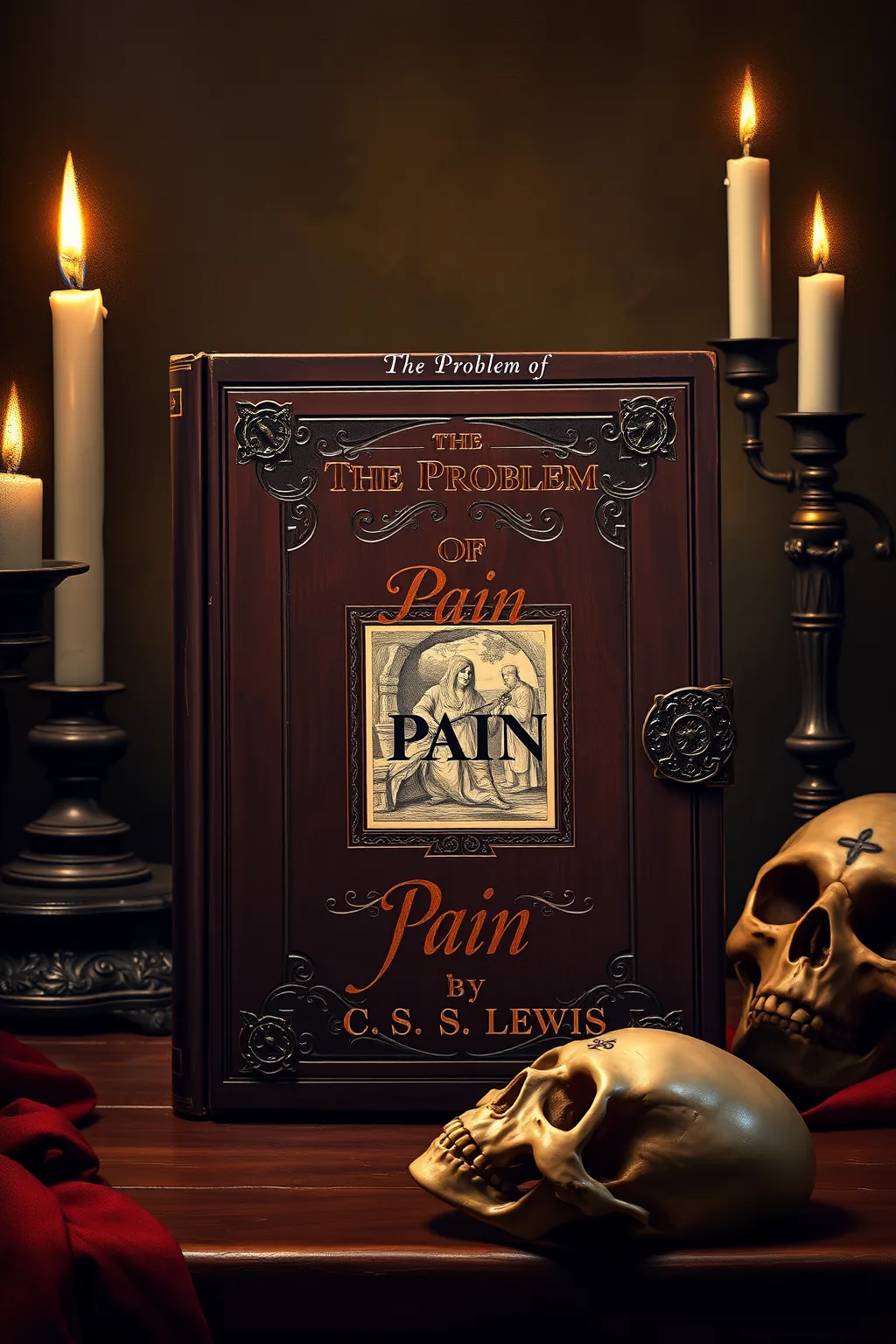
The Problem of Pain
 81
81

The Problem of Pain
Lewis’s 1940 treatise on suffering is less an esoteric text and more a rigorous, if sometimes stark, examination of theodicy. He begins by dismantling common objections to God based on pain, a task he undertakes with considerable intellectual force. His argument that “pain is the great evangelist” is particularly potent, suggesting that suffering can drive individuals toward spiritual reckoning. However, the work’s primary limitation lies in its dispassionate tone; while intellectually sound, it can feel distant to those actively experiencing profound agony. The section on hell, while theologically consistent within Lewis’s framework, remains a difficult passage for many readers. The Problem of Pain offers a robust intellectual defense of faith against the charge of indifference, but its comfort is primarily intellectual, not emotional.
📝 Description
81
C. S. Lewis published The Problem of Pain in 1940, tackling suffering's theological challenges.
First released in 1940, C. S. Lewis's The Problem of Pain examines the theological and philosophical questions surrounding suffering. Lewis addresses how human pain challenges beliefs in a good God, dissecting arguments against divine existence that arise from affliction. He constructs a reasoned defense for faith amidst hardship.
This book speaks to those wrestling with existential questions about suffering and divine justice. It is for individuals who have faced loss or hardship, testing their faith, and for those interested in theological apologetics. Students of philosophy and theology will find Lewis's structured arguments useful for understanding classical discussions on theodicy.
Written during the period before and during World War II, The Problem of Pain responded to the anxieties and philosophical discussions of the mid-20th century. The growth of secularism and existentialism formed a backdrop for Lewis’s Christian apologetics. His work engaged with existing theological ideas while also addressing contemporary intellectual trends that questioned religious doctrines due to widespread suffering.
While not strictly esoteric, Lewis engages with long-standing Christian theological debates concerning the nature of good and evil, divine omnipotence, and the human condition. His work is situated within the tradition of Christian apologetics, seeking to reconcile faith with the reality of suffering, a theme that resonates across many spiritual and philosophical systems. The book addresses how suffering can be understood not merely as an affliction, but potentially as a catalyst for spiritual growth and a deepening of one's relationship with the divine.
💡 Why Read This Book?
• Understand the theological argument for divine goodness despite suffering, as Lewis outlines the concept of God as a “cosmic surgeon” in Chapter 4, seeking to heal humanity. • Grasp the role of free will in the existence of evil, a core argument Lewis presents in Chapter 5, explaining how human choice contributes to suffering. • Explore the ultimate purpose of pain in a believer's spiritual development, a concept Lewis develops by contrasting temporal suffering with eternal joy, particularly in Chapter 8.
⭐ Reader Reviews
Honest opinions from readers who have explored this book.
❓ Frequently Asked Questions
When was C. S. Lewis's The Problem of Pain first published?
The Problem of Pain by C. S. Lewis was first published in 1940, a period marked by significant global conflict and philosophical questioning.
What is the main argument of C. S. Lewis's The Problem of Pain?
The book's central argument is a defense of God's goodness and existence in the face of human suffering, exploring the theological and philosophical implications of pain.
Does The Problem of Pain discuss hell?
Yes, C. S. Lewis dedicates a significant portion of the book to discussing the nature of hell and its relationship to the problem of pain and divine justice.
Is The Problem of Pain considered an esoteric text?
While Esoteric Library curates it, The Problem of Pain is primarily a work of Christian apologetics and philosophy, though its exploration of suffering touches on profound existential and metaphysical themes.
Who was C. S. Lewis?
C. S. Lewis was a renowned scholar, author, and theologian, famous for his "Narnia" series, his Christian apologetics, and his academic work on medieval and Renaissance literature.
What is theodicy as discussed in The Problem of Pain?
Theodicy is the theological concept of defending God's justice and goodness in light of the existence of evil and suffering, which is the core subject of Lewis's book.
🔮 Key Themes & Symbolism
Suffering as Divine Tool
Lewis posits that pain, rather than disproving God, can serve as a necessary catalyst for spiritual growth and a divine summons. He argues that God uses suffering as a means to break down our self-sufficiency and draw us towards Him, much like a surgeon uses a scalpel to heal. This perspective reframes pain not as an arbitrary affliction, but as a purposeful element within a divine plan for human redemption, challenging the reader to see hardship as a potential pathway to deeper faith.
Free Will and Evil
A central tenet of Lewis's argument involves the necessity of free will for genuine love and moral choice. He contends that a world devoid of the possibility of evil, created by removing free will, would be a sterile and less valuable creation. Therefore, the existence of evil and suffering is presented as an inevitable consequence of granting humanity genuine freedom, a difficult but necessary trade-off for the capacity for good and love.
The Nature of Heaven and Hell
The book examines the concepts of heaven and hell not merely as eschatological destinations but as reflections of our choices and desires in this life. Lewis presents hell as a self-chosen state, a perpetual turning away from God, while heaven is the ultimate fulfillment of our deepest, God-given longings. This exploration aims to reconcile the existence of suffering and judgment with a benevolent divine nature by framing these states as the logical outcomes of free will.
God's Goodness Reconsidered
Lewis challenges conventional, often sentimental, notions of divine goodness. He argues that God’s goodness is not equivalent to human notions of mere pleasantness or indulgence. Instead, divine goodness is understood in terms of ultimate purpose and the well-being of the soul, which may necessitate difficult or painful experiences. This redefinition allows for a God who permits suffering for a greater, eternal good, rather than one who is incapable of preventing it.
💬 Memorable Quotes
Direct passages from the work, attributed to the author.
“God whispers to us in our pleasures, speaks in our conscience, but shouts in our pains: it is His megaphone to rouse a deafened world.”
— This powerful metaphor suggests that intense suffering serves as an undeniable, urgent call from the divine. While everyday joys might offer subtle hints of God's presence, and conscience provides moral guidance, pain is presented as an inescapable, attention-grabbing force designed to awaken individuals to spiritual realities they might otherwise ignore.
“If we consider what the mouse-hole is to the lion, we can understand the problem of pain.”
— This analogy highlights the vast difference in scale and perspective between human suffering and the divine. Just as a mouse-hole is insignificant to a lion, human pain, while immense to us, may be viewed differently within the context of eternity and divine omnipotence, suggesting a need for a broader, perhaps incomprehensible, divine viewpoint.
“We can either praise, or blame, God for the world as it is. We cannot do both.”
— This statement frames the core dilemma of theodicy. It forces a choice: either accept the world as fundamentally good and therefore praise God for it, or acknowledge its pervasive suffering and evil, which then implies blame or at least questioning of divine benevolence. Lewis uses this to push the reader toward a more nuanced understanding of God's role.
“The love of God is of a different kind than ours.”
— Lewis distinguishes between human affection and divine love. He suggests that God's love is not merely sentimental or permissive but is actively concerned with our ultimate well-being, even if that involves methods that appear harsh or painful from a human perspective. This implies a love focused on eternal outcomes rather than immediate comfort.
“Merciful is the word to describe the pain that rouses us from our lethargy.”
— This interpretation of pain as a merciful act challenges the common perception of suffering as purely negative. Lewis argues that the discomfort and distress caused by pain can be a benevolent intervention, shaking us out of complacency and spiritual apathy, thereby acting as a kindness that redirects us towards a better path.
🌙 Esoteric Significance
Tradition
While primarily a work of Christian apologetics, The Problem of Pain touches upon themes that resonate within esoteric traditions by exploring the metaphysical implications of suffering. Its focus on the soul's journey, the nature of divine justice, and the ultimate purpose of existence aligns with perennial philosophical inquiries found in Gnosticism and Neoplatonism, which often grapple with the presence of imperfection and evil in a divinely ordered cosmos.
Symbolism
The book uses the 'lion' as a potent symbol, representing God's power and inscrutability, contrasting it with the 'mouse-hole' of human understanding, which is too small to grasp the divine perspective on suffering. Another implicit symbol is that of the 'cosmic surgeon,' portraying God as one who inflicts necessary pain for a greater, healing purpose, a motif found in various spiritual traditions that view hardship as a purification process.
Modern Relevance
Contemporary thinkers and spiritual practitioners interested in the intersection of faith, psychology, and suffering often turn to Lewis's work. His structured arguments continue to inform discussions in pastoral care, philosophical theology, and even self-help literature that seeks to find meaning in adversity. His influence can be seen in modern approaches to resilience and the spiritual dimensions of trauma recovery, where the search for purpose in pain remains a central concern.
👥 Who Should Read This Book
• Individuals questioning their faith or the nature of divine justice in the face of personal tragedy or global events. • Students of philosophy and theology seeking a foundational text on the problem of theodicy and classical arguments for God's existence. • Readers interested in the intellectual history of the 20th century and the development of Christian apologetics by a prominent literary figure.
📜 Historical Context
Published in 1940, C. S. Lewis’s The Problem of Pain emerged during a period of profound global upheaval, with World War II raging across Europe. The intellectual climate was marked by increasing secularism and the burgeoning influence of existentialist thought, which often grappled with the apparent meaninglessness of suffering. Lewis, a prominent Christian apologist and scholar of medieval literature, engaged directly with these contemporary anxieties. His work offered a robust defense of Christian doctrine against the philosophical challenges posed by widespread suffering, contrasting sharply with the more nihilistic or atheistic responses prevalent among thinkers like Jean-Paul Sartre, whose early works were also gaining traction. Lewis's approach, grounded in classical theological arguments, sought to provide a rational framework for faith amidst widespread doubt and despair, positioning his work as a significant contribution to 20th-century Christian apologetics.
📔 Journal Prompts
The concept of pain as a divine megaphone, as described by Lewis.
The necessity of free will in the context of potential evil and suffering.
Lewis's redefinition of divine goodness beyond human sentimentality.
The comparison of human suffering to a 'mouse-hole' in relation to an omnipotent 'lion'.
Reflections on the nature of hell as a state of perpetual self-will.
🗂️ Glossary
Theodicy
The theological attempt to reconcile the existence of evil and suffering with the attributes of an omnipotent, omniscient, and benevolent God. Lewis's book is a major work of theodicy.
Free Will
The capacity of agents to choose between different possible courses of action unimpeded. Lewis argues free will is essential for genuine love and morality, but also the source of evil.
Natural Evil
Suffering and misfortune caused by natural processes, such as disease, earthquakes, and storms, as opposed to moral evil caused by the actions of sentient beings.
Moral Evil
Suffering and wrongdoing caused by the deliberate actions of free agents, typically humans, who choose to act against divine or ethical principles.
Apologetics
The branch of theology and philosophy concerned with demonstrating the truth and validity of Christian beliefs, often in response to objections or criticisms.
Eschatology
The part of theology concerned with death, judgment, and the final destiny of the soul and of humankind. Lewis discusses heaven and hell in this context.
Divine Goodness
The quality of being morally excellent and benevolent attributed to God. Lewis redefines this concept as being aligned with ultimate purpose rather than immediate human comfort.
🔮 Readers Also Liked
Browse all →









More by C. S. Lewis, James Simmons
All books →
More Free Spiritual Development Books
View all →