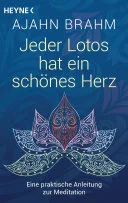
Jeder Lotos hat ein schönes Herz
 80
80

Jeder Lotos hat ein schönes Herz
Ajahn Brahm's "Jeder Lotos hat ein schönes Herz" attempts to demystify meditation for the hurried modern individual. The author's strength lies in his accessible, often humorous, prose, making complex Buddhist ideas feel approachable. He clearly articulates how consistent practice, rather than mere desire, is the key to unlocking inner peace. A notable passage illustrates the concept of the 'monkey mind' through relatable anecdotes, effectively showing how to observe thoughts without judgment. However, the book occasionally leans towards platitudes, and the direct application of specific Buddhist doctrines could be more deeply explored for readers familiar with the tradition. Still, for newcomers seeking practical relief from stress, Brahm provides a well-trodden yet effective path.
📝 Description
80
Ajahn Brahm's 2012 book reveals meditation as a tool for modern life's stresses.
Ajahn Brahm's "Jeder Lotos hat ein schönes Herz" (Every Lotus Has a Beautiful Heart) offers practical guidance on meditation, drawing from Buddhist principles to address modern life's stresses. The book presents meditation not as an escape, but as a tool to enrich daily existence, making it more manageable and fulfilling. This work is intended for individuals seeking tangible methods to alleviate stress and cultivate inner peace. It appeals to those feeling overwhelmed by the demands of contemporary life, whether students, professionals, or anyone struggling with anxiety and a sense of being constantly rushed.
The central ideas revolve around the transformative power of correct meditation techniques. Brahm emphasizes that consistent practice can fundamentally alter one's experience of daily life, fostering serenity and strength. The book details how to approach meditation with clarity and consistency, moving beyond superficial understanding to achieve deeper states of calm and insight.
Published in 2012, this book reflects a growing Western interest in contemplative practices. Ajahn Brahm, a prominent figure in Western Buddhism, makes Buddhist concepts accessible. His approach offers an alternative to more academic presentations, aligning with a broader cultural movement towards mindfulness. The book's focus on practical application connects it to traditions that emphasize direct experience over dogma.
💡 Why Read This Book?
• Learn specific techniques for observing the "monkey mind," as detailed in Ajahn Brahm's discussions, to gain control over distracting thoughts. • Discover how applying the principles taught by Brahm, a respected Buddhist teacher since the 1980s, can transform your daily experience of stress and time pressure. • Understand the Buddhist concept of "emptiness" as presented in the book's exploration of detachment, offering a unique perspective on finding peace amidst chaos.
⭐ Reader Reviews
Honest opinions from readers who have explored this book.
❓ Frequently Asked Questions
What is Ajahn Brahm's background and why is it relevant to this book?
Ajahn Brahm is a prominent Western Buddhist teacher, ordained in Thailand in 1977. His background is crucial as he bridges Eastern monastic tradition with Western secular understanding, making concepts accessible as demonstrated in "Jeder Lotos hat ein schönes Herz" (2012).
How does "Jeder Lotos hat ein schönes Herz" differ from other meditation books?
This book emphasizes practical application for modern stress, distinct from purely academic or highly ritualistic texts. Ajahn Brahm's signature blend of humor and clear instruction, a style honed over decades of teaching, sets it apart.
What are the core benefits of the meditation techniques described?
The book promises enhanced serenity, greater inner strength, and a more manageable daily life. It teaches readers to transform stress and pressure through consistent, correctly applied meditative practice.
Is prior knowledge of Buddhism required to understand this book?
No, the book is designed for a broad audience. Ajahn Brahm explains Buddhist concepts clearly, assuming no prior expertise, making the wisdom accessible to anyone seeking peace and stress reduction.
When was "Jeder Lotos hat ein schönes Herz" originally published?
The original publication date for "Jeder Lotos hat ein schönes Herz" is February 27, 2012. This places it within a period of growing interest in mindfulness and secular Buddhism.
What does the title "Jeder Lotos hat ein schönes Herz" signify?
The title, translating to "Every Lotus Has a Beautiful Heart," symbolizes the inherent purity and potential for beauty within all beings, often obscured by life's difficulties. It points to the inner peace meditation can reveal.
🔮 Key Themes & Symbolism
The Mind as a Monkey
The book frequently uses the metaphor of the "monkey mind" to describe the restless, chattering nature of untrained consciousness. Ajahn Brahm illustrates how this incessant mental activity, like a monkey leaping from branch to branch, fuels anxiety and distraction. The core teaching is not to suppress these thoughts but to observe them with gentle awareness, akin to watching a monkey without trying to catch it. This practice, rooted in Buddhist Vipassanā meditation, aims to create space between the observer and the observed, fostering equanimity and reducing the impact of stressful thoughts on one's well-being.
Meditation for Daily Life
A central tenet of "Jeder Lotos hat ein schönes Herz" is that meditation is not an activity confined to cushions or retreats; it is a way of being that permeates everyday existence. Ajahn Brahm argues that the techniques learned in formal practice can and should be applied to mundane tasks, interactions, and challenges. This integration transforms meditation from an esoteric pursuit into a practical tool for reading through the complexities of modern life, fostering resilience and a sense of calm amidst the inevitable pressures of work, relationships, and personal goals.
Compassion and Equanimity
The work explores the development of compassion (metta) and equanimity as direct outcomes of consistent meditative practice. By cultivating a non-judgmental awareness of one's own mind and experiences, practitioners begin to extend this understanding and kindness to others. Brahm suggests that true equanimity arises not from indifference, but from a deep recognition of shared human struggles and the inherent potential for peace within all beings. This theme underscores the ethical dimension of Buddhist practice, linking inner transformation with outer relational harmony.
The Nature of Suffering
Drawing from the First Noble Truth of Buddhism, the book addresses the pervasive nature of suffering (dukkha) in human life, often exacerbated by attachment and aversion. However, "Jeder Lotos hat ein schönes Herz" offers a path beyond mere acknowledgment of suffering. It presents meditation as a means to understand its roots – the craving and dissatisfaction that arise from a misunderstanding of impermanence and self. By cultivating insight into these mechanisms, individuals can gradually loosen the grip of suffering and find liberation.
💬 Memorable Quotes
Direct passages from the work, attributed to the author.
“Meditation can transform, enrich, and lighten our daily lives.”
— This concise statement expresses the book's core promise: that consistent meditative practice offers tangible benefits for everyday existence, making it less burdensome and more meaningful.
“One must meditate correctly to find help.”
— This highlights the importance of proper technique and understanding in meditation, suggesting that simply sitting isn't enough; the method and intention are crucial for effective results.
“The modern person finds it hard to achieve rest and inner peace.”
— This observation directly addresses the target audience's struggles, validating the feeling of being overwhelmed and setting the stage for meditation as a solution.
“The path to serenity and inner strength.”
— This phrase points to the ultimate goal of the practices discussed in the book, framing meditation not as an end in itself, but as a means to achieve lasting psychological well-being.
“From appointment to appointment, stressed and under pressure.”
— This vivid description paints a relatable picture of the modern condition, emphasizing the relentless pace and stress that the book aims to alleviate through its teachings.
🌙 Esoteric Significance
Tradition
While firmly rooted in the Theravada Buddhist tradition, Ajahn Brahm's work often translates its core principles into a universally applicable psychological framework. It departs from strict sectarian dogma, focusing on the experiential and practical aspects of meditation that align with broader contemplative traditions. It can be seen as part of a modern movement to extract the 'essence' of Buddhist practice, making it accessible beyond monastic or specific cultural contexts, akin to how the Theosophical Society sought universal spiritual truths.
Symbolism
The lotus flower, central to the title, is a profound Buddhist symbol representing purity, enlightenment, and the potential for beauty to emerge from muddy circumstances. It signifies the mind's capacity to remain untainted by the defilements of the world, even while existing within it. The 'beautiful heart' of the lotus speaks to the inherent goodness and peace that meditation aims to uncover. Other subtle symbols might include the imagery of the 'monkey mind,' representing uncontrolled mental states, and the 'path,' symbolizing the progressive journey of practice.
Modern Relevance
Ajahn Brahm's approach resonates strongly with contemporary mindfulness-based stress reduction (MBSR) programs and secularized meditation movements. Therapists and coaches frequently recommend his accessible teachings to clients seeking practical tools for anxiety management and emotional regulation. His emphasis on the integration of practice into daily life aligns with modern self-help and positive psychology trends, making Buddhist wisdom relevant to a wide audience beyond traditional practitioners.
👥 Who Should Read This Book
['• Individuals experiencing significant stress and anxiety in their professional or personal lives, seeking practical, non-dogmatic methods for cultivating calm.', '• Beginners to meditation and Buddhist philosophy who desire clear, relatable instruction from a respected contemporary teacher.', '• Those interested in applying contemplative practices to enhance daily well-being and develop greater emotional resilience.']
📜 Historical Context
Published in 2012, "Jeder Lotos hat ein schönes Herz" arrived during a significant surge in Western interest in mindfulness and Buddhist contemplative practices, largely secularized from their origins. Ajahn Brahm, ordained in 1977, represented a generation of Westerners who had become prominent teachers, making complex doctrines accessible. His approach contrasted with more traditional, academic, or exclusively monastic presentations of Buddhism. This period saw numerous books aiming to distill Eastern wisdom for a Western audience, with figures like Thich Nhat Hanh also gaining widespread popularity. Brahm's work fit into this burgeoning field, offering practical, often humorous, guidance that resonated with individuals grappling with the stresses of contemporary life, distinct from, for example, the more analytical approach of the early Buddhist Publication Society in Sri Lanka.
📔 Journal Prompts
The monkey mind's constant leaps and bounds.
Transforming daily life through meditation.
Cultivating compassion from inner peace.
The path to serenity as described by Brahm.
Finding the lotus heart within chaos.
🗂️ Glossary
Monkey Mind
A Buddhist metaphor describing the restless, agitated, and easily distracted nature of the untrained human mind, prone to jumping erratically between thoughts and emotions.
Vipassanā
A Pali term meaning 'insight' or 'clear seeing.' It refers to a specific form of Buddhist meditation focused on developing awareness and understanding of the true nature of reality, particularly impermanence, suffering, and non-self.
Metta
A Pali term for loving-kindness or benevolence. It is a core meditation practice in Buddhism aimed at cultivating unconditional positive regard and well-wishing towards oneself and all beings.
Equanimity
A state of mental calmness and composure, especially in difficult situations. In Buddhism, it is one of the Four Immeasurable Qualities, involving an unbiased, non-reactive acceptance of life's ups and downs.
Dukkha
A fundamental concept in Buddhism, often translated as 'suffering,' 'dissatisfaction,' or 'stress.' It refers to the inherent unsatisfactoriness of conditioned existence, arising from impermanence and attachment.
Serenity
A state of being calm, peaceful, and untroubled. In the context of the book, it is presented as an achievable outcome of consistent meditation practice, leading to inner strength.
Ajahn
A Thai term of respect for a monk, equivalent to 'teacher' or 'master.' Ajahn Brahm is respected as a senior monastic teacher within the Buddhist tradition.