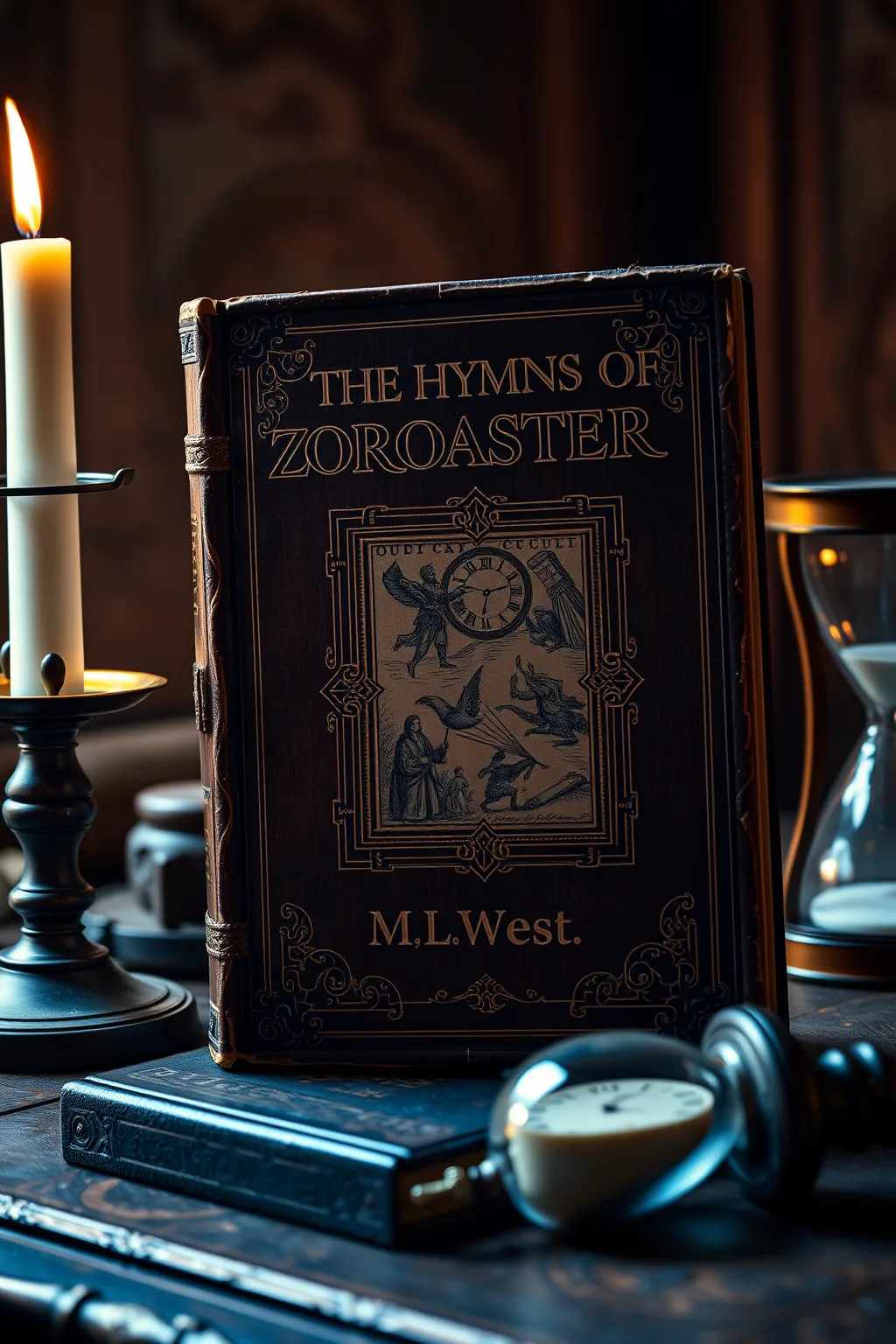
The Hymns Of Zoroaster. A New Translation Of The Most Ancient Sacred Texts Of Iran By M L West 2010
 72
72

The Hymns Of Zoroaster. A New Translation Of The Most Ancient Sacred Texts Of Iran By M L West 2010



The Hymns of Zoroaster by M.L. West is a remarkable work that bridges the gap between ancient wisdom and modern understanding. West's translation is both scholarly and accessible, making it an excellent resource for those interested in esoteric and occult studies. The book's exploration of the dualistic struggle between good and evil, as well as its emphasis on a single, all-powerful deity, offers profound insights into the foundational beliefs of Zoroastrianism. For modern esoteric seekers, this text provides a rich tapestry of mystical and philosophical thought, making it an essential addition to any spiritual library. The historical context provided by West further enriches the reading experience, allowing readers to appreciate the enduring relevance of these ancient teachings. Overall, this book is a treasure trove of esoteric knowledge that deserves a place in the collection of any serious student of the occult.
📝 Description
72
M. L. West's 2010 translation presents the ancient hymns attributed to Zoroaster.
This volume contains a new English translation of the Gathas, the oldest hymns in the Avesta, the sacred scripture of Zoroastrianism. M. L. West, a respected classical scholar, approached these texts with an eye for philological accuracy and historical context. The Gathas are central to Zoroastrian theology and practice, attributed to the prophet Zoroaster himself. They articulate core concepts of the faith, including the nature of the divine, ethical principles, and the cosmic order.
The translation aims to make these foundational texts accessible to a modern audience. It preserves the poetic and spiritual qualities of the original Old Iranian language while clarifying their meaning. Readers will find discussions on concepts such as *Asha* (truth, righteousness), *Vohu Manah* (good mind), and the ongoing struggle between forces of good and evil. The hymns represent some of the earliest monotheistic thought and offer insight into the religious and philosophical landscape of ancient Iran.
The Gathas form the core of Zoroastrian scripture and are considered a primary source for understanding one of the world's oldest monotheistic traditions. This translation situates them within a lineage of esoteric thought that influenced later Abrahamic religions and philosophical systems. The hymns' focus on spiritual discernment, ethical conduct, and the inherent order of the cosmos (*Asha*) provides a basis for mystical interpretation and contemplation. They articulate a worldview where divine wisdom and human action are intertwined, guiding the individual toward spiritual realization and cosmic harmony.
💡 Why Read This Book?
Reading 'The Hymns of Zoroaster' today offers a unique opportunity to connect with one of the world's oldest religious traditions. This book provides deep insights into the esoteric and mystical teachings of Zoroastrianism, helping readers understand the dualistic struggle between good and evil and the concept of a single, all-powerful deity. For those interested in the occult and esoteric studies, this text serves as a valuable resource, offering a scholarly yet accessible interpretation of ancient sacred texts. By exploring these themes, readers can gain a deeper appreciation for the enduring relevance of Zoroastrianism and its influence on modern spiritual thought.
⭐ Reader Reviews
Honest opinions from readers who have explored this book.
❓ Frequently Asked Questions
What is the historical significance of The Hymns of Zoroaster?
The Hymns of Zoroaster are among the most ancient sacred texts of Iran, dating back to the time of the Persian Empire. They provide insights into the foundational beliefs of Zoroastrianism, which was a dominant religion in ancient Persia.
Who should read this book?
This book is ideal for esoteric seekers, students of the occult, and anyone interested in ancient religious traditions. It offers deep insights into the mystical and philosophical underpinnings of Zoroastrianism.
What are the key themes in this book?
Key themes include the struggle between good and evil, the concept of a single, all-powerful deity, and the importance of moral living. These themes are explored through the sacred hymns and verses of Zoroastrianism.
🔮 Key Themes & Symbolism
Cosmic Dualism
The hymns of Zoroaster explore the concept of cosmic dualism, where the universe is seen as a battleground between the forces of good and evil. This dualism is not merely a philosophical abstraction but a profound reflection on the nature of existence and the struggle for spiritual enlightenment. The text invites readers to contemplate the deeper meanings of this dualistic framework and its implications for their own spiritual journeys.
Symbolism and Hidden Knowledge
The hymns are rich with symbolism and hidden knowledge, inviting readers to examine the esoteric dimensions of Zoroastrian thought. Symbols such as fire, light, and the sacred word Ahura Mazda are explored in depth, revealing layers of meaning that have inspired mystics and scholars for centuries. This book is a valuable collection of symbolic language and mystical allusions, making it an invaluable resource for those seeking to uncover the hidden truths of ancient religions.
The Triumph of Light
One of the central themes of the hymns is the ultimate triumph of light over darkness. This theme is not merely a metaphor but a profound reflection on the nature of spiritual enlightenment and the struggle for good. The text explores the ways in which light, both literal and metaphorical, can guide us on our spiritual journeys and help us overcome the challenges of the material world. This theme is particularly relevant for those seeking to deepen their spiritual practice and explore the esoteric dimensions of ancient religions.
💡 Key Ideas
Editorial paraphrase of the work's core concepts — not direct quotes.
The path of the righteous leads to the house of song.
This quote highlights the joy and harmony that come from a life lived in alignment with divine principles.
The wise man knows that the fire of truth burns away the darkness of ignorance.
This passage underscores the transformative power of knowledge and the struggle against ignorance.
Ahura Mazda, the wise lord, guides us through the labyrinth of existence.
This quote emphasizes the role of the divine in guiding our spiritual journeys and helping us read through the complexities of life.
The light of dawn dispels the shadows of the night.
This passage symbolizes the triumph of good over evil and the power of spiritual enlightenment to overcome darkness.
The sacred word is the key to the mysteries of the universe.
This quote highlights the esoteric significance of language and the hidden knowledge contained within sacred texts.
🌙 Esoteric Significance
Tradition
The Hymns of Zoroaster belong to the esoteric tradition of Zoroastrianism, which emphasizes the struggle between good and evil and the ultimate triumph of light over darkness. This tradition has had a profound influence on various mystical and occult movements, including Gnosticism and Hermeticism. Zoroastrianism's dualistic framework and its focus on the divine spark within each individual have inspired seekers of spiritual enlightenment for centuries.
Symbolism
Key symbols in the hymns include fire, light, and the sacred word Ahura Mazda. Fire is seen as a symbol of purification and enlightenment, representing the divine spark within each individual. Light is a symbol of spiritual knowledge and the ultimate triumph of good over evil. The sacred word Ahura Mazda is a symbol of the divine and the source of all creation. These symbols are explored in depth in the hymns, revealing layers of meaning that have inspired mystics and scholars alike.
Modern Relevance
The esoteric significance of the hymns of Zoroaster continues to be relevant in modern times. Many seekers of spiritual enlightenment and practitioners of mystical arts draw on the wisdom of Zoroastrianism to deepen their understanding of the divine and the nature of existence. The hymns offer a unique perspective on the struggle between good and evil and the ultimate triumph of light over darkness, themes that resonate with modern spiritual seekers. Today, the hymns are studied and practiced by scholars, spiritual seekers, and practitioners of various esoteric traditions.
👥 Who Should Read This Book
This book is ideal for a diverse audience, including beginners in esoteric studies, scholars of ancient texts, spiritual seekers, and practitioners of mystical arts. Beginners will find the strong symbolism and hidden knowledge challenging but rewarding, as it invites them to explore the esoteric dimensions of ancient religions. Scholars will appreciate the meticulous translation and the depth of insight into the philosophical significance of Zoroastrianism. Spiritual seekers will find inspiration and guidance in the hymns' exploration of cosmic dualism and the struggle between good and evil. Practitioners of mystical arts will benefit from the esoteric insights and symbolic language contained within the text.
📜 Historical Context
The hymns of Zoroaster, known as the Gathas, are among the oldest sacred texts in the world, dating back to the second millennium BCE. Zoroaster, also known as Zarathustra, was an ancient Iranian prophet who founded Zoroastrianism, one of the world's oldest living religions. His teachings had a profound influence on the development of Western thought, particularly in the areas of ethics, philosophy, and religion. The hymns were originally composed in an ancient Iranian language called Avestan and were passed down orally for generations before being written down. They were important when written because they provided a framework for understanding the nature of the divine and the struggle between good and evil, themes that continue to resonate in modern times.
📔 Journal Prompts
How do the themes of cosmic dualism and the struggle between good and evil resonate with your own spiritual journey?
In what ways does the symbolism of fire and light in the hymns reflect your understanding of spiritual enlightenment?
How does the concept of the divine spark within each individual influence your perspective on the nature of existence?
What insights do you gain from the exploration of the sacred word Ahura Mazda and its significance in Zoroastrianism?
How can the wisdom of the hymns of Zoroaster be applied to your own spiritual practice and the challenges of the modern world?
🗂️ Glossary
Ahura Mazda
The supreme god in Zoroastrianism, representing the divine principle of truth, wisdom, and creation.
Gathas
The most ancient and sacred hymns of Zoroaster, composed in the Avestan language and containing useful insights into the nature of the divine.
Avesta
The sacred scriptures of Zoroastrianism, containing the Gathas and other religious texts that form the foundation of the religion.
Zoroastrianism
One of the world's oldest living religions, founded by the prophet Zoroaster and emphasizing the struggle between good and evil and the ultimate triumph of light over darkness.
Cosmic Dualism
The belief in the existence of two opposing forces in the universe, typically representing good and evil, and their ongoing struggle for dominance.
This book appears in 4 collections
🔮 Readers Also Liked
Browse all →







From the “Gnosticism” Collection
View all →



![Serrano Miguel Adolf Hitler The Ultimate Avatar [ 2000]](/img/thumb/serrano-miguel-adolf-hitler-the-ultimate-avatar-2000.webp)


More Free Sacred Texts & Gnosticism Books
View all →