The Hindus
 81
81

The Hindus
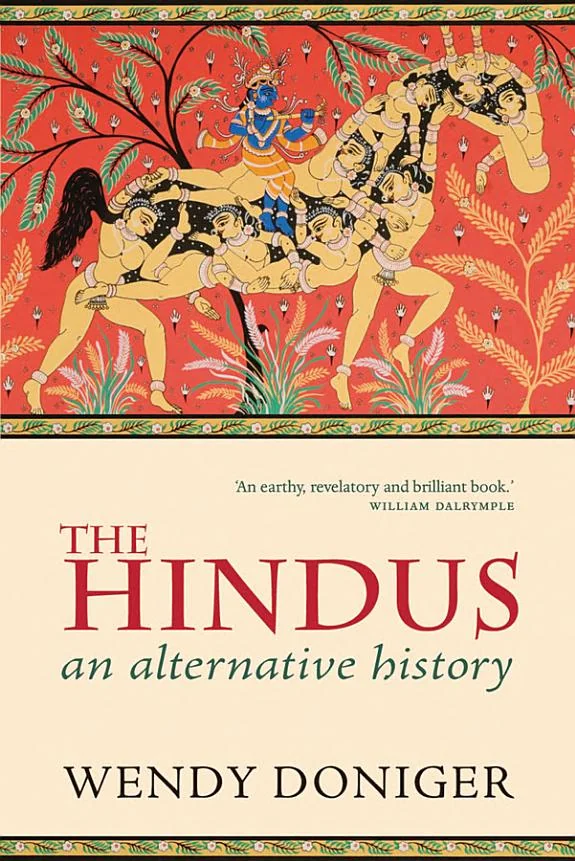
Wendy Doniger's "The Hindus" offers a significant re-evaluation of a faith often misunderstood in the West. The work excels in its meticulous deconstruction of how history and myth intertwine within Hinduism, demonstrating that a linear chronological account is insufficient for its fluid, cyclical nature. Doniger adeptly highlights the tension between textual evidence and imaginative cosmology, particularly evident in the varying interpretations of concepts like *karma* and *dharma* across different historical periods. A notable strength lies in its comparative approach, drawing parallels and contrasts with other religious traditions to illuminate Hinduism's unique characteristics. However, for readers seeking a purely devotional or practice-oriented guide, the academic rigor and critical analysis might prove challenging. The book's exploration of the Skanda Purana, for instance, while illuminating, requires sustained attention. Ultimately, "The Hindus" is a vital scholarly intervention, offering a sophisticated lens through which to view the vast landscape of Hindu thought.
📝 Description
81
### What It Is ### Who It's For ### Historical Context ### Key Concepts
💡 Why Read This Book?
• Gain a nuanced understanding of how concepts like *dharma* evolved historically, moving beyond static definitions as presented in Chapter 3, "The Making of Dharma." • Appreciate the interplay between historical events and the mythological narratives that shape Hindu identity, particularly concerning the Vedic period and its textual interpretations. • Discover how Western scholarship, including figures like Sir Edwin Arnold, has influenced the perception and study of Hinduism, as explored in the book's engagement with Orientalist scholarship.
⭐ Reader Reviews
Honest opinions from readers who have explored this book.
❓ Frequently Asked Questions
What is the primary focus of Wendy Doniger's "The Hindus"?
The book's primary focus is on understanding Hinduism not as a monolithic entity, but as a dynamic and evolving tradition shaped by the interplay of history, myth, and diverse interpretations over centuries, challenging purely chronological or dogmatic approaches.
How does "The Hindus" address the dating of ancient Indian texts?
Doniger acknowledges the significant challenges in reliably dating many central Hindu texts, even within a century, and uses this uncertainty to argue for a more fluid understanding of the religion's development, rather than imposing rigid timelines.
What is the significance of the concept of *karma* as discussed in the book?
The work explores how *karma*, a foundational tenet, is not static but arises at particular moments in Indian history and differs significantly in its meaning and application across various texts and philosophical schools.
Does "The Hindus" offer a narrative history of India?
While it provides a narrative account, it's specifically focused on the history and evolution of Hindu thought and practice, rather than a comprehensive political or social history of India, emphasizing the relationship between historical reality and imagined worlds.
Who is Wendy Doniger and what is her background?
Wendy Doniger is a renowned scholar of comparative religion, specializing in Hinduism and mythology. Her extensive academic career and prolific writing have made her a prominent voice in the study of Indian religions.
How does the book differentiate between recorded history and myth in Hinduism?
Doniger elucidates how Hinduism often blurs these lines, with mythological narratives serving as crucial frameworks for understanding historical consciousness and vice versa, demonstrating a unique co-existence rather than strict separation.
🔮 Key Themes & Symbolism
History and Myth Intertwined
Doniger posits that Hinduism cannot be contained by a linear historical timeline due to the fluid nature of its foundational texts and concepts. The work examines how mythological narratives actively shape historical understanding and vice versa, creating a unique cosmology where the imaginary world is as crucial as recorded events. This is particularly evident in the discussion of epic traditions and Puranic literature, which often serve as both historical memory and divine revelation, challenging Western notions of objective historical fact.
The Evolving Nature of Dharma
A central theme is the concept of *dharma*, which Doniger illustrates as a protean idea that shifts its meaning and emphasis depending on the historical context and the specific philosophical or sectarian lens applied. Rather than a fixed moral code, *dharma* is presented as an emergent principle tied to specific moments in Indian history, reflecting the diverse and often contradictory ethical and social frameworks that have characterized Hindu traditions over millennia. The work dissects various interpretations found in texts like the Dharmaśāstras and epics.
Karma as a Dynamic Principle
The book investigates *karma*, another cornerstone of Hindu philosophy, not as a simple cause-and-effect mechanism but as a concept that has been continually reinterpreted throughout India's history. Doniger shows how the understanding of *karma* has been shaped by different schools of thought, social structures, and theological developments, highlighting its adaptability and its role in creating a framework for moral accountability that is responsive to changing societal needs and philosophical inquiries.
The Challenge of Chronology
Doniger directly confronts the difficulty of applying Western chronological methods to a tradition where key texts lack precise dating and where cyclical time is a significant philosophical element. The work argues that this inherent ambiguity is not a deficit but a defining characteristic of Hinduism, fostering a continuous process of reinterpretation and adaptation. This approach requires readers to move beyond seeking definitive historical origins and instead embrace a more layered and dynamic understanding of religious evolution.
💬 Memorable Quotes
“Hinduism does not lend itself easily to a strictly chronological account.”
— This statement encapsulates the core challenge Doniger addresses: Western historical methodologies often fail when applied to the fluid, multi-layered nature of Hindu tradition, where myth and history are deeply intertwined and textual origins are elusive.
“its central tenets karma, dharma, to name just two arise at particular moments in Indian history and differ in each e”
— This highlights Doniger's argument that fundamental concepts like karma and dharma are not static, eternal truths but are historically contingent, evolving and taking on different meanings across various periods and schools of Hindu thought.
“elucidates the relationship between recorded history and imaginary worlds.”
— This points to the book's central thesis: understanding Hinduism requires appreciating how its followers have historically engaged with and integrated both empirical events and mythological narratives to construct their worldview and religious identity.
“many of its central texts cannot be reliably dated even within a century”
— This factual observation underscores the methodological difficulties in studying Hinduism chronologically, forcing a re-evaluation of how historical development is understood within the tradition itself.
“offers a new way of understanding one of the world's oldest major religions”
— This suggests that Doniger's approach provides a fresh perspective, moving beyond conventional interpretations to offer a more complex and accurate portrayal of Hinduism's vast and multifaceted spiritual landscape.
🌙 Esoteric Significance
Tradition
While not strictly adhering to a single Western esoteric lineage like Hermeticism or Kabbalah, Doniger's work resonates with the Gnostic emphasis on challenging orthodoxies and seeking deeper, often hidden, meanings within religious narratives. Her focus on the fluidity of truth and the subjective experience of the divine aligns with mystical traditions that prioritize inner understanding over dogma. The book's deconstruction of monolithic religious identities can be seen as a form of esoteric critique, encouraging a more personalized and critical engagement with spiritual traditions.
Symbolism
The Puranic narratives, often dense with symbolism, are central to Doniger's exploration. For instance, the cyclical destruction and recreation of the cosmos found in creation myths symbolize *pralaya* and *kalpa*, representing the eternal recurrence and the divine play (*lila*) that underscores the Hindu worldview. Similarly, the complex genealogies of gods and sages are not mere historical records but symbolic maps of cosmic and human relationships, illustrating the interconnectedness of all existence and the unfolding of divine energies.
Modern Relevance
Contemporary thinkers and practitioners in fields like comparative mythology, religious studies, and even transpersonal psychology draw upon Doniger's insights. Her work informs discussions on post-colonial religious studies and challenges essentialist views of religion. Practices that emphasize the integration of myth and personal narrative, or those seeking to understand the psychological archetypes within Hinduism, find her analytical framework invaluable for deconstructing traditional narratives and exploring their enduring relevance.
👥 Who Should Read This Book
• Students of comparative religion and mythology seeking to understand the complex relationship between historical events and religious imagination. • Scholars and practitioners of Hinduism interested in critical perspectives that challenge monolithic interpretations and explore the evolution of key concepts like *dharma*. • Readers curious about how ancient texts and traditions continue to shape contemporary thought, particularly those who appreciate nuanced historical and philosophical analysis.
📜 Historical Context
Published in 2010, Wendy Doniger's "The Hindus" emerged during a period of continued academic engagement with Indian religions, building on decades of scholarship. It responded to a prevailing tendency in Western studies to categorize Hinduism through fixed doctrines or historical periods, often influenced by Orientalist perspectives. Doniger's work engaged critically with the textual traditions, particularly the Puranas and epics, challenging earlier scholars who sought singular origins or definitive historical accounts. Unlike scholars focused on Advaita Vedanta as the sole philosophical pinnacle, Doniger embraced the diversity and contradictions within Hinduism. Her approach, while academically rigorous, also faced scrutiny from some who felt it overemphasized the mythological or questioned her interpretations of sensitive religious texts, highlighting ongoing debates about the representation of Eastern religions in Western academia.
📔 Journal Prompts
The fluid nature of *dharma* across different historical periods.
The co-existence of recorded history and imaginary worlds in Hindu texts.
The challenges of applying chronological methods to Hindu scriptures.
The evolving interpretations of *karma* throughout Indian history.
Hinduism's relationship with Western scholarly approaches.
🗂️ Glossary
Dharma
A foundational concept in Hinduism, often translated as duty, righteousness, law, or cosmic order. Doniger emphasizes its contextual and evolving nature, differing significantly across texts and historical periods.
Karma
The principle of cause and effect, where actions (karma) influence an individual's present and future circumstances, including rebirth. The book explores its diverse interpretations within Hindu traditions.
Puranas
A vast genre of Sanskrit literature containing cosmologies, genealogies of deities, heroes, and sages, and descriptions of Hindu philosophy. They are central to understanding the mythological narratives discussed by Doniger.
Vedic
Pertaining to the Vedas, the oldest scriptures of Hinduism. Doniger examines how later traditions built upon, reinterpreted, or diverged from Vedic concepts and practices.
Lila
A Sanskrit term often translated as 'play' or 'divine sport.' It signifies the concept that the cosmos is a divine play enacted by the gods, suggesting a non-serious, creative, and often cyclical aspect of existence.
Orientalism
A term coined by Edward Said, referring to the way Western cultures have constructed a view of the East (including India) as exotic, inferior, and unchanging, often influencing academic study.
Dharmaśāstras
Texts dealing with dharma, law, and social conduct in ancient India. They provide crucial insights into the codification and interpretation of social duties and moral principles within historical contexts.