Taoism
 71
71

Taoism
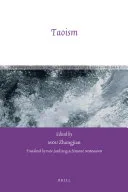
Zhongjian Mou's curated collection, Taoism, presents a challenging yet rewarding dive into the academic landscape of Taoist studies within the People's Republic of China. The strength of this volume lies in its commitment to showcasing original Chinese scholarship, offering perspectives often obscured by Western translations and interpretations. The chronological spread, from 1947 to 2006, is particularly illuminating, revealing shifts in academic discourse. However, the selection, while representative, can feel somewhat fragmented, with each article standing as a distinct scholarly contribution rather than a seamlessly integrated narrative. A passage discussing the influence of Marxist historical materialism on early PRC analyses of Taoism offers a stark reminder of the ideological constraints under which some of these studies were produced. While its academic rigor is undeniable, the lack of extensive introductory or comparative material may present a barrier for less specialized readers. This collection is a vital resource for those dedicated to understanding the academic reception of Taoism in its homeland.
📝 Description
71
### What It Is Taoism presents a collection of seventeen English translations of scholarly articles originally published in the People's Republic of China. These pieces, spanning from 1947 to 2006, offer a concentrated look at the academic discourse surrounding Taoism within mainland China during a significant period of its modern intellectual history. The volume, first published in 2012 by Zhongjian Mou, aims to provide an accessible overview of key research trends and interpretations.
### Who It's For This compilation is intended for scholars, advanced students, and serious researchers of Chinese religions and philosophy. It is particularly valuable for those interested in the evolution of Taoist studies within a specific socio-political context. Individuals seeking to understand how Taoism has been academically approached and debated in the PRC, distinct from Western academic traditions, will find this work of significant interest.
### Historical Context The selected articles offer a window into the academic study of Taoism in the People's Republic of China, a period marked by ideological shifts and evolving academic freedoms. The earliest articles date back to 1947, preceding the establishment of the PRC, while the latest are from 2006. This temporal breadth allows for an examination of how scholarly perspectives on Taoism changed in response to historical events and changing intellectual climates within China. The collection's original publication in 2008 as part of a larger volume underscores a renewed academic interest in indigenous traditions.
### Key Concepts The work explores various facets of Taoist thought and practice as understood and analyzed by Chinese scholars. Readers can expect examinations of foundational texts, historical development of monastic orders, philosophical interpretations of core tenets like the Tao and Wu Wei, and the social role of religious Taoism. The collection highlights the scholarly engagement with Taoism as both a philosophical system and a living religious tradition within China.
💡 Why Read This Book?
• Gain insight into the academic study of Taoism as conducted within the People's Republic of China, particularly through articles dating from the 1947-2006 period, offering a unique national scholarly perspective. • Understand the evolution of scholarly discourse on Taoist concepts and history within mainland China, as reflected in the collection's chronological range and diverse authorial approaches. • Access translated scholarship that may not be widely available elsewhere, providing a direct connection to Chinese academic engagement with Taoism beyond Western interpretations.
⭐ Reader Reviews
Honest opinions from readers who have explored this book.
❓ Frequently Asked Questions
When was the original Chinese edition of the collected Taoist studies published?
The original edited volume containing these selected works was published in 2008 in the People's Republic of China, with the English translation appearing later.
What is the time span covered by the articles in Taoism?
The articles translated in this collection were originally published in the People's Republic of China between 1947 and 2006, offering a broad historical sweep of scholarly inquiry.
Who is the editor of the English translation of Taoism?
The English translation of Taoism was compiled and edited by Zhongjian Mou, who also oversaw the original Chinese publication.
What is the primary focus of the scholarly articles included?
The articles focus on various aspects of Taoist studies as researched in mainland China, including philosophical interpretations, historical development, and religious practices.
Is this book suitable for beginners interested in Taoism?
While valuable, the book is primarily aimed at advanced students and scholars due to its academic nature and focus on specific PRC scholarship from 1947-2006.
Where were the original articles for this collection first published?
The original articles were published within the People's Republic of China, reflecting the academic discourse on Taoism within that specific national context.
🔮 Key Themes & Symbolism
Modern Chinese Scholarship
This collection uniquely showcases the trajectory of academic research on Taoism within the People's Republic of China. By translating articles published between 1947 and 2006, it allows readers to observe how Taoist philosophy, history, and practice were interpreted and analyzed under evolving socio-political conditions. The work highlights the development of national academic discourse, offering a perspective distinct from Western scholarly traditions and revealing the intellectual currents shaping the study of indigenous Chinese traditions.
Philosophical Interpretations
Central to the collection are scholarly explorations of core Taoist philosophical concepts. Articles delve into the meaning and application of the Tao, the principle of Wu Wei (non-action), and the interconnectedness of yin and yang. These discussions reflect the analytical frameworks employed by Chinese academics, potentially influenced by both classical Taoist texts and contemporary philosophical trends within China. The aim is to present a nuanced understanding of these foundational ideas as studied by PRC scholars.
Historical and Religious Development
Beyond pure philosophy, the selected works examine the historical evolution and practical manifestations of Taoism. This includes studies on the development of Taoist schools, monasticism, rituals, and their societal roles. By focusing on scholarship originating from mainland China, the collection offers insights into how these historical and religious dimensions have been researched and understood within their original cultural and political context from 1947 onwards.
Academic Discourse and Context
The compilation serves as a testament to the academic study of Taoism within the PRC. It provides a critical look at how scholars in China have engaged with their own religious heritage, navigating academic expectations and historical circumstances. The inclusion of articles spanning several decades illustrates the dynamic nature of scholarly inquiry and the efforts to preserve and analyze Taoist traditions through academic research.
💬 Memorable Quotes
“The study of Taoism in the PRC has undergone significant transformations since 1947.”
— This statement encapsulates the collection's core value: demonstrating how academic approaches to Taoism within China have shifted over time, influenced by the nation's historical and political developments.
“Wu Wei is not passivity, but a mode of action aligned with natural processes.”
— This interpretation highlights a key philosophical tenet, suggesting that scholarly analysis within the PRC often refines or recontextualizes traditional understandings of core Taoist concepts for contemporary academic discourse.
“The relationship between philosophical Taoism and religious Taoism presents a complex research area.”
— This points to the nuanced academic debates within the collection regarding the distinction and interplay between the theoretical philosophical aspects of Taoism and its organized religious practices.
“Scholarly engagement with classical texts reveals evolving interpretations.”
— This suggests that the collection features analyses of foundational Taoist texts, showcasing how PRC academics have approached these ancient sources with contemporary hermeneutical methods.
“The social function of Taoist practices has been a subject of extensive research.”
— This indicates that the volume includes studies examining how Taoism has historically interacted with and influenced Chinese society, as analyzed by scholars within mainland China.
🌙 Esoteric Significance
Tradition
This collection does not directly align with Western esoteric traditions like Hermeticism or Kabbalah. Instead, it offers an insider's view of how Taoism, a foundational Eastern philosophical and religious system, has been academically processed within its cultural homeland. It represents a critical engagement with indigenous spiritual heritage, distinct from the syncretic or revivalist movements often found in Western esotericism.
Symbolism
While not focused on esoteric symbolism in the Western sense, the academic analyses within the collection likely touch upon symbols integral to Taoism, such as the Yin-Yang (representing duality and balance), the Ba Gua (eight trigrams of the I Ching, symbolizing cosmic principles), and imagery associated with Immortals or cosmic diagrams. These are examined for their philosophical and historical meaning within the Chinese context.
Modern Relevance
Contemporary scholars of Chinese religions and philosophy, particularly those interested in the academic reception and evolution of Taoist thought within China itself, draw heavily on this type of scholarship. It informs comparative studies of religious traditions and provides essential context for understanding the ongoing academic discourse on Taoism globally.
👥 Who Should Read This Book
['• Scholars of Chinese Religions: Researchers focusing on the academic study and historical development of Taoism within mainland China will find this a crucial primary source.', '• Students of Philosophy: Those interested in comparative philosophy, particularly Eastern thought, can gain a unique perspective on how Taoist concepts are academically dissected.', '• Researchers of Modern Chinese Intellectual History: Individuals studying the evolution of thought and academic disciplines in the PRC will find valuable insights into the treatment of indigenous traditions.']
📜 Historical Context
The academic study of Taoism in the People's Republic of China, as represented in this collection, unfolded against a backdrop of profound political and intellectual change. Articles from 1947 represent a period just before the establishment of the PRC, while later pieces from up to 2006 reflect decades of state-sanctioned academic discourse. This era saw Taoism, like other traditional religions and philosophies, subject to ideological scrutiny and reinterpretation, often viewed through the lens of historical materialism or national identity. Key figures in Chinese academia engaged with these traditions, sometimes re-evaluating them as historical phenomena or cultural heritage rather than living faiths. The period also witnessed fluctuating policies regarding religious studies, impacting the scope and direction of research. Unlike the comparative mysticism prevalent in some Western esoteric circles, PRC scholarship often emphasized historical analysis and socio-political context, sometimes engaging critically with pre-1949 interpretations or Western scholarship.
📔 Journal Prompts
The evolution of PRC scholarship on Taoism from 1947 to 2006.
Wu Wei as a concept: scholarly interpretations presented.
Distinctions between philosophical and religious Taoism in academic discourse.
The impact of historical context on the study of Taoism.
Key themes in the analysis of Taoist historical development.
🗂️ Glossary
Tao (Dao)
The fundamental concept in Taoism, often translated as 'the Way.' It represents the natural order of the universe, the underlying principle of all existence, and the path to harmony.
Wu Wei
A central Taoist principle literally meaning 'non-action' or 'effortless action.' It refers to acting in accordance with the natural flow of things, without forcing or striving.
Yin and Yang
The Taoist concept of complementary, interconnected, and interdependent forces that make up all aspects of the universe. Yin is typically associated with the passive, feminine, and dark; Yang with the active, masculine, and light.
PRC
Abbreviation for the People's Republic of China, the country's official name since its establishment in 1949.
Taoist Studies
The academic discipline focused on the research, analysis, and interpretation of Taoist philosophy, history, religion, and practices.
Monasticism
In the context of Taoism, refers to the organized communities and practices of Taoist priests and nuns who dedicate their lives to spiritual cultivation and service.
Hermeneutics
The theory and methodology of interpretation, especially the interpretation of texts. In academic study, it concerns how meaning is understood and conveyed.