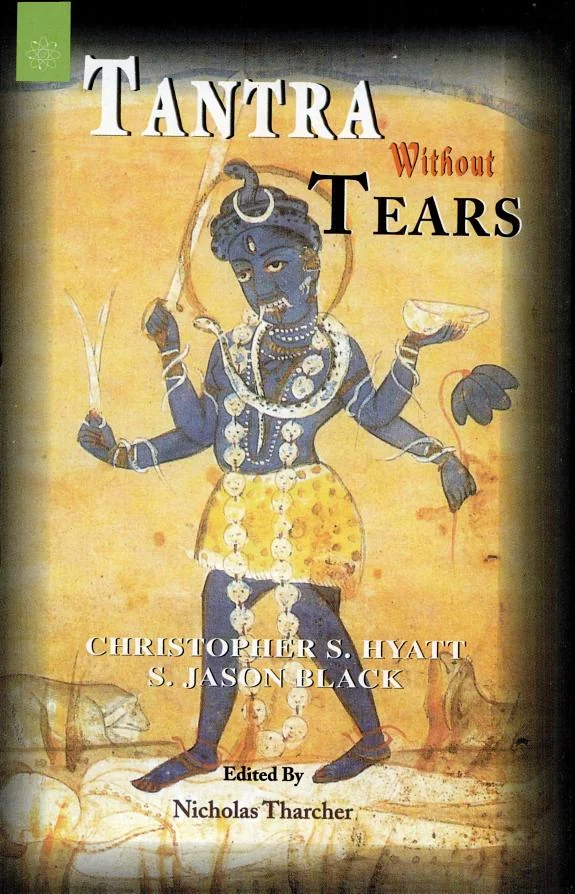
Tantra Without Tears
 71
71

Tantra Without Tears
Hyatt and Black's "Tantra Without Tears" is a provocative text, certainly living up to its promise of offering a Western-friendly, power-focused perspective on Tantra. The strength lies in its unvarnished approach; it strips away the niceties often associated with spiritual literature, presenting Tantra as a force to be reckoned with, akin to the "power" described in its opening blurb. The book’s examination of Kundalini as "dressed in Western clothes" is a compelling framing device for those accustomed to Western psychological models. However, the very directness that makes it potent also renders it potentially alienating for some. The authors’ insistence on confronting "horrors" alongside "marvels" can feel less like an invitation and more like a demand, lacking the nuanced guidance found in texts that more carefully scaffold the ascent. A passage discussing the "illusion of self" through intense sensory manipulation, while vivid, could benefit from more explicit cautions regarding psychological integration. Ultimately, "Tantra Without Tears" is a bracing, if uncompromising, manual for those seeking potent, direct experience with the energies of consciousness.
📝 Description
71
### What It Is
Christopher S. Hyatt and S. Jason Black's "Tantra Without Tears," first published in 2001, presents a radical reinterpretation of Tantric principles for a Western audience. It eschews the common romanticized or overly spiritualized portrayals, focusing instead on the raw, experiential power inherent in these ancient practices. The book aims to demystify Tantra, presenting it as a potent system for expanding consciousness and accessing hidden potentials of the mind and body. It is not a gentle introduction but a direct engagement with forces that can alter perception and reality.
### Who It's For
This work is intended for serious practitioners and students of esoteric traditions who seek a no-nonsense approach to Tantra. It is particularly suited for those whose Western psychological framework might find traditional Eastern presentations opaque or inaccessible. Readers should possess a robust intellectual curiosity and a willingness to confront potentially unsettling aspects of consciousness. It is for individuals who understand that spiritual or magical development often involves engaging with both light and shadow, not just comfortable ideals.
### Historical Context
Emerging in the early 2000s, "Tantra Without Tears" arrived at a time when Western interest in Eastern spiritual traditions, including Tantra, was high, often filtered through New Age paradigms. Hyatt and Black's approach was distinctive for its directness and its attempt to synthesize Tantric concepts with Western psychological and occult frameworks. This book can be seen as part of a broader late 20th and early 21st-century movement to de-exoticize and re-contextualize ancient spiritual systems for contemporary Western practitioners, moving beyond purely academic or purely devotional interpretations.
### Key Concepts
The book centers on the concept of Kundalini, not merely as a dormant serpent energy, but as a direct force for transformation and power. It explores methods for awakening and directing this energy, often through practices that challenge ordinary sensory and mental limitations. The authors emphasize the direct experience of altered states of consciousness, viewing them as keys to unlocking deeper understanding of reality. "Tantra Without Tears" posits that these experiences, while potentially awe-inspiring, can also reveal darker or more challenging aspects of the psyche and existence.
💡 Why Read This Book?
• Gain a practical framework for understanding Tantric power dynamics, moving beyond superficial interpretations, as detailed in the book's direct engagement with Kundalini in a Western context. • Experience a direct confrontation with altered states of consciousness and their potential to reveal both marvels and horrors, challenging ordinary perception as the book describes. • Explore the synthesis of Eastern Tantric principles with Western psychological concepts, offering a unique lens for practitioners familiar with traditions like Hermeticism or depth psychology, as evidenced by its 2001 publication date.
⭐ Reader Reviews
Honest opinions from readers who have explored this book.
❓ Frequently Asked Questions
What is the primary goal of 'Tantra Without Tears' for Western readers?
The book aims to demystify Tantra by presenting its core principles as a system of power and consciousness expansion directly applicable to the Western mind, focusing on experiential techniques.
How does 'Tantra Without Tears' differ from typical Western portrayals of Tantra?
It deliberately avoids romanticized or overly spiritualized interpretations, instead focusing on the raw, transformative power of Tantric practices and the potential for accessing both awe-inspiring and unsettling states of consciousness.
What is the role of Kundalini in Christopher S. Hyatt's 'Tantra Without Tears'?
Kundalini is presented as a potent, transformative energy, conceptualized as 'dressed in Western clothes' to make its power and function more accessible and understandable to a Western audience.
Is 'Tantra Without Tears' suitable for absolute beginners to Tantra?
The book is generally considered more suitable for those with some background in esoteric or psychological studies due to its direct and sometimes intense approach to consciousness exploration.
When was 'Tantra Without Tears' first published?
'Tantra Without Tears' by Christopher S. Hyatt and S. Jason Black was first published on January 1, 2001.
What kind of experiences does the book suggest Tantra can unlock?
It suggests experiences that allow glimpses beyond ordinary reality, encompassing both profound marvels and potentially disturbing 'horrors,' emphasizing the full spectrum of consciousness.
🔮 Key Themes & Symbolism
Direct Experience of Power
The book frames Tantra not as a philosophical system but as a direct technology for power and consciousness alteration. It emphasizes experiential techniques designed to bypass intellectualization and induce profound shifts in perception. This approach aims to reveal the potent, often unacknowledged, forces within the individual and the cosmos, challenging the reader to engage with these energies directly rather than merely studying them.
Kundalini Re-Contextualized
Hyatt and Black re-imagine Kundalini for a Western audience, moving it from a purely Eastern, often mystified, concept to a more tangible force of transformation. This re-framing as 'Kundalini, dressed in Western clothes' seeks to make its awakening and application relatable to those familiar with Western psychological models, psychological forces, or esoteric power dynamics.
Confronting the Shadow
A significant theme is the necessity of confronting the full spectrum of consciousness, including its darker, 'horrific' aspects, to achieve genuine transformation. The book posits that true spiritual or psychological development involves integrating both the light and shadow elements of existence, rather than seeking only pleasant or euphoric states.
Transcendence of Ordinary Reality
The core promise of the book involves techniques and insights that facilitate a departure from mundane, day-to-day reality. It suggests that by working with Tantric principles, practitioners can access altered states of consciousness that offer a more comprehensive and potent understanding of existence, revealing hidden dimensions and potentials.
💬 Memorable Quotes
“It is power. It is Kundalini, dressed in Western clothes.”
— This concise statement encapsulates the book's central thesis: Tantra is fundamentally about accessing and wielding potent energies, re-framed in a way that resonates with Western psychological and esoteric paradigms.
“It describes experiences and techniques which allow you to glimpse beyond ordinary day-to-day reality, into a world of marvels---and horrors.”
— This highlights the book's commitment to exploring the full spectrum of altered states, suggesting that true expansion of consciousness involves confronting both the sublime and the terrifying aspects of existence.
“For the Western mind, this is the only Book on Tantra you will ever need.”
— An audacious claim reflecting the authors' intent to provide a comprehensive and self-contained system of Tantra specifically tailored to address the cognitive and cultural frameworks of Western individuals.
“A bold statement? Perhaps. However, the idea behind this book is simple: It is power.”
— This directly confronts potential skepticism, immediately redirecting the reader's focus from academic discourse or spiritual platitudes to the core practical application and inherent force of the subject matter.
“The idea behind this book is simple: It is power.”
— This distillation of the book's purpose emphasizes its pragmatic and results-oriented approach, positioning Tantra as a direct means to effect change and gain influence over one's reality.
🌙 Esoteric Significance
Tradition
While rooted in Tantric traditions originating from India, "Tantra Without Tears" significantly reinterprets them through a Western esoteric lens. It aligns with traditions that emphasize the direct manipulation of consciousness and energy for practical results, rather than solely seeking liberation. The work draws parallels to Western occultism's focus on power and will, aiming to create a bridge between Eastern energetic practices and Western psychological frameworks.
Symbolism
The book frequently engages with the concept of Kundalini, presented not just as a coiled serpent but as a fundamental force of transformation and consciousness expansion. The "marvels and horrors" dichotomy serves as a symbolic representation of the dual nature of reality and the psyche, suggesting that true understanding requires confronting both illumination and shadow.
Modern Relevance
This work continues to influence contemporary practitioners interested in Western esotericism, occult psychology, and non-dualistic approaches to consciousness. Thinkers and practitioners exploring the intersection of magic, psychology, and direct experience often reference Hyatt's distinct, power-focused methodology. Its pragmatic approach to altered states and energy work finds echoes in modern magical orders and independent practitioners seeking potent, experiential paths.
👥 Who Should Read This Book
• Students of Western esotericism seeking to understand how Eastern practices like Tantra can be integrated with concepts of power and will, drawing parallels to Hermeticism. • Practitioners of psychology and consciousness studies interested in experiential techniques for altering perception and accessing deeper psychological states beyond conventional therapeutic models. • Individuals exploring occult traditions who desire a direct, no-nonsense guide to working with potent energies, willing to confront challenging aspects of the psyche and reality.
📜 Historical Context
Published in 2001, "Tantra Without Tears" emerged during a period of intense Western interest in Eastern spiritual traditions, including Tantra. However, it deliberately diverged from the often New Age-filtered or highly academic interpretations prevalent at the time. Christopher S. Hyatt, already known for his direct and often controversial works on occultism and psychology, collaborated with S. Jason Black to create a text that synthesized Tantric concepts with a Western psychological and power-oriented framework. This approach distinguished it from more traditional scholarly works or devotional guides. The book's focus on "power" and direct experience, rather than purely spiritual enlightenment, positioned it within a lineage of Western esoteric thought that sought to integrate occult practices with psychological understanding, echoing earlier movements like the O.T.O. or certain Hermetic orders, while distinctly reinterpreting the esoteric for a modern, skeptical audience.
📔 Journal Prompts
The concept of Kundalini as 'dressed in Western clothes': How does this reframing alter your understanding of this energy?
Reflect on the "marvels---and horrors" hinted at in the book. What might these represent in your own psychological landscape?
Consider the book's emphasis on "power." How does this differ from your current perception of spiritual or personal development?
Analyze the statement: 'For the Western mind, this is the only Book on Tantra you will ever need.' What makes this claim provocative or potentially true?
Explore the idea of glimpsing "beyond ordinary day-to-day reality." What techniques or states of mind might facilitate such glimpses?
🗂️ Glossary
Kundalini
In Tantra, a primordial cosmic energy believed to reside at the base of the spine, capable of being awakened to bring about profound spiritual and physical transformation.
Esoteric
Intended for or likely to be understood by only a small number of people with a specialized knowledge or interest; relating to mystical or supernatural affairs.
Consciousness
The state of being aware of and responsive to one's surroundings; a person's awareness or perception of something.
Altered States of Consciousness
Any mental state significantly different from normal waking consciousness, often induced by meditation, psychoactive substances, or intense experiences.
Western Mind
Refers to the cognitive, cultural, and psychological frameworks typically associated with individuals raised in Western societies, often characterized by analytical thought and specific philosophical traditions.
Power (in esoteric context)
The capacity or ability to direct or influence the behavior of others or the nature of events; in esoteric traditions, often refers to the manipulation of subtle energies or consciousness.
Transformation
A thorough or dramatic change in form or appearance; in esoteric contexts, refers to profound personal or spiritual change.