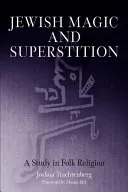
Jewish Magic and Superstition
 74
74

Jewish Magic and Superstition
Joshua Trachtenberg's "Jewish Magic and Superstition" provides a rigorous academic survey of a frequently overlooked aspect of Jewish history. The book's strength lies in its detailed cataloging of practices and beliefs, drawing from a wide array of primary sources to reconstruct a picture of popular religiosity. Trachtenberg’s analysis of amulets, incantations, and demonology, particularly in his discussion of the period between the 11th and 16th centuries, offers significant historical insight. However, the sheer density of information can sometimes make the narrative feel somewhat encyclopedic rather than flowing. A notable passage is the detailed explanation of various protective charms and their supposed efficacy, revealing the practical concerns of individuals within the community. While the academic tone is maintained throughout, the work offers a crucial counterpoint to purely theological histories of Judaism, highlighting the lived, often magical, realities of its adherents. It is an essential, if dense, resource for understanding the full scope of historical Jewish belief.
📝 Description
74
Joshua Trachtenberg's 1939 book examines Jewish magic and superstition from the 11th to 16th centuries.
This 1939 study details the popular beliefs and rituals that coexisted with official Jewish doctrine between the 11th and 16th centuries. Trachtenberg meticulously documents folk customs, magical practices, charms, incantations, and superstitions common in Jewish communities.
He argues that these practices, though sometimes viewed with skepticism by rabbinic authorities, were a significant part of Jewish life. The research places these folk beliefs within the context of the European Middle Ages and Renaissance, a period when superstition was common across cultures. The book contrasts these popular expressions with formal Halakhic development and rabbinic discussions of the time, highlighting the tension between religious leadership and the everyday spiritual concerns of ordinary people.
The work focuses on the distinction between formal religious law and the vibrant folk religion. It discusses topics like amulets for protection, the evil eye, dream interpretation, and the influence of Kabbalah on popular magic. Trachtenberg shows how these beliefs, even when discouraged, were deeply ingrained.
This work situates itself within the study of folk religion and its relationship to established religious institutions. It examines a specific corpus of beliefs and practices that existed outside the formal theological structures of Judaism, yet were deeply integrated into the lives of its adherents. By detailing charms, superstitions, and magical rituals, Trachtenberg illuminates a dimension of Jewish spiritual life often overlooked in favor of purely doctrinal or legalistic studies. The book contributes to understanding how marginalized or unofficial spiritual expressions interact with and sometimes challenge dominant religious norms.
💡 Why Read This Book?
• Gain insight into the specific historical period of the 11th to 16th centuries by examining the coexistence of formal Judaism and popular folk religion, a dynamic Trachtenberg details. • Understand the function and form of amulets and incantations as explored in the text, revealing how Jewish communities historically sought protection and agency. • Appreciate the scholarly methodology of reconstructing folklife from historical records, as demonstrated by Trachtenberg’s rigorous approach to primary sources.
⭐ Reader Reviews
Honest opinions from readers who have explored this book.
❓ Frequently Asked Questions
What is the primary focus of Joshua Trachtenberg's "Jewish Magic and Superstition"?
The book focuses on the popular beliefs and magical practices within Jewish communities from the 11th to the 16th centuries, exploring how these folk traditions coexisted with formal religious doctrine.
When was "Jewish Magic and Superstition" first published?
The work was first published on October 8, 2012, though its research covers historical periods centuries prior.
Does this book offer practical instructions for performing Jewish magic?
No, "Jewish Magic and Superstition" is an academic and historical study, not a practical guide. It analyzes historical beliefs and practices rather than instructing readers on how to perform them.
What historical period does Trachtenberg primarily cover?
Trachtenberg's primary focus is on the period spanning from the 11th through the 16th centuries in Jewish history.
Who is Joshua Trachtenberg?
Joshua Trachtenberg was a scholar known for his work on Jewish folklore, history, and the social aspects of Jewish life, particularly during the medieval and early modern periods.
What is the relationship between formal Judaism and the folk religion discussed in the book?
Trachtenberg illustrates that the folk religion, encompassing magic and superstitions, flourished alongside, and often in tension with, the officially sanctioned rabbinic and Halakhic development of Judaism during the covered centuries.
🔮 Key Themes & Symbolism
Folk Religion vs. Doctrine
Trachtenberg meticulously documents the prevalence of popular beliefs and magical practices that existed outside the rabbinic mainstream from the 11th to the 16th centuries. He demonstrates how these customs, concerning everything from healing to protection against evil, formed a vital component of lived Jewish experience, even when they did not receive official approval. The work highlights the enduring human need for spiritual and practical solutions beyond formal religious structures.
Amulets and Protective Charms
A significant portion of the book is dedicated to the study of amulets, talismans, and other charms employed by Jewish communities for protection. Trachtenberg examines the materials used, the inscriptions, and the specific purposes attributed to them, such as warding off illness, averting the evil eye, or ensuring safe childbirth. These artifacts reveal a practical engagement with the supernatural and a desire for tangible means of influencing one's fortune.
Incantations and Divination
The work explores the use of spoken spells, prayers with magical intent, and various forms of divination within Jewish folk practice. Trachtenberg analyzes the language of these incantations, often drawing from biblical, kabbalistic, or other sources, and discusses methods like dream interpretation for seeking guidance or foreknowledge. This theme underscores the active role individuals played in seeking divine or supernatural intervention in their daily lives.
Demonology and the Supernatural
Belief in spirits, demons, and malevolent forces played a prominent role in the superstitions examined. Trachtenberg details the perceived roles of these entities and the rituals developed to appease, banish, or protect against them. This aspect of folk belief reflects a worldview where the supernatural was an immediate and active presence, influencing health, fortune, and personal safety.
💬 Memorable Quotes
Direct passages from the work, attributed to the author.
“The popular religion of the Jews… was not a thing apart, but rather the warp and woof of their daily lives.”
— This interpretation emphasizes that the folk beliefs and magical practices discussed were not fringe elements but were deeply integrated into the fabric of everyday existence for many Jewish people during the historical periods studied.
“The line between the magical and the religious was often blurred in the popular mind.”
— This highlights how, for ordinary people in medieval and Renaissance Jewish communities, the distinction between sanctioned religious observance and what might be considered magical practice was not always clear-cut.
“Rabbinic authorities often found themselves in a difficult position, unable to wholly endorse or entirely condemn popular practices.”
— This suggests the complex relationship between religious leadership and the populace, where leaders had to work through the widespread acceptance of certain folk customs that deviated from strict religious law.
“Dream interpretation served as a common method for seeking divine guidance or uncovering hidden truths.”
— This interpretation points to the significance of dreams within the framework of Jewish superstition, where they were not merely random occurrences but potential channels for prophetic insight or communication from the divine.
💡 Key Ideas
Editorial paraphrase of the work's core concepts — not direct quotes.
Amulets were seen as practical tools for protection against tangible and intangible threats.
This paraphrased concept underscores the functional aspect of amulets within Jewish folk belief, illustrating their use as active measures to ensure well-being and security in a world perceived as full of dangers.
🌙 Esoteric Significance
Tradition
While not strictly adhering to a single esoteric lineage like Hermeticism or Kabbalah, Trachtenberg's work engages with the popular manifestations of these traditions within Jewish folk practice. It details how elements often associated with Kabbalistic mysticism, such as the use of divine names and specific incantations, permeated everyday superstitions and magical beliefs among the broader populace.
Symbolism
Key symbols explored include the Hamsa (Hand of Miriam) and various forms of written amulets, often inscribed with biblical verses or divine names, intended to ward off the evil eye or provide protection. The Hebrew alphabet itself, particularly divine names, was imbued with potent symbolic power, used in incantations and charms as a direct conduit to supernatural forces or divine favor.
Modern Relevance
Contemporary scholars of Jewish folklore and history continue to reference Trachtenberg's foundational research. His work informs modern discussions on popular religiosity, the history of magic, and the interplay between elite and folk cultures within religious traditions. Thinkers exploring the psychological and sociological aspects of belief systems often draw upon his detailed accounts of historical practices.
👥 Who Should Read This Book
• Students of Jewish history and religious studies seeking to understand the practical, everyday beliefs and rituals of past communities. • Researchers in comparative folklore interested in the prevalence of magical practices and superstitions across different cultures and time periods. • Individuals curious about the intersection of formal religious doctrine and popular spiritual expression, particularly within a historical Jewish context.
📜 Historical Context
Joshua Trachtenberg's "Jewish Magic and Superstition" emerged from a scholarly landscape increasingly interested in social history and the lived experiences of religious communities. Written in an era where religious studies began to look beyond formal theology, it addressed the vibrant folk traditions present in Jewish life between the 11th and 16th centuries. This period was marked by significant intellectual and social developments across Europe, including the flourishing of Kabbalah, which sometimes influenced popular magical practices. Trachtenberg's work stood in contrast to purely legalistic or theological histories, bringing attention to the popular religiosity that rabbinic authorities often viewed with ambivalence. While not a direct engagement with a specific contemporary author in the manner of a polemic, the book implicitly engaged with the broader historiographical debates about the nature of religious adherence and the validity of folk beliefs within Judaism, offering a counter-narrative to more rigid interpretations.
📔 Journal Prompts
The concept of folk religion's integration into daily life.
The function and symbolism of amulets and protective charms.
Rabbinic attitudes toward popular magic between the 11th and 16th centuries.
The role of incantations in historical Jewish superstition.
Reconstructing folklife from historical records.
🗂️ Glossary
Halakha
The collective body of Jewish religious laws derived from the Written and Oral Torah, guiding religious practice and daily life within Orthodox Judaism.
Evil Eye
A superstitious belief that a glare can cause misfortune or injury to the person or thing it is directed at, a concept Trachtenberg explores in relation to protective measures.
Kabbalah
A system of Jewish mysticism that seeks to understand the nature of God and the universe, often involving esoteric interpretations of scripture and divine names.
Amulet
An object worn or carried as a charm against evil or injury, often inscribed with religious texts or symbols, as discussed extensively in Trachtenberg's work.
Incantation
A series of words said in a ritualistic or magical way, often to produce a magical effect, a practice detailed in the context of Jewish superstition.
Folklife
The customs, beliefs, traditions, and practices of ordinary people within a particular culture or community, a central subject of Trachtenberg's study.
Superstition
A belief or practice resulting from ignorance, fear of the unknown, trust in magic or chance, often contrasted with religious dogma.