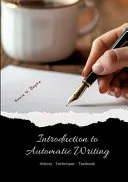
Introduction to Automatic Writing
 79
79

Introduction to Automatic Writing
Xenia V. Boyko’s “Introduction to Automatic Writing” provides a necessary, if somewhat dry, primer on a practice shrouded in both fascination and skepticism. The book’s strength lies in its systematic approach, demystifying techniques that can otherwise seem arcane. Boyko clearly outlines the steps involved, from preparing the writing space to interpreting the resulting script, grounding the reader in practical application. A particular passage detailing the importance of releasing the ego’s desire to control the outcome is crucial; it correctly identifies this as the primary hurdle for most neophytes. However, the work occasionally feels overly academic, lacking the evocative language that might better convey the subjective richness of the experience. While it meticulously recounts historical uses, it could benefit from more direct engagement with contemporary practitioners or a deeper exploration of the psychological underpinnings beyond a surface-level description. Despite this, it serves as a solid, reliable starting point for anyone serious about exploring this form of channeled communication.
📝 Description
79
Xenia V. Boyko's Introduction to Automatic Writing was first published in 2023.
Xenia V. Boyko's Introduction to Automatic Writing details the historical development of automatic writing, tracing its use from early spiritualist movements to contemporary self-discovery. The book explains the core principles and methods for engaging with this technique, aiming to equip readers with the knowledge to begin their own practice. It serves as a guide to understanding the mechanics and philosophical underpinnings of receiving impressions that bypass ordinary thought processes.
This text is designed for individuals intrigued by the intersection of consciousness, spirituality, and creative expression. It appeals to students of the occult, parapsychology, and esoteric traditions interested in accessing subconscious or non-ordinary states of awareness. Those seeking to deepen their intuition, explore artistic inspiration through unconventional means, or investigate the historical claims of mediums and visionaries will find relevant material. It is particularly suited for beginners curious about the historical and practical aspects of automatic writing, offering a structured approach to a potentially elusive subject.
Automatic writing emerged as a significant practice during the 19th-century Spiritualist movement. Figures like the Fox sisters and Helena Blavatsky used channeled scripts to convey messages from the spirit world. This period saw intense interest in phenomena challenging materialism, leading to organizations like the Society for Psychical Research. Boyko's work situates automatic writing within this lineage, examining its historical claims and practical application for accessing altered states of consciousness.
💡 Why Read This Book?
• Gain practical, step-by-step guidance on how to initiate automatic writing, learning techniques to quiet the conscious mind and access subconscious insights, a methodology detailed across the book's instructional chapters. • Understand the historical lineage of automatic writing, exploring its connections to 19th-century Spiritualism and figures like Helena Blavatsky, providing context unavailable in purely practical guides. • Develop skills for interpreting the subtle messages received through automatic writing, learning to discern authentic impressions from ordinary thoughts, a key interpretive skill elaborated upon in the text.
⭐ Reader Reviews
Honest opinions from readers who have explored this book.
❓ Frequently Asked Questions
What is automatic writing according to Xenia V. Boyko?
Xenia V. Boyko defines automatic writing as a method of receiving information or creative output by allowing the hand to write spontaneously, bypassing the conscious, critical mind. It's presented as a bridge to the subconscious or potentially external non-physical sources.
When was "Introduction to Automatic Writing" first published?
The first publication date for "Introduction to Automatic Writing" by Xenia V. Boyko is April 24, 2024.
Can automatic writing be used for creative purposes?
Yes, the book explores automatic writing as a tool for creative ideation and artistic expression. By accessing deeper levels of consciousness, writers, artists, and musicians can potentially uncover novel concepts and inspirations.
Is "Introduction to Automatic Writing" suitable for absolute beginners?
Absolutely. The book is structured as an introduction, providing historical context, theoretical frameworks, and practical techniques designed to guide individuals new to the practice of automatic writing.
What historical movements are discussed in relation to automatic writing?
The book specifically references the 19th-century Spiritualist movement and early parapsychological investigations as key historical contexts for the development and popularization of automatic writing.
Does the book explain how to interpret automatic writing?
Yes, "Introduction to Automatic Writing" includes guidance on interpreting the script produced. It advises on discerning the nature of the messages and understanding their potential significance for the practitioner.
🔮 Key Themes & Symbolism
Subconscious Access
The core of automatic writing lies in its ability to tap into the subconscious mind, a reservoir of intuition, memory, and unexpressed creativity. Boyko's work details how to create the conditions for this access, suggesting that by quieting the analytical conscious mind, one can permit deeper layers of awareness to surface. This exploration positions automatic writing as a direct method for self-knowledge, revealing personal insights and hidden potentials that standard introspection might miss.
Historical Mediumship
The book situates automatic writing within its historical context, particularly its role in 19th-century Spiritualism. It examines how mediums and psychics used this technique to communicate with alleged spirits, bridging the material and immaterial worlds. This historical perspective highlights automatic writing not just as a personal tool but as a practice that historically played a significant role in broader spiritual and occult movements, influencing societal perceptions of consciousness and the afterlife.
Technique and Practice
Boyko provides practical, actionable advice for engaging in automatic writing. This includes preparation, posture, the mental state required, and methods for recording the incoming 'messages.' The emphasis is on developing a disciplined yet open approach, learning to differentiate between one's own thoughts and those purportedly originating from other sources. The book serves as a textbook, offering concrete exercises and guidance for consistent practice and skill development.
The Unseen World
A central theme is the concept of an 'unseen world' or higher consciousness accessible through altered states. Automatic writing is presented as a potential conduit for receiving wisdom, guidance, or creative inspiration from these non-physical realms. The work explores the philosophical implications of such communication, framing it as a means to expand one's understanding of reality beyond the empirically verifiable, connecting the practitioner to broader cosmic or spiritual intelligences.
💬 Memorable Quotes
Direct passages from the work, attributed to the author.
“The hand becomes a conduit, the pen an antenna.”
— This metaphor highlights the core function of automatic writing: acting as a physical channel for information that originates beyond the writer's immediate conscious control, much like a radio antenna receives unseen signals.
“Stillness of the mind is the prerequisite for the flow of inner wisdom.”
— This statement emphasizes the crucial role of mental quietude in the practice. It suggests that by achieving a state of mental silence, one creates space for intuitive or subconscious knowledge to manifest.
“History shows automatic writing as a bridge to the unseen.”
— This highlights the historical significance of the practice, framing it as a long-standing method used by various traditions and individuals to connect with spiritual or non-physical dimensions.
“Observe the script without judgment; let it unfold.”
— This offers practical advice for the practitioner, advocating for a non-analytical and accepting attitude towards the written output, which is essential for allowing the process to function authentically.
“The subconscious holds reservoirs of untapped potential.”
— This concept underscores the psychological and creative benefits of automatic writing, suggesting that the deeper mind is a source of valuable insights, solutions, and creative impulses waiting to be accessed.
🌙 Esoteric Significance
Tradition
The work aligns with the broader esoteric tradition of exploring consciousness and seeking knowledge through non-rational means, particularly drawing from the vein of Spiritualism and early parapsychology. It fits within a lineage that views the human mind as capable of receiving impressions from realms beyond the physical, similar to practices found in Theosophy and certain forms of Hermeticism that emphasize inner revelation. The book departs from purely mystical traditions by offering a structured, almost pedagogical approach to a practice often shrouded in anecdotal accounts.
Symbolism
While not heavily symbolic in its textual presentation, the act of automatic writing itself carries symbolic weight. The 'unseen world' serves as a potent symbol for the untapped potential of the subconscious and the possibility of contact with higher intelligences or spiritual guides. The pen or writing instrument can be seen as a symbol of the bridge between the inner and outer, the conscious and subconscious, or the physical and non-physical realms, facilitating the manifestation of hidden knowledge.
Modern Relevance
Contemporary interest in mindfulness, altered states of consciousness, and personalized spirituality provides fertile ground for automatic writing's resurgence. Thinkers and practitioners in fields like transpersonal psychology, creative arts therapy, and even certain strands of New Age spirituality draw upon techniques akin to automatic writing for self-discovery, artistic inspiration, and therapeutic insight. The book's structured approach makes it relevant for modern seekers who desire a practical, historically informed method for exploring these deeper dimensions of experience.
👥 Who Should Read This Book
• Aspiring practitioners of esoteric arts seeking a foundational understanding of channeling and intuitive writing techniques. • Students of parapsychology and consciousness studies interested in the historical development and methodologies of automatic writing. • Creatives and intuitives looking for structured methods to access subconscious inspiration and unlock novel ideas for their work.
📜 Historical Context
Xenia V. Boyko's "Introduction to Automatic Writing" emerges in a contemporary landscape still influenced by the late 19th and early 20th centuries' fervent interest in spiritualism and psychical research. This era, marked by figures like Helena Blavatsky and the Theosophical Society (founded 1875), saw widespread exploration of mediums, channeling, and automatic script as potential avenues for accessing non-material realities. The work implicitly engages with this lineage, positioning automatic writing as a method that bridges the gap between the material world and what was then often termed the 'unseen.' It also implicitly contrasts with the more rigidly empirical approaches emerging in psychology and physics during the same period, such as the work of Wilhelm Wundt in experimental psychology, which focused on observable mental processes. Boyko's text revisits these historical currents, offering a guide to a practice that continues to fascinate those seeking knowledge beyond conventional empirical boundaries.
📔 Journal Prompts
The relationship between ego-resistance and the flow of automatic script.
Interpreting the symbols that emerge from the 'unseen world' during practice.
The historical parallels between 19th-century mediums and contemporary automatic writing.
Personal experiences with bypassing the conscious mind during writing exercises.
The potential applications of automatic writing for problem-solving.
🗂️ Glossary
Automatic Writing
A method of writing where the hand moves and writes spontaneously, purportedly without conscious thought or control, to receive information from the subconscious or other non-physical sources.
Subconscious Mind
The part of the mind of which we are not aware but which influences our actions and feelings. In the context of automatic writing, it's seen as a primary source of channeled information.
Conscious Mind
The part of the mind that is aware of its immediate surroundings and internal states. Automatic writing aims to bypass its analytical and controlling functions.
Spiritualism
A religious movement that asserts the belief in a future state and in the communion of the living with the spirits of the dead, popular in the 19th century and often utilizing automatic writing.
Medium
A person believed to be able to communicate with the spirits of the dead or to act as an intermediary between the living and the spirit world, often through practices like automatic writing.
Channeled Information
Content or messages believed to originate from a source external to the individual's own consciousness, such as spirits, higher guides, or universal intelligence.
Receptive State
A mental and physical condition characterized by openness, stillness, and a lack of resistance, conducive to receiving impressions or information from subconscious or external sources.