 82
82

Apocryphal Acts of the Apostles



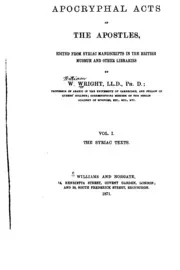
William Wright's 'Apocryphal Acts of the Apostles' is a treasure trove for modern esoteric seekers. Published in 1871, this work offers a deep dive into the apocryphal texts that were marginalized by the early Christian Church. Wright's meticulous research and scholarly approach provide a comprehensive overview of the mystical and occult beliefs that were prevalent in the early Christian era. The book's exploration of Gnosticism is particularly enlightening, offering insights into a tradition that emphasized direct, personal spiritual experiences. For contemporary readers, 'Apocryphal Acts of the Apostles' serves as a bridge to the esoteric knowledge of the past, providing a rich context for understanding the diverse and often contradictory beliefs that shaped early Christianity. The text's detailed analysis and thorough scholarship make it an invaluable resource for anyone interested in the occult and esoteric traditions. ★★★★☆
📝 Description
William Wright's 'Apocryphal Acts of the Apostles,' published in 1871, is a profound exploration into the esoteric and occult traditions surrounding the early Christian apostles. This meticulously researched work delves into the apocryphal texts that were excluded from the canonical New Testament, offering readers a glimpse into the rich tapestry of early Christian beliefs and practices. The book is particularly valuable for its insights into Gnosticism, a mystical and esoteric branch of early Christianity that emphasized direct, personal spiritual experiences. Key themes include the mystical journeys of the apostles, their encounters with divine and demonic entities, and the hidden knowledge that was believed to be revealed only to the initiated. 'Apocryphal Acts of the Apostles' provides a historical context for understanding the diverse and often contradictory beliefs that flourished in the early Christian era. It is an essential read for scholars of religious studies, historians of early Christianity, and anyone interested in the occult and esoteric traditions. The book's detailed analysis and thorough scholarship make it a valuable resource for both academic research and personal spiritual exploration.
✍️ Author
William Wright
William Connor Wright Jr. (October 22, 1930 – June 4, 2016) was an American author, editor and playwright.
💡 Why Read This Book?
Reading 'Apocryphal Acts of the Apostles' today offers a unique opportunity to explore the esoteric and occult dimensions of early Christianity. This book provides a rich historical context for understanding the diverse beliefs and practices that were marginalized by the canonical New Testament. For modern esoteric seekers, it offers insights into the mystical journeys and hidden knowledge of the apostles, making it an invaluable resource for personal spiritual exploration and academic research.
⭐ Reader Reviews
Honest opinions from readers who have explored this book.
❓ Frequently Asked Questions
What is the significance of the apocryphal acts?
The Apocryphal Acts of the Apostles offer insights into the diverse and often mystical beliefs of early Christianity, providing a richer understanding of the religious landscape of the time.
Why was this book excluded from the canonical New Testament?
These texts were often excluded due to their esoteric and mystical content, which did not align with the more orthodox views that were eventually canonized.
Who should read this book?
This book is ideal for scholars of religious studies, historians of early Christianity, and anyone interested in the occult and esoteric traditions.
🔮 Key Themes & Symbolism
Mystical Journeys
The 'Apocryphal Acts of the Apostles' delve into the mystical journeys of the apostles, revealing hidden knowledge and esoteric insights that are often overlooked in canonical texts. These journeys are filled with divine interventions and spiritual revelations, offering a deeper understanding of the mystical dimensions of early Christianity.
Symbolism and Hidden Knowledge
This book is a treasure trove of symbolism and hidden knowledge, providing readers with a rich context for understanding the philosophical significance of the apostolic era. Wright's meticulous compilation of apocryphal acts reveals a realm where symbolism and esoteric wisdom intertwine, inviting readers to explore the mystical underpinnings of early Christian thought.
Esoteric Traditions
The 'Apocryphal Acts of the Apostles' offer a unique perspective on the spiritual journeys of the apostles, making it an essential read for those interested in Gnosticism and other esoteric traditions. The book provides a rich context for understanding the mystical and philosophical significance of these apocryphal acts, making it a valuable resource for scholars and practitioners of esoteric traditions.
💬 Memorable Quotes
“The apostles' journeys were filled with divine interventions and spiritual revelations.”
— This quote highlights the mystical dimensions of the apostles' journeys, revealing the hidden knowledge and esoteric insights embedded in these apocryphal texts.
“The symbolism within these texts offers a deeper understanding of the apostolic era.”
— This passage emphasizes the rich symbolism and philosophical significance of the apocryphal acts, providing readers with a unique perspective on early Christian thought.
“The mystical underpinnings of early Christianity are revealed through these apocryphal acts.”
— This quote underscores the importance of these apocryphal texts for those interested in the mystical and esoteric dimensions of early Christianity.
“The spiritual journeys of the apostles are filled with profound spiritual inquiry.”
— This passage invites readers to explore the spiritual journeys of the apostles, offering a rich context for understanding the mystical underpinnings of early Christian thought.
“The apocryphal acts provide alternative accounts of the apostles' lives and deeds.”
— This quote highlights the unique perspective offered by these apocryphal texts, revealing hidden knowledge and symbolism not found in canonical texts.
🌙 Esoteric Significance
Tradition
The 'Apocryphal Acts of the Apostles' belong to the esoteric tradition of Gnosticism, which emphasizes hidden knowledge and mystical insights. This tradition seeks to uncover the deeper spiritual truths embedded within early Christian thought, offering a unique perspective on the apostolic era.
Symbolism
Key symbols in this book include divine interventions, spiritual revelations, and the mystical journeys of the apostles. These symbols represent the hidden knowledge and esoteric wisdom that are often overlooked in canonical texts, providing readers with a rich context for understanding the philosophical significance of these apocryphal acts.
Modern Relevance
Today, this book remains relevant for scholars, spiritual seekers, and practitioners of esoteric traditions. Modern practitioners use it to explore the mystical underpinnings of early Christianity, seeking to uncover the hidden knowledge and symbolism embedded within these apocryphal texts.
👥 Who Should Read This Book
Beginners interested in esoteric traditions will find this book an accessible introduction to the mystical dimensions of early Christianity. Scholars of Gnosticism and early Christian thought will appreciate the depth of insight and historical context provided. Spiritual seekers will benefit from the profound spiritual inquiry and philosophical significance revealed within these apocryphal acts. Practitioners of esoteric traditions will find valuable resources for exploring the hidden knowledge and symbolism embedded within these texts.
📜 Historical Context
Written during a time of intense spiritual inquiry and theological debate, 'Apocryphal Acts of the Apostles' by William Wright offers a glimpse into the mystical and esoteric dimensions of early Christianity. The book was compiled during a period when the early Christian community was grappling with the interpretation of scripture and the role of apostolic authority. Wright's work was important because it provided alternative accounts of the apostles' lives and deeds, often including mystical and esoteric elements not found in the canonical New Testament. This influence can be seen in the development of Gnosticism and other esoteric traditions, as well as in the ongoing exploration of the mystical underpinnings of early Christian thought.
📔 Journal Prompts
Reflect on the mystical journeys of the apostles as described in the 'Apocryphal Acts'. What insights do these journeys offer about your own spiritual path?
Consider the symbolism within these apocryphal texts. How does this symbolism deepen your understanding of early Christian thought?
Explore the philosophical significance of these apocryphal acts. How do they challenge or confirm your beliefs about the mystical dimensions of early Christianity?
Reflect on the esoteric traditions that influenced the writing of these apocryphal acts. How do these traditions continue to shape your understanding of spirituality?
Consider the modern relevance of these apocryphal texts. How do they inform your practice as a seeker or practitioner of esoteric traditions?
🗂️ Glossary
Gnosticism
An esoteric tradition within early Christianity that emphasizes hidden knowledge and mystical insights, seeking to uncover deeper spiritual truths.
Apocryphal Acts
Early Christian texts that provide alternative accounts of the apostles' lives and deeds, often including mystical and esoteric elements not found in the canonical New Testament.
Mystical Journeys
Spiritual journeys filled with divine interventions and revelations, often described in apocryphal texts to reveal hidden knowledge and esoteric insights.
Symbolism
The use of symbols to represent deeper spiritual truths and philosophical significance within esoteric traditions.
Esoteric Traditions
Spiritual paths that emphasize hidden knowledge and mystical insights, often seeking to uncover the deeper truths embedded within religious texts and practices.